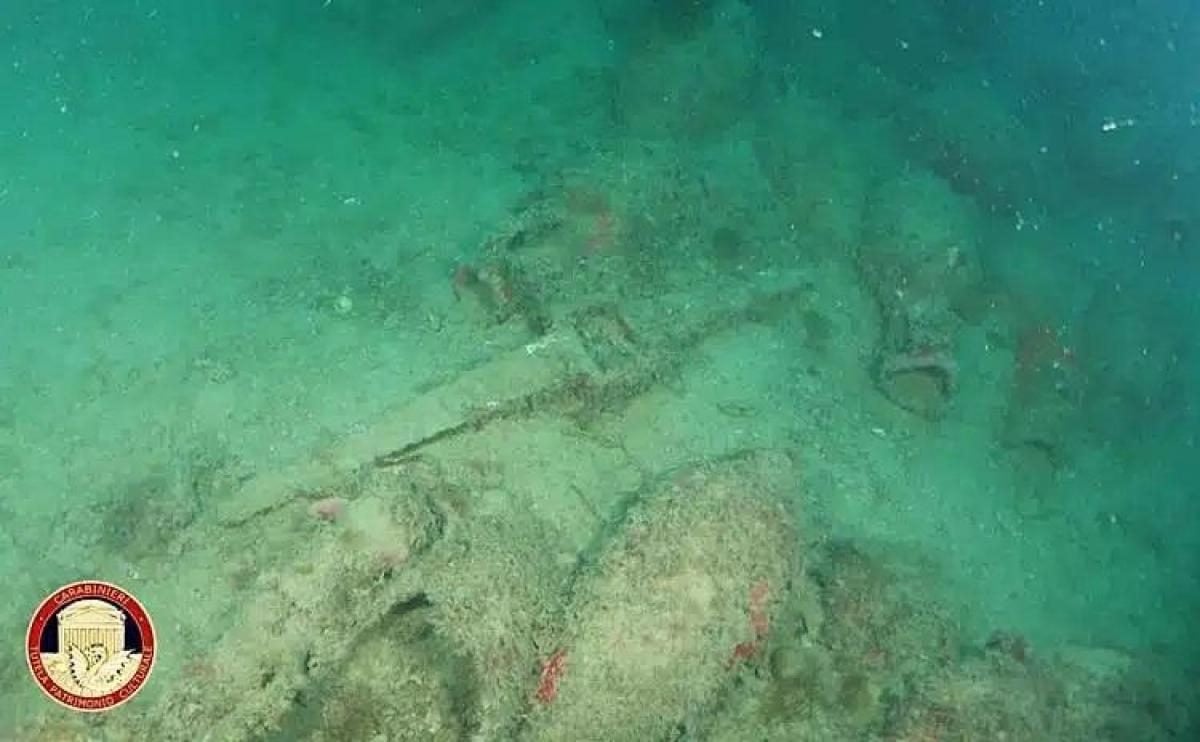
Italian diver Giacomo De Mola has discovered an intact Roman merchant ship carrying hundreds of ancient amphorae off the coast of Mazara del Vallo in Sicily.
The 21-metre vessel lies at a depth of 46 metres on the seabed, preserving a vast cargo of clay jars that has remained untouched for roughly 2,000 years.
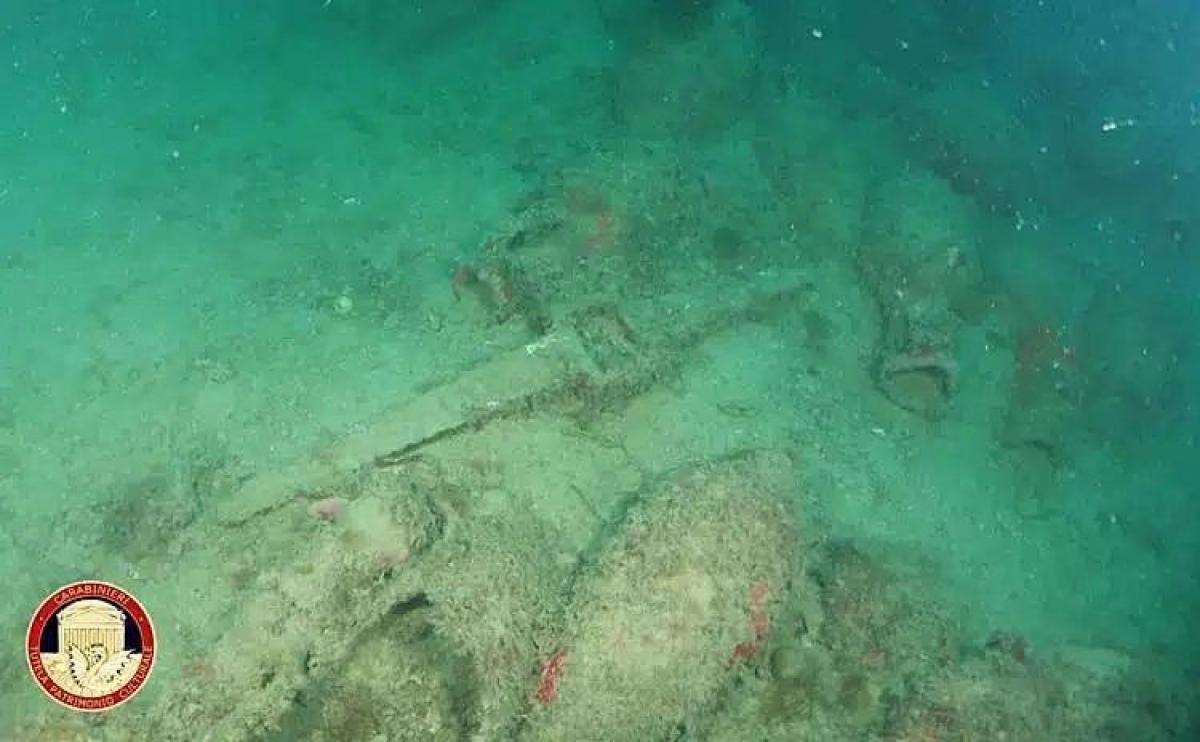
De Mola was diving several kilometres off the Sicilian coast when he initially spotted what appeared to be an ordinary rock formation on the sea floor. Upon swimming closer, he realised he was looking at an ancient merchant vessel.
De Mola said he moved closer to the formation and his heart skipped a beat when he realised it was not a stone. After surfacing, he informed his fishing partner about what he had seen underwater.
The two divers reported the finding to the Superintendency of the Sea of the Sicilian Region. The report prompted the Carabinieri Command for the Protection of Cultural Heritage to begin documenting the wreck site and verifying its details.
De Mola described the find as without doubt the most incredible discovery of his life, adding that it was hard to express what it felt like to be among the first people in nearly 20 centuries to see the site again.
Official measurements show the vessel is 21 metres long and 6 metres wide. Archaeologists date the ship to either the first or second century BC, placing it in the late Roman Republic era.
Experts believe the depth of approximately 46 metres helped protect the wooden hull and its contents from human disturbance and natural degradation over the centuries. The discovery was first reported by science news outlet The Daily Galaxy.
Cargo of ancient amphorae
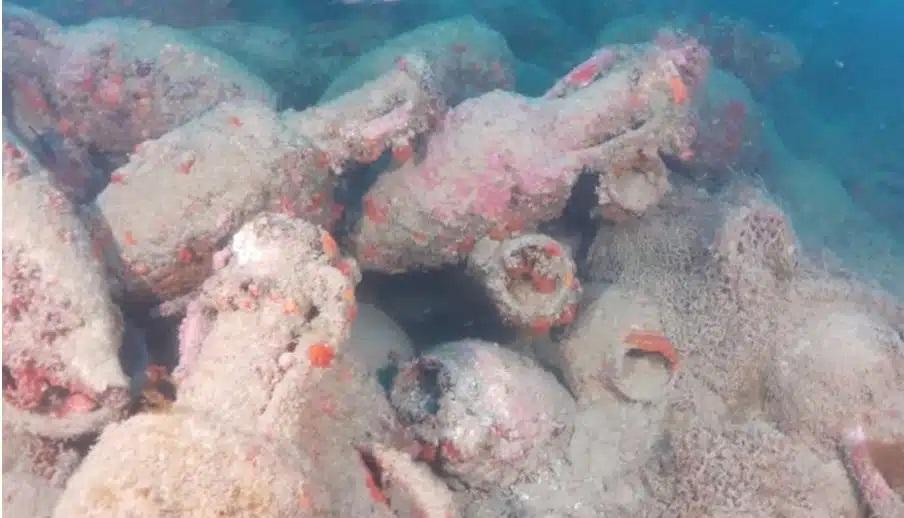
What makes the shipwreck particularly remarkable is the volume and variety of the ancient goods preserved on board. The ship was transporting hundreds of amphorae, the tall two-handled terracotta jars used by Romans to transport goods such as wine and olive oil across Mediterranean trade routes.
According to the Italian Ministry of Culture, the majority of the jars belong to the Dressel 1A classification, a widespread Roman design from that period. The cargo also contains Lamboglia 2 amphorae, which were commonly used to transport wine, alongside several containers believed to originate from North Africa and even older Neo-Punic jars.
Ministry officials stated that the amphorae are stacked in a pile nearly two metres high, spanning an area more than 18 metres long and 6 metres wide. This dense arrangement suggests that a major portion of the original cargo survived intact when the ship sank.
The diversity of jar designs indicates that the vessel may have loaded cargo from multiple regions along its trading route. Maritime trade in the Mediterranean was common during antiquity, but archaeological finds with such remarkably undamaged freight remain rare. Officials noted that the discovery demonstrates how countless historical artifacts remain hidden beneath the sea, awaiting chance discovery rather than targeted searches.
Mazara del Vallo, situated on the south-western coast of Sicily near the mouth of the Mazaro River, has long been positioned along key maritime corridors connecting Southern Europe and North Africa. The Carabinieri Command for the Protection of Cultural Heritage works alongside regional bodies like the Superintendency of the Sea to safeguard such underwater archaeological treasures from looting and degradation.
Plans for preservation and study
Italian Culture Minister Alessandro Giuli highlighted the national importance of the discovery, calling it one of the most outstanding archaeological finds of recent years.
Giuli said it was one of the most significant underwater archaeological discoveries of recent years. He noted that the sea continues to return fragments of history, and that the Mazara del Vallo shipwreck tells the story of the people, trade routes and commerce that made the Mediterranean a crossroads of civilisations, adding that research would continue to uncover its history.
Authorities have not yet decided whether the shipwreck will eventually be raised from the seabed or preserved in place. A spokesperson for the Ministry of Culture stated that there are currently no plans to salvage the entire vessel, although select artifacts may be brought to the surface for detailed study.
Officials explained that further research is required to evaluate the structural fragility of the hull and determine whether any historical looting occurred at the site. For the time being, the wreck will remain on the sea floor under official protection while archaeological assessments continue.