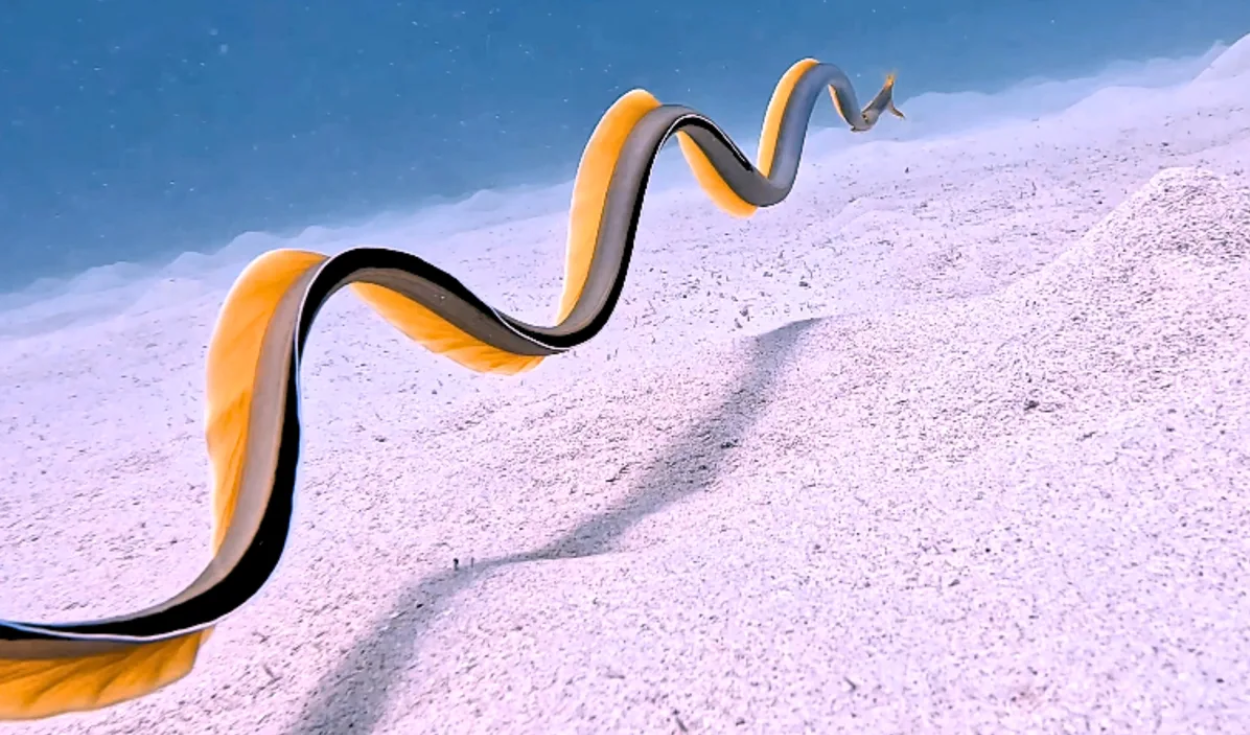
Underwater photographer Ian Haggerty has captured footage of a rare ribbon eel swimming freely along the ocean floor in Mauritius.
The sighting occurred in 2025 during a dive conducted alongside the Ocean Spirit dive center. Recording the marine creature swimming out in open water surprised observers because ribbon eels typically remain concealed inside burrows dug into sand or reef rock debris.
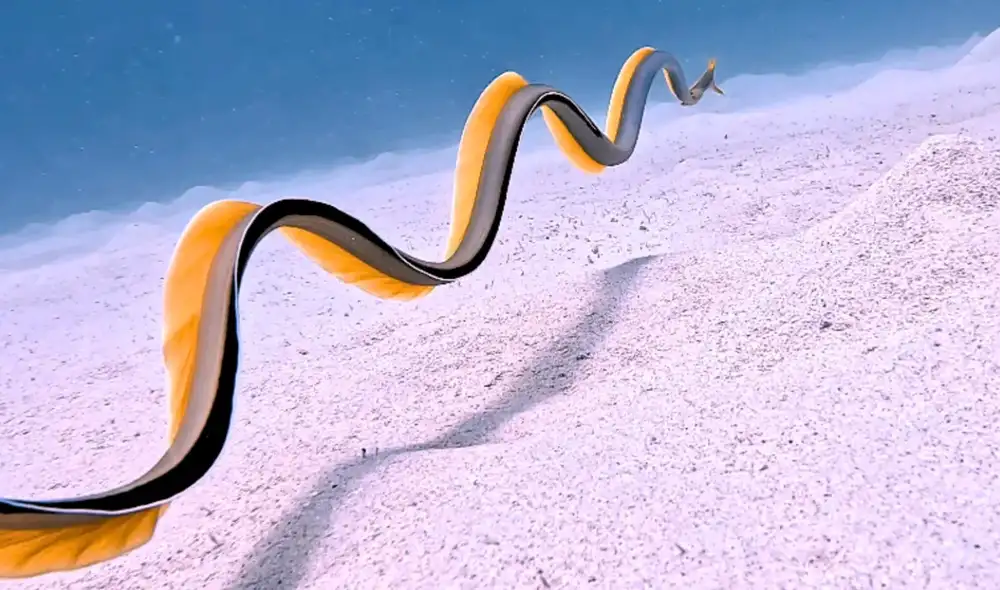
Haggerty shared video footage showing the fish displaying striking blue and yellow colors as it navigated the seabed. He said the creature glided elegantly through the turquoise waters of Mauritius like a living ribbon.
He added that ribbon eels are expert navigators across Indo-Pacific reefs and compared the animal's fluid movement to a silk scarf floating in the ocean. He described the encounter as a rare experience due to the species' secretive behavior.
Unusual behavior in open water
Ribbon eels, known scientifically as Rhinomuraena quaesita, belong to the moray eel family. They inhabit tropical marine environments across the Indo-Pacific region, an expansive marine area stretching across the Indian Ocean and western Pacific.
The species usually spends most of its time hidden within reef structures or sandy ocean beds, frequently leaving only its head exposed to the surrounding water. Observing an individual swimming freely away from its burrow for an extended period is considered highly uncommon.
Mauritius, an island nation located in the Indian Ocean off the southeastern coast of Africa, features extensive tropical reef systems that provide natural shelter for these shy marine animals.
Physical characteristics and color changes
The ribbon eel possesses an extremely slender body that can reach a length of around 1.3 meters. It features large nostrils positioned at the front of its head, which assist the marine predator in detecting prey and navigating its environment.
The species undergoes remarkable color transformations across different stages of its development. Young ribbon eels are predominantly black with a bright yellow dorsal fin extending along their body.
As they mature into adult males, their bodies transition to an intense blue coloration with yellow accents. Adult females can develop a body color that is predominantly yellow.
Reproduction and sex transitions
Beyond their distinctive appearance, ribbon eels feature a notable reproductive system known as protandric hermaphroditism. Individuals function initially as males and can later transform into females as they age.
Haggerty highlighted this reproductive characteristic when sharing the video, noting as a fun fact that the eels can change from male to female over time.
According to the global marine database FishBase, this sequential hermaphroditism has been inferred from observed color transitions in wild populations. FishBase notes that the biological transformation process has not yet been definitively confirmed through anatomical research.