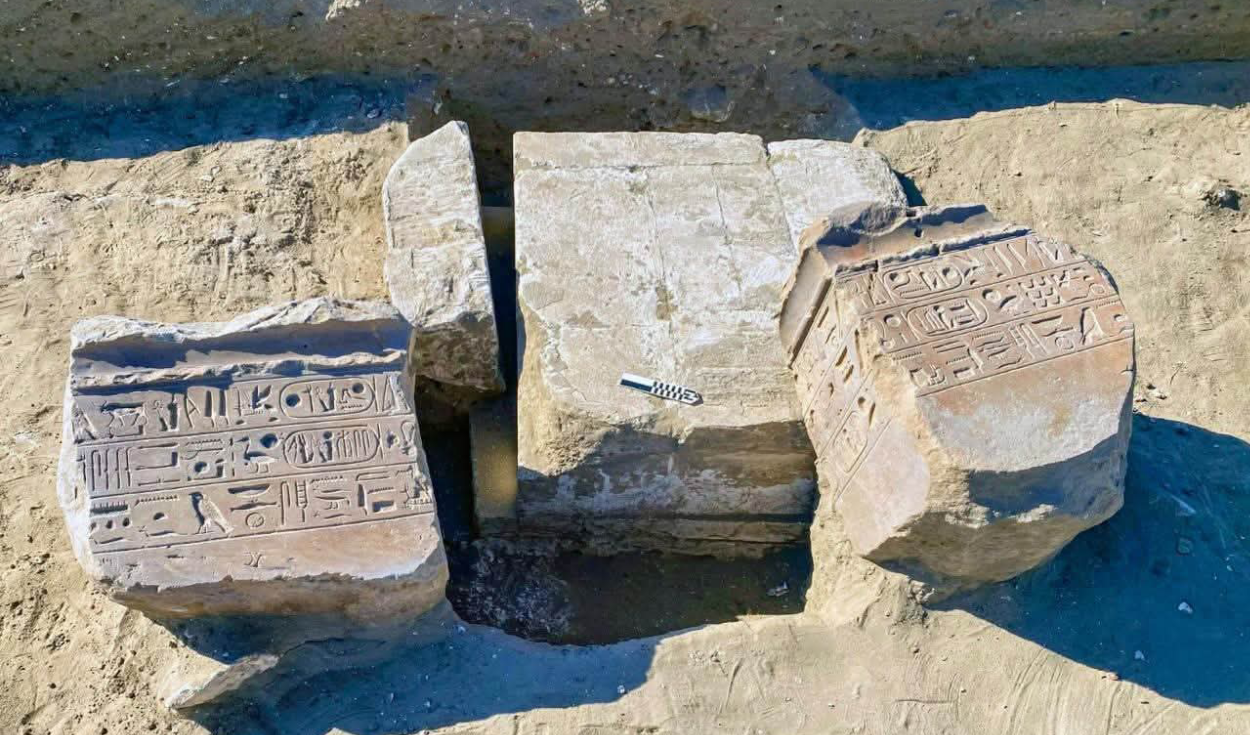
Egyptian archaeologists have discovered a stone lintel bearing the inscription of Pharaoh Ramesses II at Tell Abu Seifi near Qantara East in the Ismailia Governorate.
The discovery made near Egypt's eastern border provides fresh evidence that could confirm the location of the ancient lost city of Mesn.
The excavation by an Egyptian team forms part of a wider project investigating the ancient Way of Horus. The strategic military route defended the eastern frontier of Egypt, connecting military posts and settlements across to the Sinai Peninsula.
Researchers working under the supervision of the Supreme Council of Antiquities of Egypt excavated a massive mud brick wall during the current season. Archaeologists previously believed the structure formed part of the temple itself.
The team now considers the structure to be the outer wall of the sacred precinct. This revised interpretation provides experts with a clearer understanding of the original layout of the temple complex.
Sherif Fathy, the Minister of Tourism and Antiquities, said the results belong to ongoing efforts to document archaeological sites in northern Sinai and the Qantara region. Fathy emphasized the historical significance of the area in protecting Egypt's eastern border along the Way of Horus.
The Supreme Council of Antiquities serves as the state body responsible for managing and preserving Egypt's cultural heritage and historic monuments.
Temple layout and the Ramesses II lintel
Hisham El-Leithy, the secretary general of the Supreme Council of Antiquities, explained that this season's fieldwork relied on decades of prior excavations. He said earlier findings were reexamined with greater precision to reconstruct the site's original floor plan.
Mohamed Abdel Badie, head of the Egyptian antiquities sector at the council, indicated that the mission identified two distinct stone roads leading toward the temple. The older road dates from the Ptolemaic period, while a narrower Roman road was later constructed directly over it.
Abdel Badie added that archaeologists located storage units in the northern sector of the site. Excavators also unearthed larger service rooms to the south and a sanctuary situated within the inner zone of the complex.
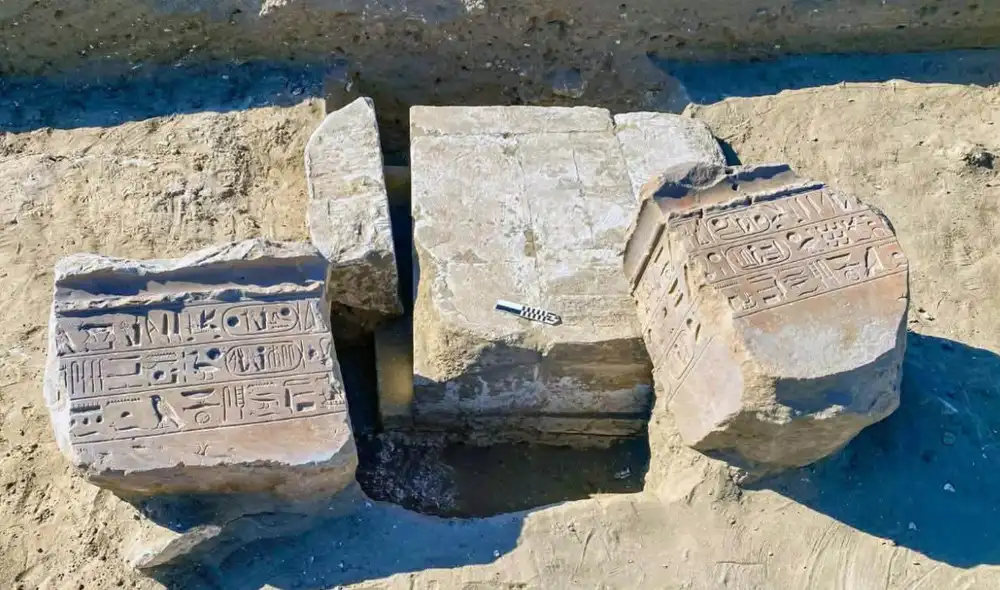
Among the key discoveries was a large sandstone lintel split into two pieces. Hieroglyphic inscriptions carved into three of its sides detail the titles of Ramesses II.
The text on the lintel also records restoration work performed on a statue of the god Horus, who is described as the Lord of the city of Mesn. Ancient Egyptian texts from the New Kingdom period place a settlement named Mesn along the eastern border, strengthening the belief that Tell Abu Seifi marks the lost city.
Ramesses II, who ruled Egypt during the 19th Dynasty of the New Kingdom in the 13th century BC, was renowned for building extensive monuments and fortifying the kingdom's frontiers.
Statues and Roman industrial transformation
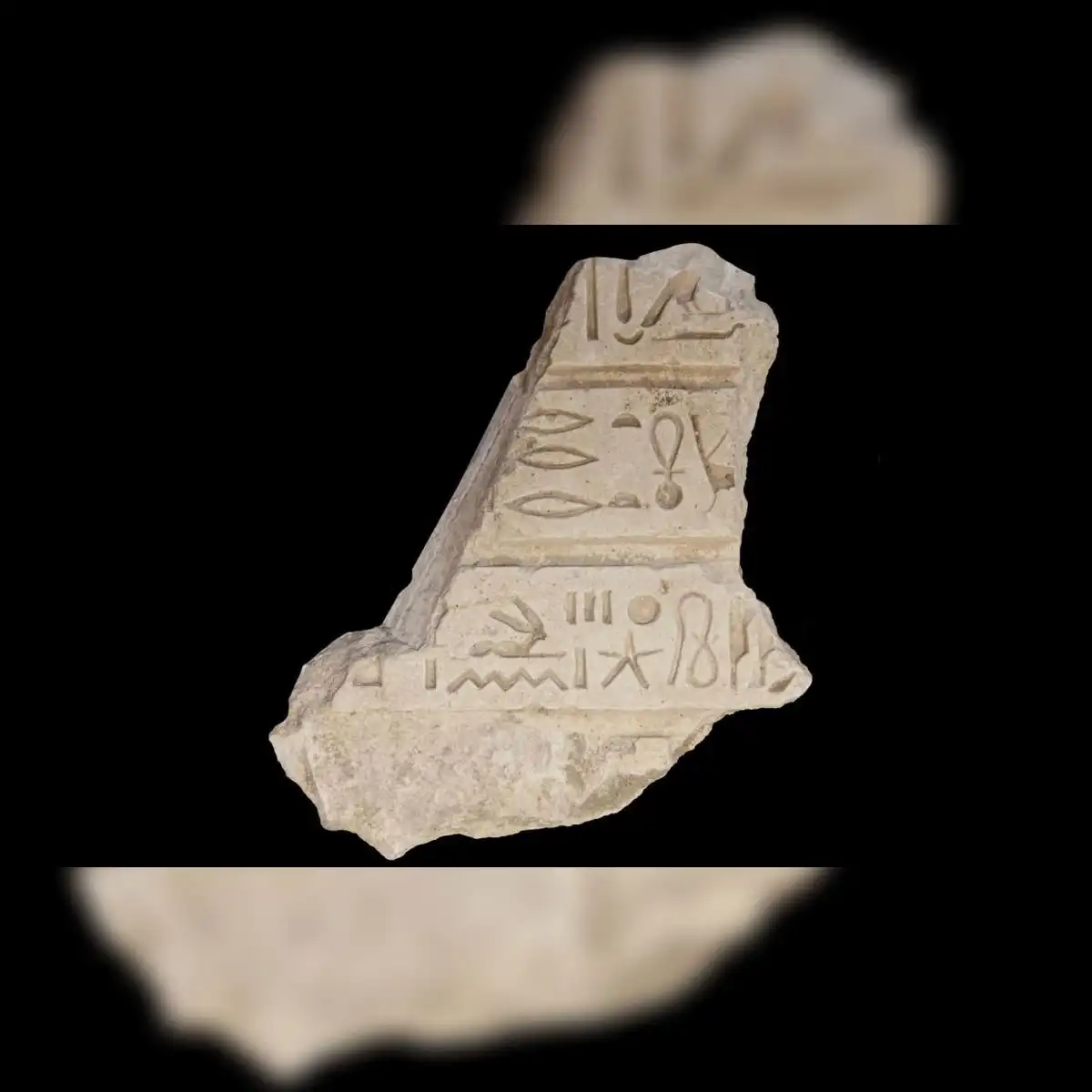
Excavators recovered several artifacts at the site, including part of a schist statue depicting a military scribe from the 26th Dynasty who holds a fragmented shrine. The team also uncovered a headless statue, a royal basalt torso, and fragments of falcons carved from basalt and limestone.
The temple reached its primary architectural development during the Ptolemaic era. In the third century AD, Roman forces repurposed part of the sanctuary complex into a military camp known as a castrum.
The site eventually lost its religious function and was converted into a limestone quarry. Workers built two large circular kilns directly over destroyed sections of the sanctuary, where heat affected limestone remnants reveal an industrial transition.
Researchers noted that while the new discoveries strongly support the link between Tell Abu Seifi and ancient Mesn, definitive proof remains unconfirmed. Upcoming archaeological campaigns will search for further evidence to establish the identity of the settlement and document its historical evolution.