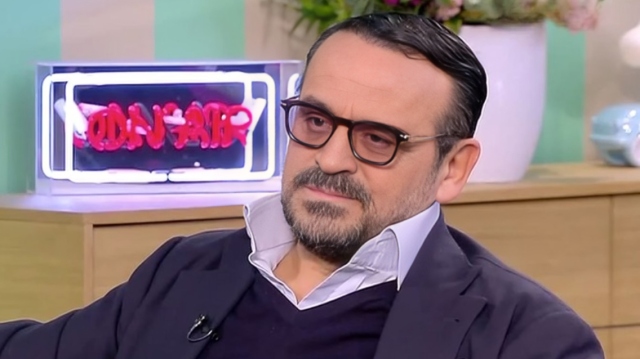
Greek actor Pygmalion Dadakaridis has expressed his deep desire to have children while reflecting on the grief of losing his father in late 2025.
Appearing on the Greek morning television programme Proino on Friday, November 6, the acclaimed performer stressed that starting a family must happen through genuine love rather than by accident or in pursuit of a posthumous legacy.
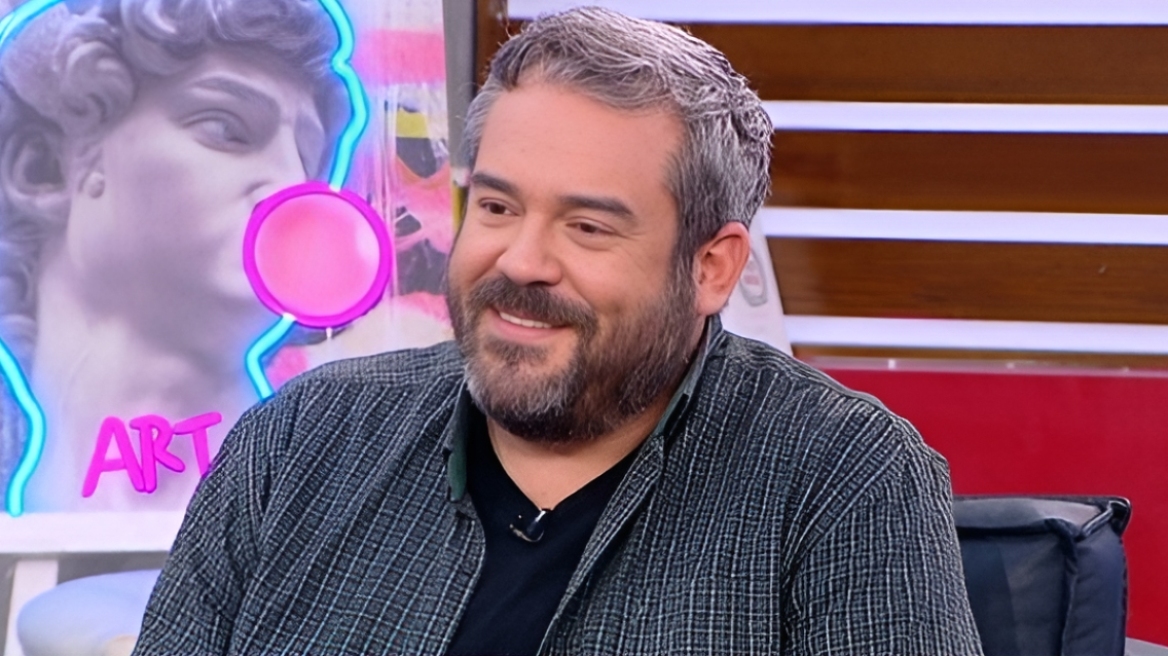
While Dadakaridis chose not to disclose details regarding his private life, he explained that he still hopes to experience fatherhood. He noted that he has not yet had children, but wants to watch a loving partnership develop naturally without rushing into parenthood merely for the sake of doing so.
Reflecting on family life, he cited a comment he had read describing true happiness as planting a tree not to enjoy its shade yourself, but to provide shade for the people who will come after you. He added that approaching such commitments without haste makes the journey deeply experiential.
Theatrical bond behind The Whale
During the television broadcast, Dadakaridis drew a direct connection between his personal grief and his work on stage. He explained that when he first read the script for The Whale, the text resonated strongly with his own life and his close relationship with his father, who passed away in December 2025.
The Whale, written by American playwright Samuel D. Hunter, centres on a reclusive, severely obese online writing instructor named Charlie who attempts to reconcile with his estranged teenage daughter. Dadakaridis directed and starred as Charlie in the Greek stage adaptation of the production.
Dadakaridis stated that his father was the precise reason he chose to stage the production in the first place. He noted that while audiences often focused on the character's extreme physical transformation and theatrical spectacle, the emotional core of the play remained the parent and child dynamic, which reflected his own relationship as a son.
He explained that he staged the drama as an experiential tribute to every father who strove to be ideal for his son, yet felt unable to achieve that standard for reasons of his own. In a tragic and unexpected parallel, the emotional resolution of the drama ultimately mirrored events in his private life.
Health struggles and stage reconciliation
Dadakaridis revealed that his father was aware from the very beginning that the production was created for him. However, his father was unable to attend the show during its initial theatrical run because of ongoing health complications.
His father finally managed to watch the performance during its second year on stage. After seeing the show, his father asked him whether the entire production had been mounted for his benefit, to which Dadakaridis replied that it was created more for both of them together.
The actor explained that he had tried many ways to reach his father, and the theatre piece offered a chance to convey something deeper. He said he wanted to show his father how crucial his presence remained, overcoming the defensive barriers that often isolate individuals and leave them feeling critical, pointed, insecure, or burdened by guilt.
Coping with the loss of a father
Dadakaridis admitted that he misses his father every single day, describing their connection as a bond of a lifetime. He stated that he thanks God for having had such a person in his life, describing his father as a paradise of emotions.
When asked how he copes with the absence, Dadakaridis conceded that the void left by his father cannot be filled, adding that he would not lie about the pain. Instead, he leans on his close circle of loved ones, including his father's second wife and his siblings.
The actor noted that he feels fortunate to have siblings living both in Greece and in England. Dadakaridis, who was born in England to an English mother and a Greek father before building an acting career in Athens, maintains close ties across both countries.
The emotional interview followed earlier public comments the actor made about coping with bereavement. In previous appearances, Dadakaridis had observed that coming to terms with mortality is an inevitable part of life, expressing gratitude for the memory of loved ones who have passed away.