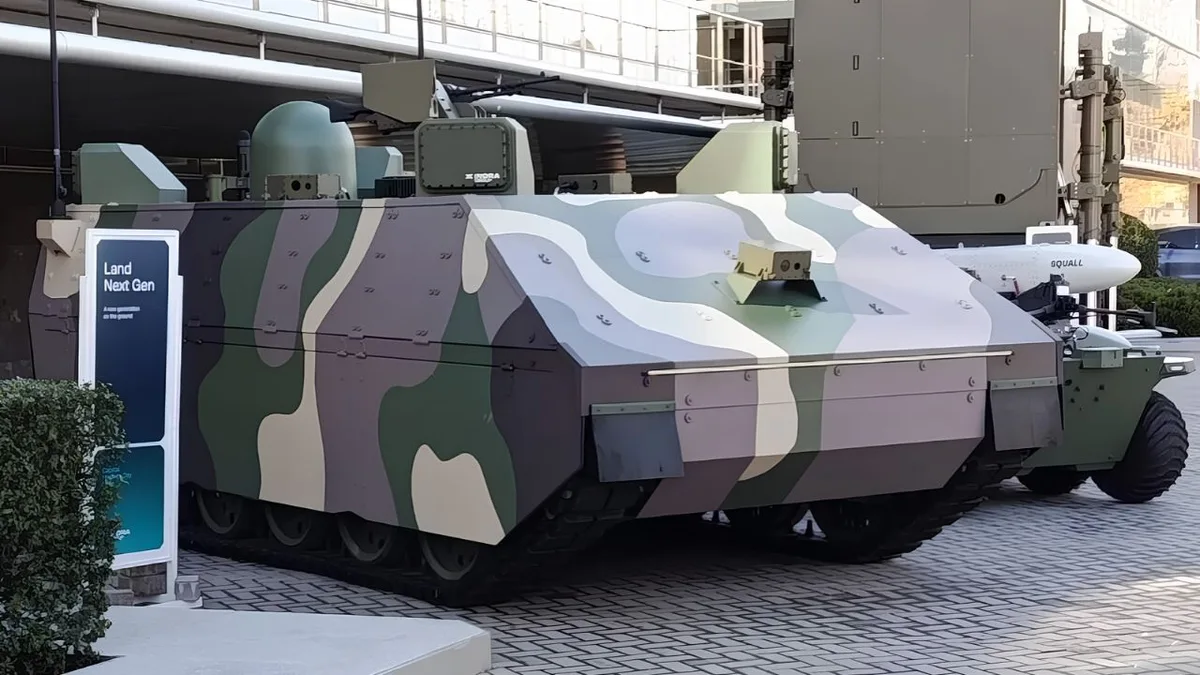
Indra, the Spanish technology and defense group, announced plans to build its own land combat vehicle, called Land Next Gen, marking a shift from its traditional role of integrating systems into vehicles made by other manufacturers.
The company unveiled the project on Wednesday at its headquarters in Madrid as part of its Forward 2030 strategic plan, which places defense at the center of its roadmap.
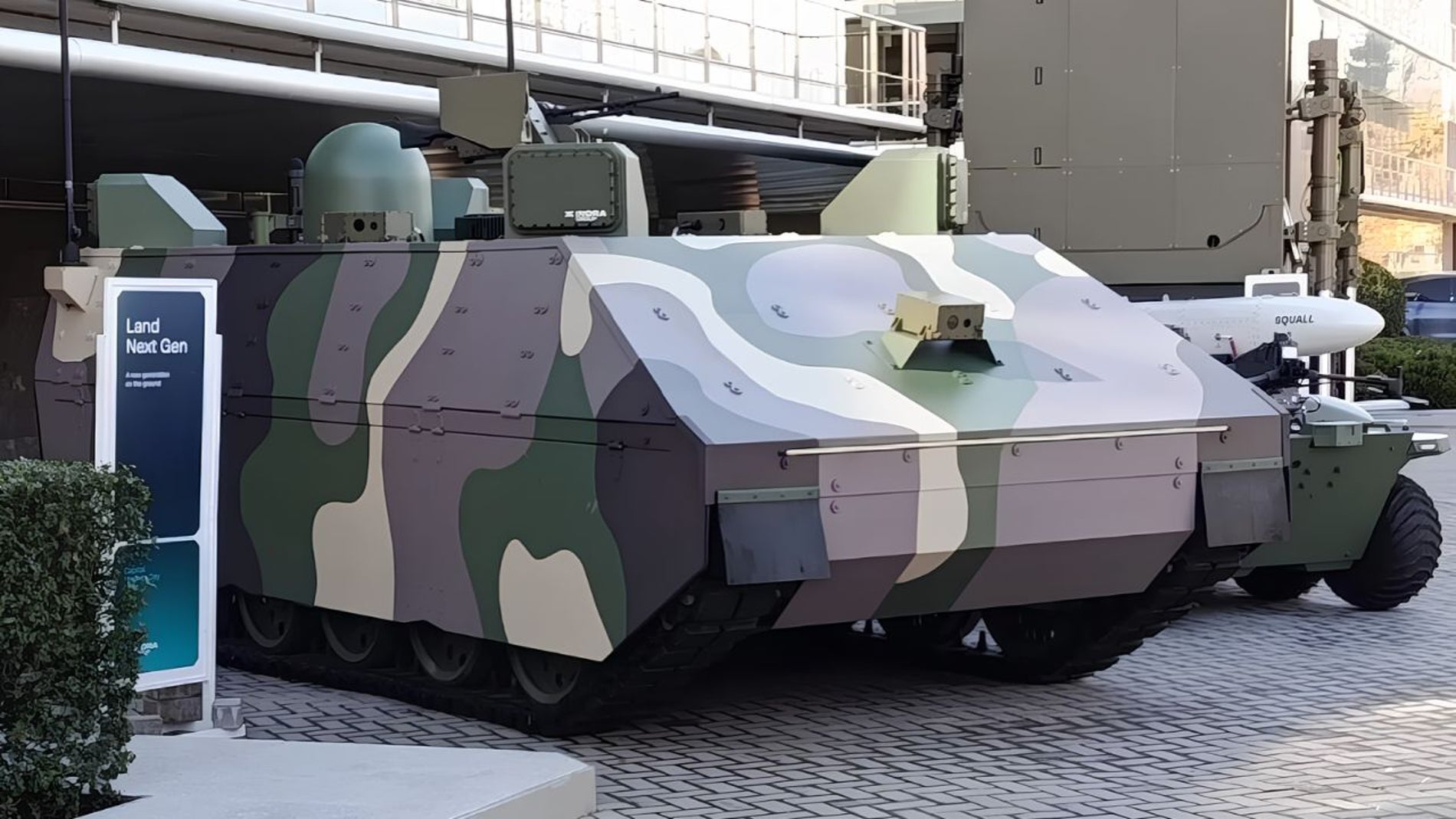
Indra said the vehicle will not be designed for a single fixed task. Instead, the mission will determine which modules and systems are fitted to it, without altering the physical platform itself. The company describes Land Next Gen as a modular, hybrid-electric and software-defined concept capable of operating either with a crew or unmanned.
Seven planned configurations
Indra has planned seven versions of the vehicle: Scout for reconnaissance, Strike for attack, Shield for protection, Connect for connectivity, Support, Rescue and Breach for intervention. All seven would share an open architecture designed to incorporate different systems and operate across multiple domains.
According to Indra, mission kits would allow the vehicle to be adapted with new functions as the requirements of the armed forces change. The company said this approach is meant to avoid developing a separate vehicle for each task and to make it easier to upgrade equipment throughout its service life.
20 million euro investment
Indra chief executive Josep Maria Recasens revealed the first details of the project. The company will fund an investment of close to 20 million euros from its own resources and has set a target price of under one million euros per unit. Indra expects to have the platform available between 2028 and 2029.
The announcement builds on Indra Land Vehicles, the division the company created to lead its major land programs. These include the VCR 8x8 Dragón wheeled combat vehicle, a future wheeled bridge-laying vehicle, and new self-propelled howitzers on both wheeled and tracked chassis.
Land Next Gen represents a further step for the division, moving from managing and integrating programs to developing a platform from start to finish. Indra said it aims to be recognized in the land defense industry not just as an integrator but also as a developer of its own products.
A testbed for a new industrial model
The project will also serve as a testbed for LAB-X, Indra's new industrial model. The company said classic military vehicle development cycles can stretch to around a decade, but it is proposing an iterative process that runs in cycles of two to three years instead.
Indra said the method relies on experimentation, joint design with the client, early adoption of new technologies and constant evaluation of results. The stated goal is to put new capabilities into the hands of users up to three times faster, cutting the time between identifying an operational need and delivering a working solution.
IndraMind, the company's artificial intelligence platform, will take part in this process by turning data collected during development and operation into knowledge to improve the systems. Indra argues that hardware will no longer be the sole factor defining a vehicle's capabilities, with software and modularity taking on a greater role.
The company said that if it meets its timeline and price targets, the vehicle would give armed forces a more agile and flexible way to adapt to changing scenarios.
What happens next
Indra expects to have the Land Next Gen platform available between 2028 and 2029.
Test yourself
How much is Indra investing in the Land Next Gen project?
How many vehicle configurations has Indra planned?
What is the target price per unit for the vehicle?
Have your say
Should defense companies like Indra invest their own funds in developing new military vehicles?
Where it happened
Madrid, Spain