Warren Buffett announced he will distribute 9,225,000 shares of Berkshire Hathaway among four family foundations, confirming that his fortune will no longer flow to the Bill & Melinda Gates Foundation as previously planned.
Most of the stock, just over 3.5 million shares, will go to the Susan Thompson Buffett Foundation, named after his first wife. The remainder will be split equally between the Sherwood Foundation, the Howard G. Buffett Foundation and the NoVo Foundation, the organizations founded by his three children.
The move follows Buffett's decision in July to leave the Gates Foundation out of his customary annual summer donation, ending a 20-year collaboration. Between 2006 and 2025, Buffett gave the Gates Foundation Berkshire stock worth close to $47.9 billion, while the four family foundations have received $29 billion to date.
Why Buffett changed course
Buffett pointed to his ties to Bill Gates, including Gates's association with Jeffrey Epstein. In a July interview with CNBC, Buffett said he found that relationship distasteful. He said his three children, Susie, Howard and Peter, all now around 70, are ready to manage the family's wealth themselves.
The Berkshire shares being redirected to the family foundations are currently valued at around $155 billion. Susie Buffett chairs both the Sherwood Foundation, which focuses on Nebraska, and the Susan Thompson Buffett Foundation, whose international work centers on reproductive health. She also sits on Berkshire's board.
Gates Foundation's countdown
Buffett's withdrawal coincides with the biggest transformation in the Gates Foundation's history. Once expected to become the leading vehicle for global philanthropy, the foundation is now set to close in 2045, once it has spent down its endowment.
Bill Gates chairs the foundation while Mark Suzman, its chief executive, decides which programs are funded. Gates's personal fortune, which will swell the endowment to roughly $200 billion, must be spent within less than two decades. The foundation's portfolio includes stakes in Canadian National Railway, Caterpillar, Deere and Ecolab.
Melinda French Gates left the foundation's co-presidency after the couple's divorce and launched her own vehicle, Pivotal, with $12.5 billion to support women, families and young people. Pivotal combines a grant-making and impact-investing foundation, a public advocacy arm and a direct-investment company, with a focus that includes contraception, maternal care and menopause. It holds its endowment mainly in Treasury bonds and corporate debt.
Foundations that control companies
Unlike most endowed foundations, which tend to operate indefinitely once established, some act as the controlling shareholders of major multinationals. Novo Nordisk Foundation controls roughly a third of the shares and most of the voting rights in Novo Nordisk, until recently Europe's most valuable company by market capitalization.
A year ago, Novo Nordisk shareholders elected Lars Rebien Sorensen, then head of the foundation, as company chairman following a bitter dispute with the outgoing board. The foundation carries a dual mandate: providing stability to the group's companies while funding scientific, humanitarian and social causes. It devoted around €1.6 billion to grants and philanthropic investments last year. Its asset fund once topped €130 billion but has fallen to just over €90 billion after a slump in Novo Nordisk's stock.
Lilly Endowment and the obesity-drug boom
In the United States, Lilly Endowment shows how the success of obesity drugs is reshaping philanthropy. The Indianapolis-based foundation, built on donations from the Lilly family, closed last year with $105.9 billion in assets, driven largely by its 9.8% stake in Eli Lilly. It collected $647 million in dividends last year plus $4 billion from asset sales, funding work in education and community development in places where the company operates.
Working around US ownership limits
US law generally caps the combined voting rights of a private foundation and related individuals at 20% of a company, with some exceptions. That restriction has driven creative structures such as Patagonia's. Founder Yvon Chouinard transferred all voting shares to a trust holding 2% of the capital, while the remaining 98%, in non-voting shares, went to Holdfast Collective, a nonprofit that uses Patagonia's dividends to fund environmental causes.
How much foundations earn on their money
Endowed foundations face a challenge similar to a pension fund or a university endowment: they need annual liquidity while trying to preserve their capital's purchasing power over generations. US private foundations held $1.87 trillion in financial assets at the end of 2025, according to the Federal Reserve, and spent $117.15 billion on charitable purposes last year. In Europe, the group Philea puts the sector's assets at €516 billion, with €76 billion in spending. Last year was unusually strong, with average investment returns of 14%, compared with a 9% annualized average over the past decade, according to Commonfund.
Other major players
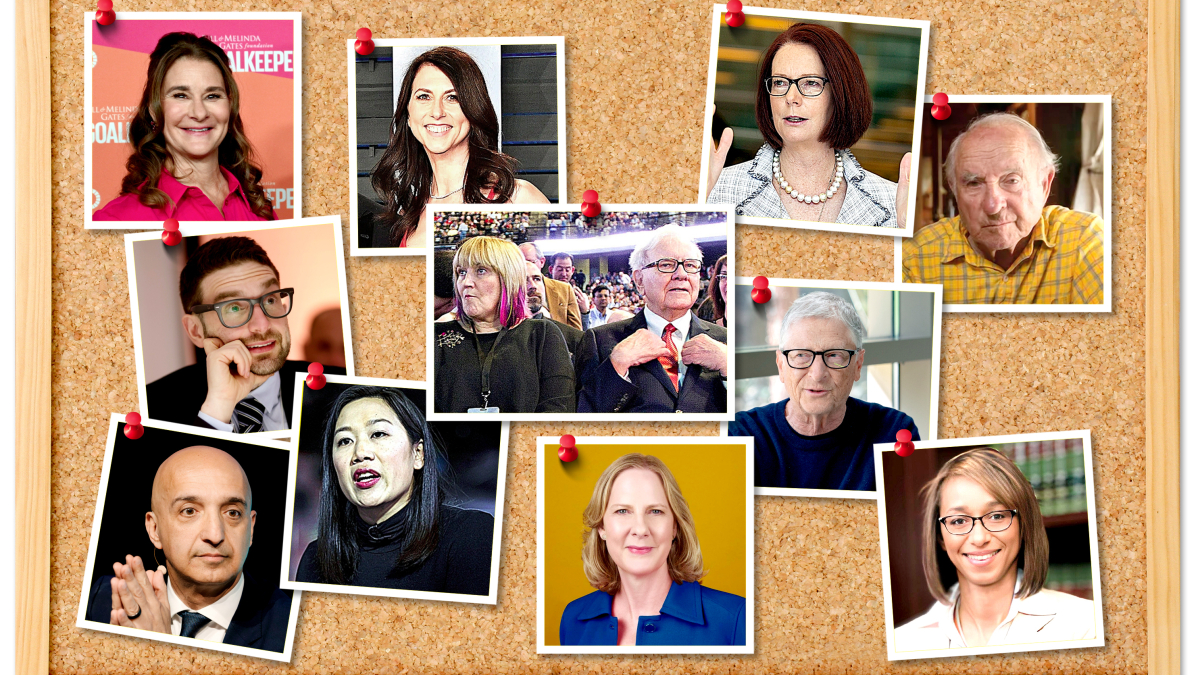
MacKenzie Scott received a 4% stake in Amazon, worth around $35 billion, in her divorce from Jeff Bezos. Since 2019 she has given $26.3 billion through her foundation, Yield Giving, which notably does not carry her surname, a trend other major donors have since followed.
The Ford Foundation, founded in 1936 by a son of Henry Ford, has had no ties to the Ford family since 1976 and sold its stake in the automaker more than 50 years ago. It now manages roughly $18 billion, earning more than $2 billion in net returns last year, of which $773 million funded its philanthropic work. Heather Gerken, former dean of Yale Law School, succeeded Darren Walker as president in November 2025.
Open Society Foundations, chaired by Alex Soros with Binaifer Nowrojee as executive president, has received more than $32 billion from founder George Soros since 1984 and reported about $1.2 billion in spending in 2024 on human rights, justice, transparency and civic participation. Its endowment is tied to Soros Fund Management's holdings in companies including Intel, Nvidia, Alphabet and Amazon.
Wellcome, led by former Australian prime minister Julia Gillard with John-Arne Rottingen as chief executive, funds long-term science and health research from a fund of roughly €47.8 billion, with only a third held in equities and the rest spread across private equity, hedge funds and real estate. The Chan Zuckerberg Initiative, co-founded by pediatrician Priscilla Chan and her husband Mark Zuckerberg, has committed more than $500 million through its Biohub platform to advance artificial intelligence in biology, with its assets largely tied to Meta alongside minority stakes in other Silicon Valley companies.
What happens next
The Gates Foundation is scheduled to cease operations in 2045 once its endowment, built largely from Bill Gates's personal fortune, has been fully spent.
Test yourself
How many Berkshire Hathaway shares is Warren Buffett distributing to his family foundations?
What stake does Lilly Endowment hold in Eli Lilly?
When is the Gates Foundation set to close?
Have your say
Should major philanthropic foundations be required to spend down their endowments within a set number of decades?