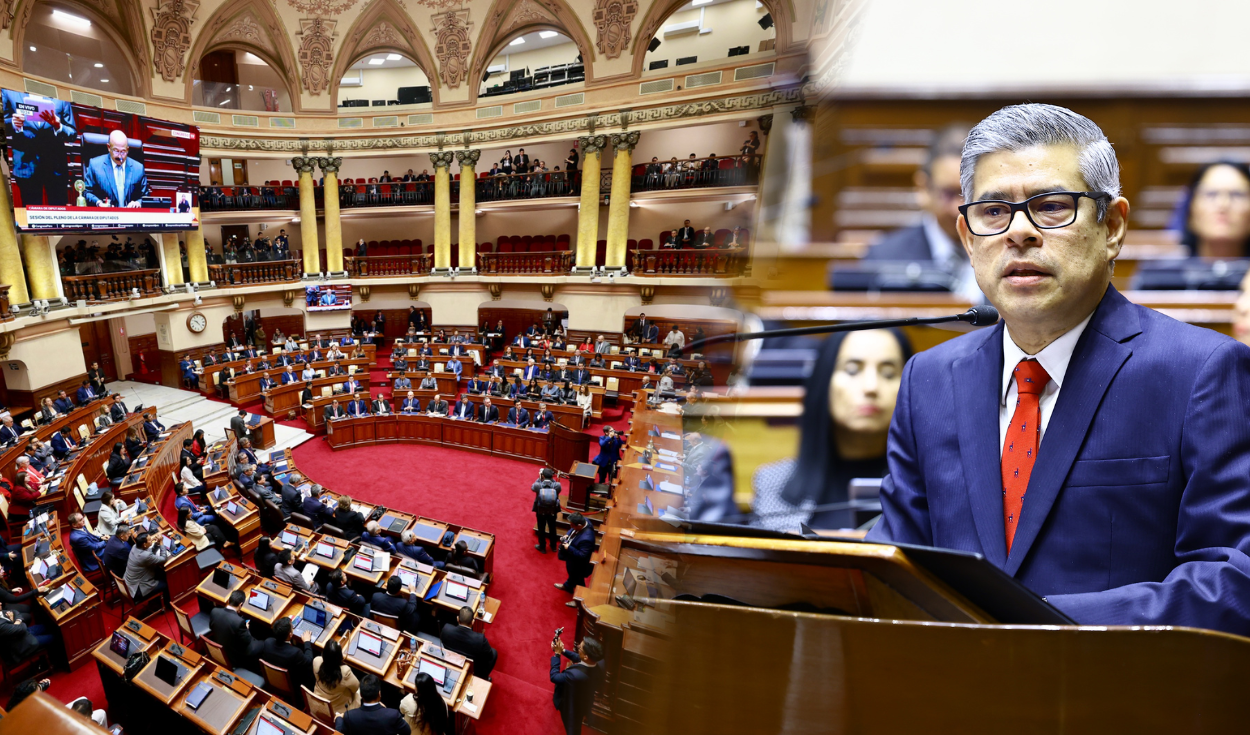
Peruvian lawmakers questioned Prime Minister Luis Galarreta and his cabinet over public safety and disaster response during a presentation to the Chamber of Deputies.
While members of the ruling Fuerza Popular party backed the prime minister with applause, deputies from opposition benches and the allied Renovación Popular party criticized the government for a lack of concrete results. Galarreta spoke for nearly an hour to outline an executive work plan centered on security, risk management, and democratic governance, but lawmakers across multiple factions demanded specific explanations regarding his proposals.
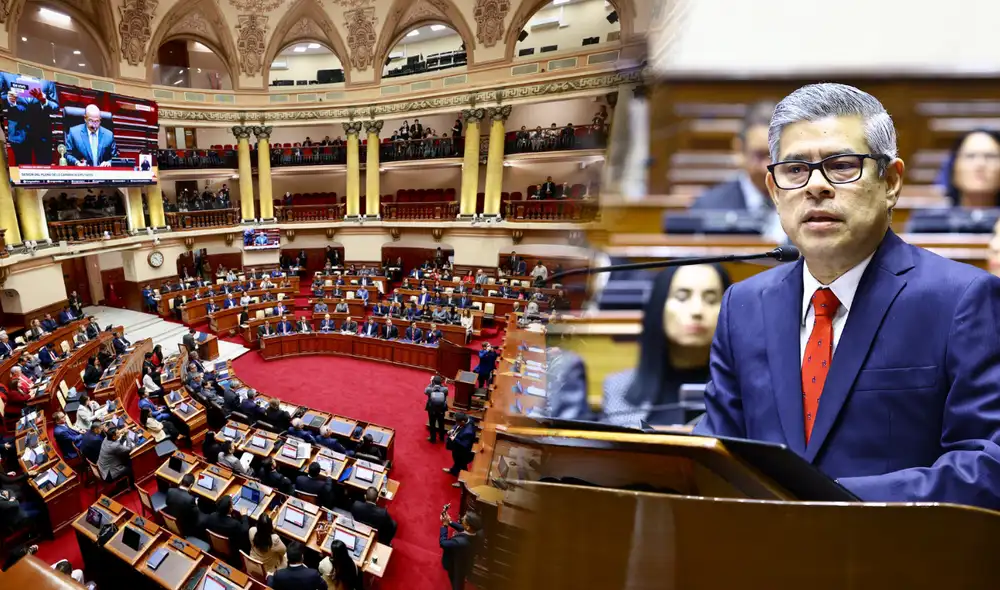
The presentation came as Congress evaluated the newly appointed administration under Keiko Fujimori, the conservative political leader whose party leads the government. Lawmakers focused much of their scrutiny on public security in South America's third-largest nation, where rising violent crime and extortion have dominated national political debate.
The most frequent demand concerned Interior Minister César Astudillo and his decision to keep General Óscar Arriola as commander general of the Peruvian National Police, the country's chief law enforcement agency. Deputies from diverse parliamentary groups, including Obras, Renovación Popular, and Ahora Nación, united in calling for Arriola's removal from office.
Police leadership and extortion complaints
Deputy Víctor Piñán of the Obras party welcomed the presence of the premier and the full cabinet in the chamber, but insisted on immediate answers to urgent public demands. Piñán highlighted the case of Mauro Garrizo Flores, a driver for the Vipusa transport company who was murdered after the firm refused to pay extortion fees to criminal gangs.
Citing statistics from the National Death Information System, known as SINADEF, Piñán stated that more than 100 people had been killed since the start of the Fujimori administration. He directly challenged Minister Astudillo for retaining the police chief, stating that the Peruvian public demands results and that he regretted Astudillo's continued ratification of General Arriola.
Criticism of the police commander extended to official government allies. Deputy Norma Yarrow of Renovación Popular asked the interior minister why he remained aligned with Arriola, noting that the general faced questioning from within the military and police forces themselves and urging Astudillo to reflect on his position.
Fellow Renovación Popular deputy Roxana Rocha raised concerns over an alleged leak of police intelligence and personal data. Rocha declared that it was inadmissible for information intended to combat crime to end up benefiting criminals, demanding immediate sanctions against those responsible.
From the Ahora Nación bench, Deputy Harvey Colchado offered a harsher assessment, asserting that the surge in criminal activity had a name in General Commander Óscar Arriola and a father in former Interior Minister Santiváñez Antúnez. Senator Ruth Luque of the same party called for structural police reform and reminded the assembly that the state maintains an outstanding debt to victims of the previous administration of former President Dina Boluarte. Luque added that while Fujimori speaks publicly of national reconciliation, she has failed to make a single meaningful gesture toward it.
El Niño prevention and labor concerns
Disaster preparedness and labor rights formed a second major line of questioning during the session. Deputy Indira Huilca of Ahora Nación criticized Fuerza Popular for presenting itself without self-criticism, arguing that the ruling party shares direct responsibility for the current state disorder due to its role in previous legislative alliances.
Huilca described the government's measures against the El Niño weather phenomenon, a periodic Pacific climate pattern that triggers severe coastal flooding across northern Peru, as entirely insufficient. She pointed out that Galarreta's address omitted vital infrastructure investments, including the Comprehensive Piura River Basin Project and planned drainage networks for the cities of Trujillo and Piura.
Huilca also warned against potential government attempts to loosen employment regulations, stating that her bench would not delegate legislative powers on labor policy or tolerate any reduction in workers' rights.
Concerns over flood defense infrastructure were echoed by Deputy Leo de Paz Lancho of Renovación Popular, who questioned why the executive's urban drainage initiative, known as the Drena Más plan, targeted highland regions such as Cusco while omitting the capital. De Paz Lancho asked whether the district of Villa El Salvador, the southern cone of the metropolis, and residents living on Lima's hillside settlements were included in the government's planning.
Opposition attacks on cabinet credentials
The sharpest political broadsides came from the left-wing Juntos por el Perú bench. Senator Jaime Quito described the ministerial team as a cabinet of recycled politicians linked to earlier administrations under former presidents Alan García and Ollanta Humala. Quito expressed regret that the vote of confidence mechanism had been removed, maintaining that the current cabinet brought nothing of value to the country while blaming sectors close to the executive for the downfall of former President Pedro Castillo.
Deputy Svieta Fernández of Juntos por el Perú challenged the prime minister's narrative that the administration had inherited a state in total disarray. She questioned who had left the country in such disorder, noting that those currently in power belonged to the political pact that sustained recent governments and oversaw the erosion of public institutions.
Her colleague, Deputy Graciela Chicana, argued that the government showed no regard for human rights and would fail to address either El Niño preparations or rising public insecurity.
Representatives from the Partido del Buen Gobierno also expressed deep skepticism regarding the cabinet's political direction. Deputy Fernando García questioned whether lawmakers could trust ministers who lacked the political stature required for the current crisis. Meanwhile, Deputy Jessica Benítez stated that while her bench remained open to dialogue and consensus building, cooperation would not mean relinquishing their duty to oversee executive actions and demand concrete results.