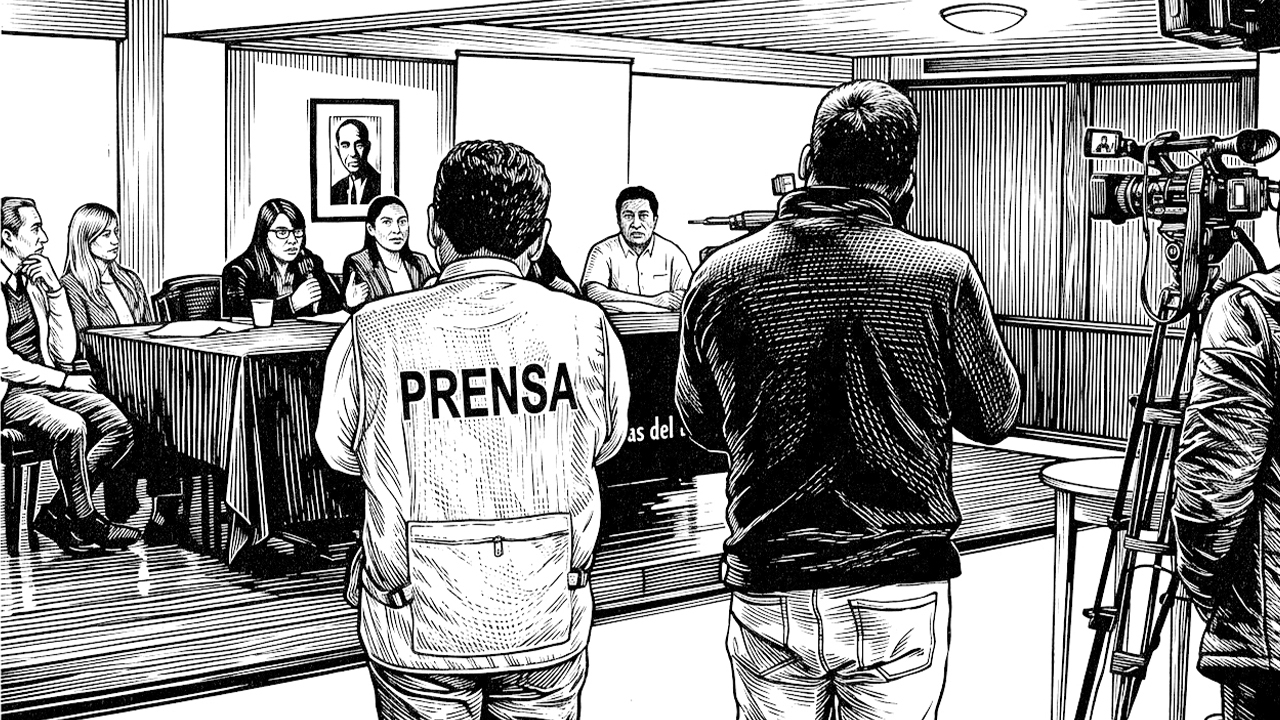
Peru's score in the OECD's PISA 2025 mathematics test fell to 382 points, nine points lower than in 2022 and 81 points below the organization's average, according to results published by the Organisation for Economic Co-operation and Development (OECD). Only 30 percent of Peruvian 15-year-olds reached the basic proficiency level in math.
The country's reading score dropped from 408 to 390, a decline the results describe as statistically significant. In science, Peru scored 406, two points lower than in 2022, placing it seventh in Latin America.
The Programme for International Student Assessment, known as PISA, is administered every three years by the OECD to measure how 15-year-old students in dozens of countries perform in reading, math and science. Its results are widely used by governments and researchers to compare education systems and track long-term trends.
An argument for education as freedom
The Indian economist Amartya Sen, who won the Nobel Memorial Prize in Economic Sciences in 1998, argued in his book "Development as Freedom" that education is a fundamental capability without which people cannot fully exercise their freedom or participate meaningfully in public life. Sen's broader thesis holds that development should be measured not only in income but in people's capacity to choose, decide and shape their own circumstances.
By that logic, a citizen who understands what they read and can reason with data is better equipped to demand accountability, resist manipulation and help build stronger democratic institutions.
A reform that lost momentum
Peru offers its own case study on what progress looks like. Between 2012 and 2018, it was the country that advanced the most in PISA evaluations worldwide, under a reform model that prioritized teacher training, merit-based entry into the teaching profession and performance measurement.
That process was led by Education Minister Jaime Saavedra, who now works at the World Bank, until Peru's Congress, then controlled by a Fujimorista majority, removed him from office through a censure vote in 2016. Peruvian education lost that momentum afterward, and the COVID-19 pandemic worsened a deterioration that was already underway.
A revolving door of ministers
Ministerial turnover has compounded the problem. Between 2016 and 2026, Peru had more than ten different education ministers, a pace that undermines the continuity, long-term vision and policy stability that a sustained education reform requires.
The newly published PISA 2025 results are the first such evaluation received by the current administration's education ministry. The country now awaits a concrete education agenda equal to a challenge that extends well beyond any single government's term.