

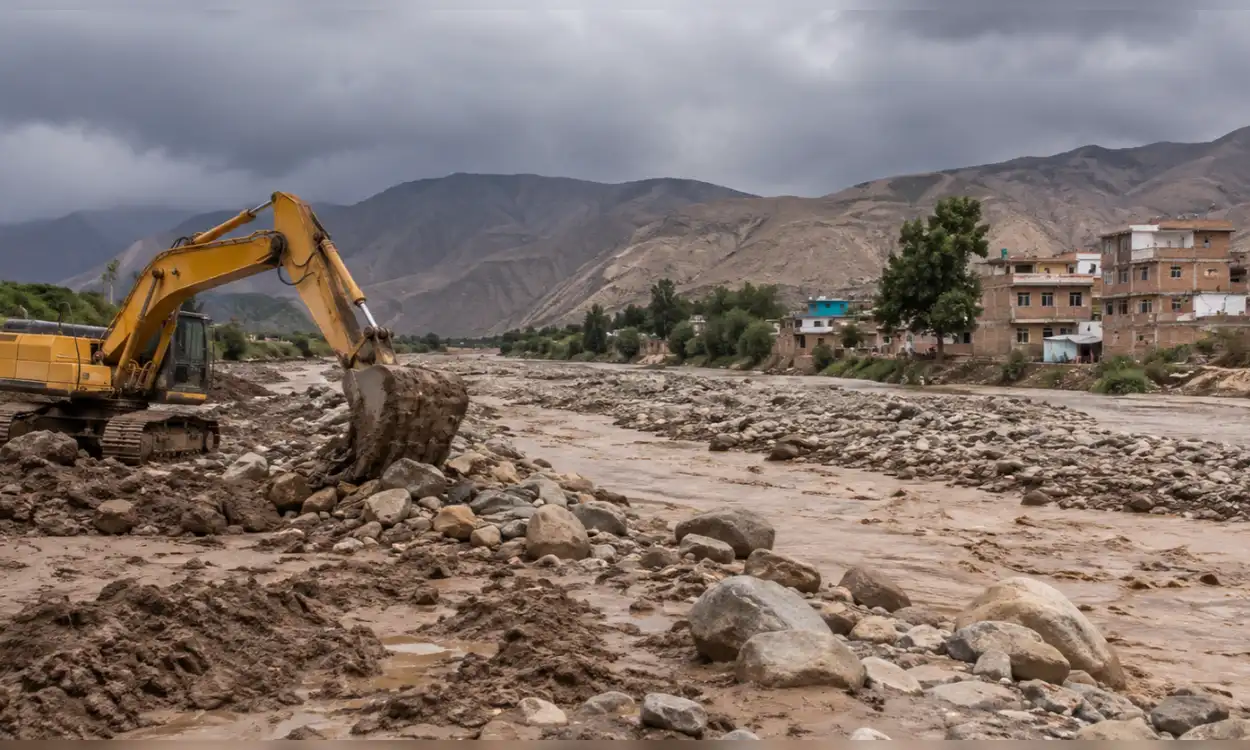
Peru's government had spent only S/425 million of the S/2,512 million transferred through 18 emergency decrees since August to respond to the El Niño phenomenon, as of November 10. That amounts to an execution rate of just 16.9%, according to tracking by the Observatorio de Os, Gestión Estratégica de Oportunidades Sostenibles.
The situation is more worrying in one of the priority actions ahead of the rainy season: clearing and removing sediment from rivers and streams. Although 87% of the funds for this work have already been certified, actual spending stands at only 8.9%, despite more than 50 days having passed since the transfers were made.
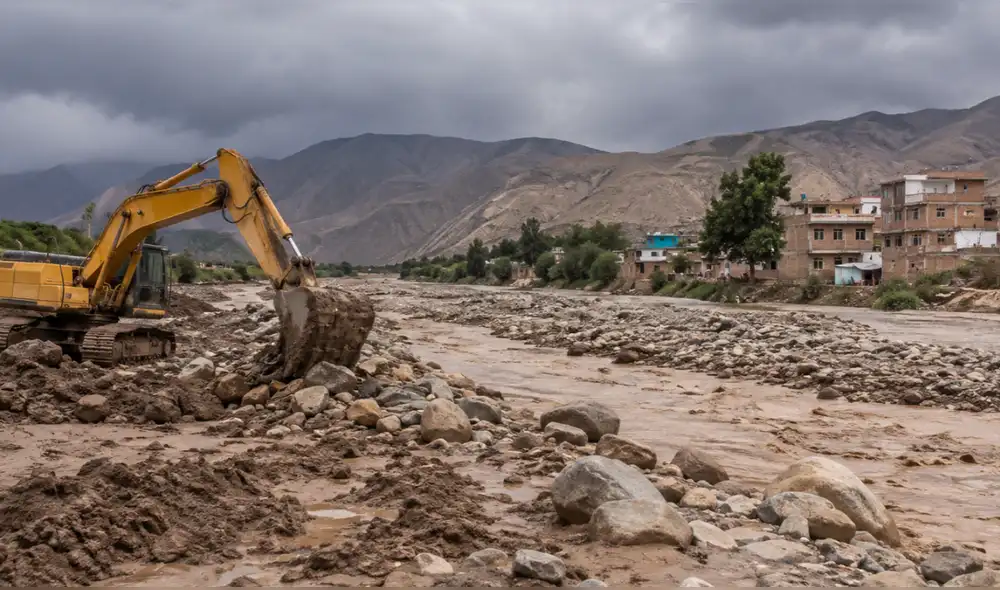
José Miguel Flórez, general manager of Os, told La República that Peru is facing a problem that has repeated itself since previous episodes of the climate phenomenon: large plans and budgets are announced, but the interventions are not carried out on time. He said the outlook is complicated because the preventive works that should have been finished after earlier emergencies were never completed.
El Niño is a cyclical warming of Pacific Ocean waters off Peru's coast that triggers heavy rainfall and flooding, particularly in the country's northern regions.
All decree funds went to national government
Flórez acknowledged that the current administration inherited an emergency that could not realistically be resolved in its first months in office. Even so, he said that circumstance does not remove its responsibility to move forward with the resources available. He said the little the government has managed to do, it is also failing to carry out, calling the pace of execution very low.
Os also found that the money transferred by decree went entirely to the national government. The Ministry of Agrarian Development and Irrigation received S/1,056.7 million, 42% of the total; the Defense Ministry received S/412.7 million; the Education Ministry received S/376.4 million; and the National Infrastructure Authority (ANIN) received S/375 million. Regional governments and municipalities received no money from these transfers.
Separately, Os identified S/583 million within the institutional budgets of entities at all three levels of government earmarked for El Niño activities, a different funding source from the decree transfers. That amount showed overall execution of 15.5%. The national government held 92% of those funds and had spent 11%; regional governments held 7% and had executed 60%; and municipalities, which held just 1%, had already used 96% of their allocation. Flórez highlighted that last figure given the usual criticism aimed at municipalities' spending capacity.
River cleaning work lags at 8.9%
The low execution rate matters most for work meant to reduce the risk of flooding and overflowing rivers. According to Os, spending on clearing riverbeds and streams has reached only 8.9%, even though 87% of the corresponding funds are already certified.
Flórez said the delay is especially concerning because this work needs to be finished before the rains intensify. He pointed to Peru's history of interventions that were planned and budgeted but never completed within the expected timeframes.
Os also flagged a gap between available resources and infrastructure needs. Its analysis identified 2,450 approved prevention investments in districts declared under emergency, together worth S/25,500 million, a figure that shows the scale of pending work compared with the funds transferred for the current emergency.
Supplementary credit mostly unrelated to El Niño
The problem is not limited to the budget distributed by decree. Law 32744 approved a supplementary credit of S/8,228 million that was presented within the context of the El Niño response. But when Os reviewed the law's annexes, it found that only S/589 million, or 7.2%, had a destination clearly linked to the climate event.
Another S/517 million could be related to the emergency but is mixed with other purposes and cannot be identified exclusively as El Niño funding. Meanwhile, S/6,474 million, close to 79% of the credit, was allocated to other ends, including funding for the Air Force, pensions and Lima's Metro Line 2. As a result, the full supplementary credit cannot be counted as prevention spending.
Six prevention works show little recent progress
Os also reviewed the financial execution of six prevention works in areas named by the government, including interventions in Cañete, Chincha and Pisco, along with work on the San Ildefonso and San Carlos streams and the Moche river. Together, these projects accumulated S/2,724 million in spending from 2017 through November 2026.
Of that total, only S/204 million was executed between August and November of this year, the period covered by the current administration, representing 7.5% of the accumulated spending. Most of that recent outlay, S/197 million, went to the San Ildefonso, San Carlos and Moche river works.
The analysis does not dispute that the government has opened or presented works that help reduce vulnerability to rainfall. It warns, however, that the projects it tracked were financed and carried out mainly under previous administrations, so they cannot be credited entirely to investment made in the last three months.
Past El Niño responses also fell short
The lack of timely execution is not new. Flórez recalled that after the 2017 coastal El Niño, the Reconstrucción con Cambios plan set aside S/25,655 million to address the damage and build infrastructure. Four years later, in 2021, only 37.4% of that budget had been executed, according to figures from the Comptroller General's Office.
He said the delays keep repeating even though Peru has gone through several climate emergencies and has had resources set aside to reduce their impact. As an example, he cited stormwater drainage systems planned for Trujillo, Chiclayo and Paita, announced after the 2017 emergency, which remain unfinished with their completion dates repeatedly pushed back.
The same difficulty showed up during the 2023 El Niño episode. In October of that year, the Comptroller's Office reported that 19.2% of the S/4,116 million set aside for the emergency had been executed. By the end of the year, the Ministry of Economy and Finance registered S/3,113 million in spending, though there is no official final percentage comparable to earlier figures because the reference budget changed during that period.
Flórez said Peru is again facing the consequences of not learning from those experiences. He warned that enormous plans with gaps worth billions are repeatedly drawn up, yet are not carried out.
He said responsibility for the lack of prevention does not fall solely on the government handling the current emergency, though he acknowledged that the administration must answer for the resources it received and for the actions it can still take.


