Up to four deputies from Peru's Juntos por el Perú party have decided to switch allegiance to Fuerza Popular, while two more are negotiating a move to Renovación Popular, according to sources cited by this newspaper.
The prospective defections would mark the second episode of its kind inside Peru's Congress in less than two months. The first came on the opening day of the chamber, when a member of the opposition bloc broke an agreement to make his vote public during the election of the Senate's Board of Directors.
Dispute inside Juntos por el Perú
Behind the latest moves lies an internal power struggle within Juntos por el Perú. Deputy Marlon Aguirre has accused the party's spokesperson, Ernesto Zunini, of bullying behavior within the bloc and of appointing himself to positions of responsibility without putting the decision to a vote among his colleagues.
Zunini has denied the accusations. The party's Regional Committee in Junín has since called for disciplinary action against Aguirre over his public criticism, a response this newspaper says confirms the internal conflict is real, and one the government is now moving to exploit.
What the numbers mean in Congress
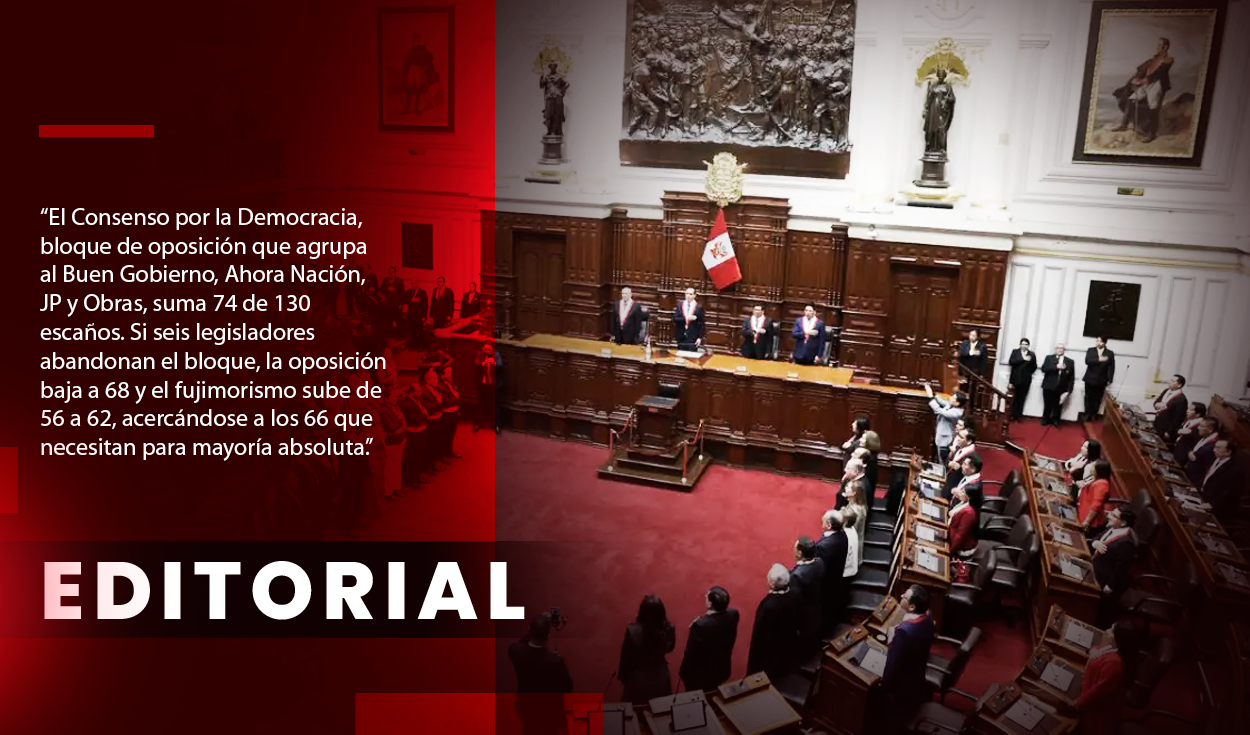
Juntos por el Perú holds 32 of the seats inside Consenso por la Democracia, the opposition bloc that also includes Buen Gobierno, Ahora Nación and Obras and which together control 74 of the 130 seats in the Chamber of Deputies.
If six legislators leave the bloc for the government's side, the opposition's total would fall to 68 seats. Fuerza Popular, the party founded by Keiko Fujimori, would rise from 56 to 62 seats, edging closer to the 66 needed for an absolute majority in the chamber.
A committee that matters
Juntos por el Perú currently chairs the Constitution Commission in the Chamber of Deputies, the committee through which the government's request for delegated powers, special authority that would let the executive legislate by decree on specific matters without a full congressional debate, must pass.
Weakening the party from within, this newspaper argues, weakens one of the few institutional checks currently standing in the way of the executive branch.
A question of mandate
Juntos por el Perú lost the presidential election on the strength of votes cast abroad. Voters who backed the party did so, in part, expecting it to act as a counterweight to Fuerza Popular and to what the return of fujimorismo to the executive represents for many Peruvians.
This newspaper argues that any deputy who crosses over to the governing party, whatever their political reasoning, betrays that mandate in the same way as a lawmaker who conceals their vote during a plenary session.
It calls on the parties within Consenso por la Democracia to resolve their internal disputes with the same democratic standards they demand of others, and it warns deputies weighing a switch that their voters are watching.