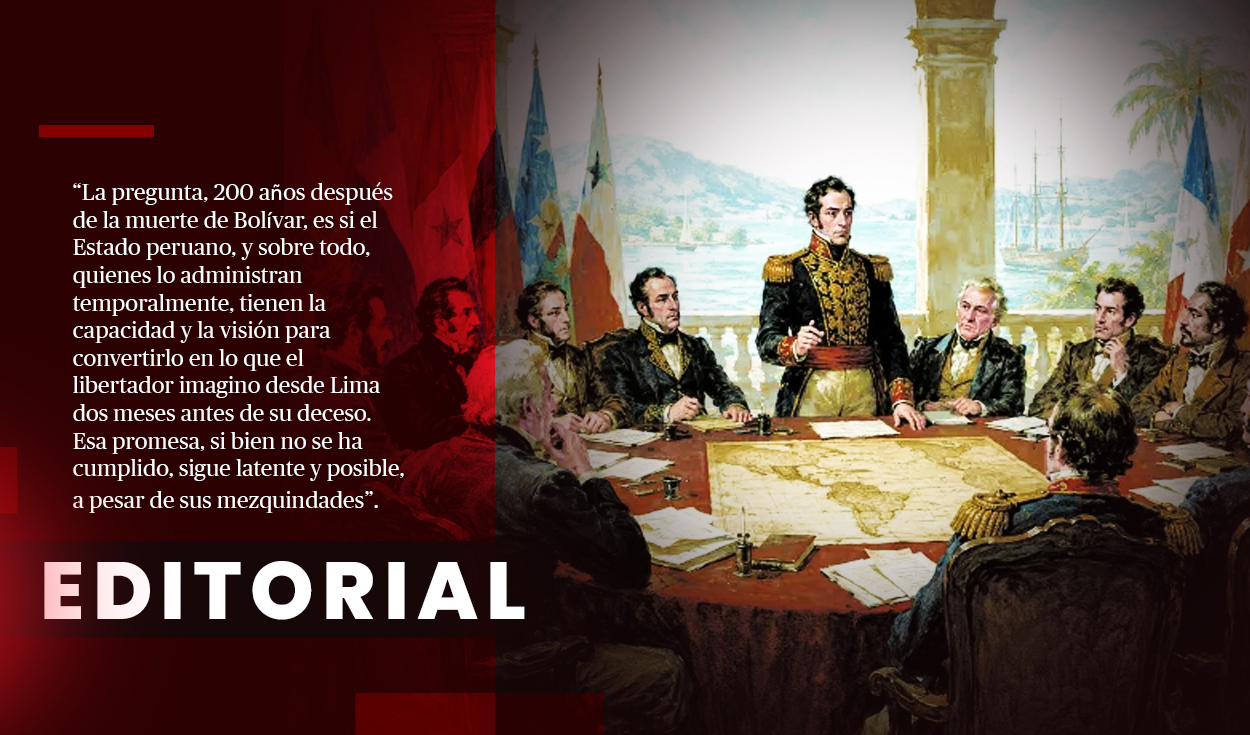
Simón Bolívar convened the Amphictyonic Congress from Lima on December 7, 1824, two days before the Battle of Ayacucho, the battle that sealed South America's independence from Spain. Bolívar, a Venezuelan-born general known as the Liberator, had led the campaigns that ended Spanish colonial rule across Venezuela, Colombia, Ecuador, Peru and Bolivia.
He had set out that conviction nine years earlier, in the 1815 Letter from Jamaica, written while he was in exile in Kingston. In it he said he wished, more than anyone, to see America shaped into the greatest nation in the world, not for its size or riches but for its liberty and glory.
The gathering, remembered as the Congress of Panama and eventually held in 1826, aimed to bind the newly independent Spanish American republics into a single confederation able to stand up to outside powers. Lima, at the time, was both the geographic and symbolic centre of that project, the capital from which Bolívar imagined the confederation taking shape. Historians often point to the Congress of Panama as an early forerunner of today's efforts at Latin American regional integration.
The Congress collapsed under the local ambitions of the region's national oligarchies. Bolívar died in Santa Marta, Colombia, in 1830, alone and disillusioned, convinced that his life's work had amounted to nothing more than ploughing the sea.
Two Centuries of Missed Opportunity
Two hundred years later, Peru still holds the same chance at regional integration that the failed Congress once represented. Yet the same small-mindedness that blocked it then continues to hold back the development of its people now.
Across that history, narrow economic interests have repeatedly diverted the momentum that Peru's varied natural wealth should have generated. Political leaders have taken advantage of the same circumstances, keeping the Peruvian state in a condition of chronic precariousness while the resources that could help consolidate it are depleted instead.
The clearest long-term result is that Peru has spent two centuries holding the most strategically valuable geographic position in South America, and has done the least of any country in the region to use it to steer its own path toward development.
A Resilient Citizenry
Even so, without excusing the opportunists who have profited from that wealth, it is worth recognising the resilience of citizens across the country who have kept alive both the spirit and the material life of a nation that remains, without question, vigorous.
That refusal to give up is what inspired the founding of this newspaper, and what keeps it committed to building, at last, what it has long called a superior republic.
Almost 200 years after Bolívar's death, the question is whether the Peruvian state, and above all those who administer it, have the capacity and the vision to turn the country into what the Liberator imagined from Lima two months before his death. That promise remains unfulfilled, but it stays alive and possible, despite the pettiness that still surrounds it.