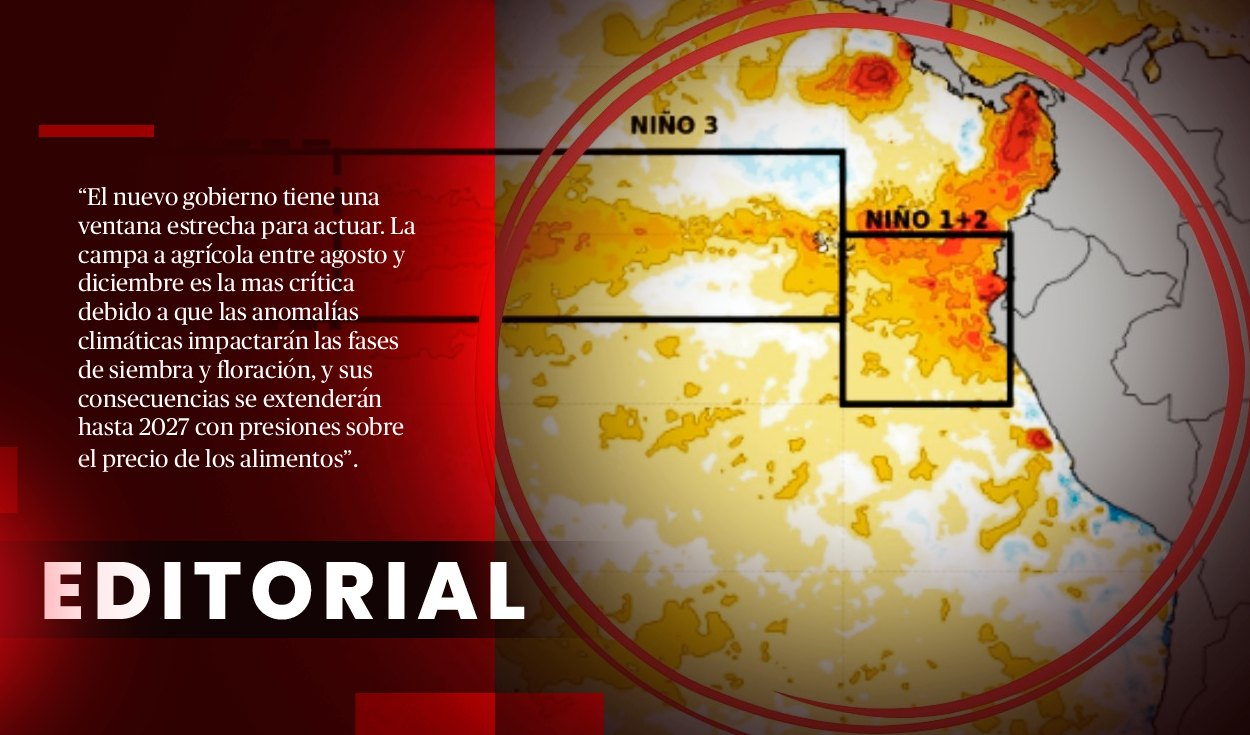
Peru is confronting two simultaneous El Niño events at a moment when its prevention infrastructure remains insufficient for the scale of the threat.
El Niño Costero is already active offshore, carrying a 48% probability of reaching strong magnitude before September. NOAA projects the El Niño Global at an 81% probability of very strong intensity from October through December.
Agricultural damage is already visible. Immature avocados are falling on the northern coast, which accounts for 50% of national production. Mango export volumes dropped 23% due to phytosanitary problems linked to heavy rains earlier this year. Peru's central bank has warned that thermal anomalies will reduce crop flowering mid-year, threatening October-to-December shipments to the United States, China, and Europe.
Large agro-exporters can adapt by adjusting planting schedules; subsistence producers, who make up 77% of the country's family farmers, cannot. For them, a lost harvest means a full season without income.
President Keiko Fujimori pledged in her inaugural address a contingency plan designed to break with the pattern of late response. The August-to-December growing season is the most critical window, and delays, the editorial argues, would push consequences into 2027 through food price pressures.