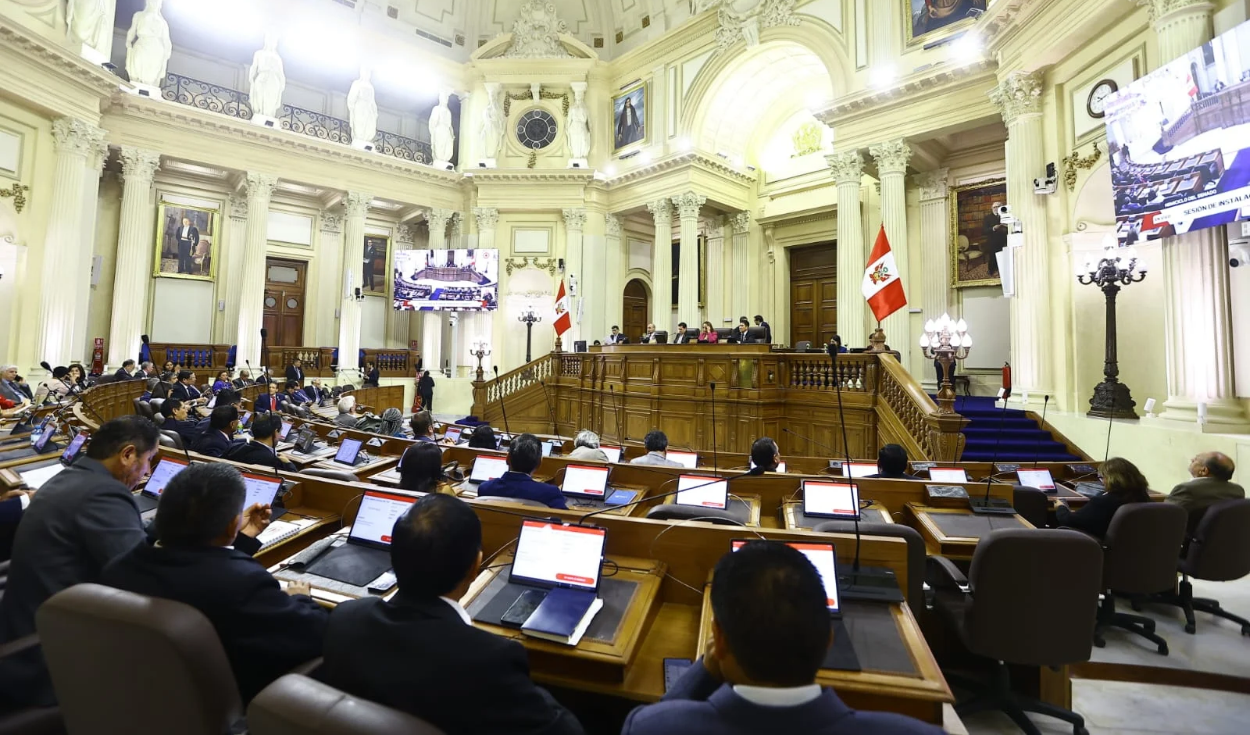
The Congress of the Republic of Peru has approved delegated legislative powers for the executive branch after Fuerza Popular secured decisive votes from opposition parties.
Lawmakers from opposition caucuses including Ahora Nación, the Partido del Buen Gobierno, and the Partido Cívico Obras voted in favor at different stages. In the first major episode of the new Congress, the governing bloc prevailed because political rivals backed the bill depending on each stage.
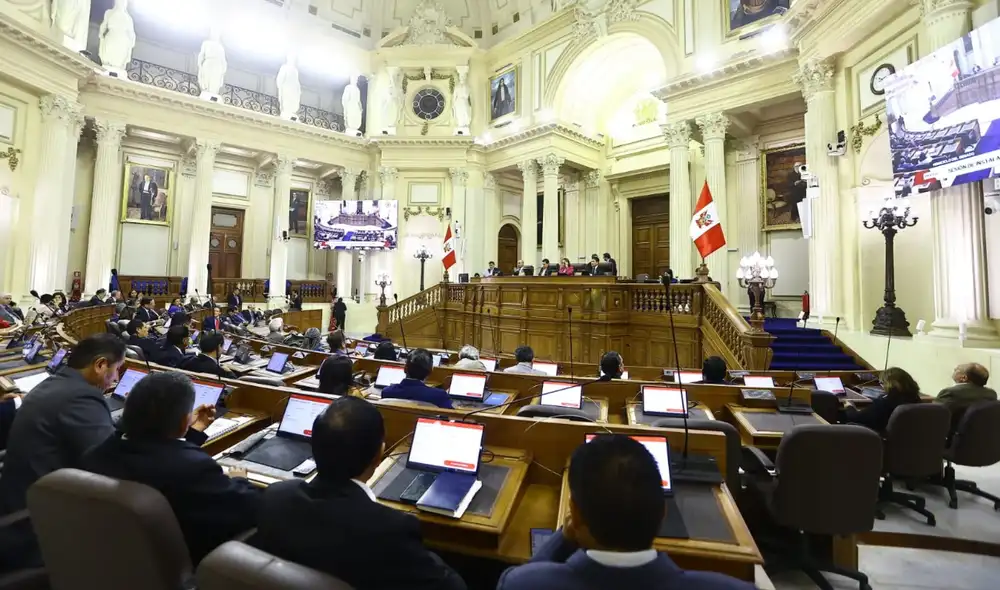
Noam López, a political scientist and researcher at the Pontifical Catholic University of Peru (Pontificia Universidad Católica del Perú, or PUCP), said Fujimorism has a parliamentary base but still must negotiate to reach a majority. In the Senate, Fuerza Popular and Renovación Popular totaled 35 votes when they needed 31, making the support of the Partido Cívico Obras and the Partido del Buen Gobierno decisive.
Under Peruvian constitutional practice, delegated legislative powers allow Congress to authorize the executive branch to legislate by decree on specified subjects. The vote also tested Peru's bicameral legislature, which is divided into a Chamber of Deputies and a Senate.
Balance of power between the two chambers
The approval process previews the dynamic that could shape Congress in the coming months. In the Chamber of Deputies, the opposition holds the majority: 74 lawmakers belong to the so-called democratic coalition, compared with 56 from Renovación Popular and Fuerza Popular.
In the Senate, the final decision-making body for every bill, the governing bloc holds a favorable position. Counting the Partido Cívico Obras, the Partido del Buen Gobierno, Ahora Nación, and Juntos por el Perú as a single group, the chamber is split evenly at 30 to 30.
In the event of a tie, the deciding vote belongs to the presiding board, the Mesa Directiva, currently headed by senior Fuerza Popular leader Miguel Ángel Torres.
López said the opposition has shown a limited capacity for coordination and is not necessarily a coalition. Sharing a critical stance toward the government, he noted, does not mean sharing a common agenda, the same interests, or the same programmatic priorities.
Opposition shifts across each voting stage
Support was uneven across the process, with Juntos por el Perú standing as the only caucus to reject the government's request at every stage. In the Constitutional Committee of the Chamber of Deputies, Ahora Nación, the Partido del Buen Gobierno, the Partido Cívico Obras, and Renovación Popular first agreed on a joint substitute text cutting the requested subjects from 66 to 27.
On the floor of the Chamber of Deputies, the Partido del Buen Gobierno distanced itself from broad support. Facing doubts over whether the Senate would add new subjects, the lawmakers led by Jorge Nieto abstained.
When that expansion occurred in the Senate, Nieto's caucus maintained its abstention, while Ahora Nación joined Juntos por el Perú in voting against the bill. The backing of the Partido Cívico Obras proved decisive in shifting the outcome.
López said three factors must be considered: the content of the proposals, parliamentary negotiations, and incentives. Because the original proposal was cut in the Chamber of Deputies and modified in the Senate, lawmakers did not vote on the exact same text at every stage, and backing a limited proposal differed from granting broad executive powers.
Recent negotiations showed how political actors weigh their interests under varying pressures and incentives. López noted that every caucus can lean toward what suits it, whether to introduce a proposal or make a political calculation. Pressure for a swift response to public insecurity and the climate crisis, he said, can make negotiating a proposal more politically convenient than rejecting it.
Fuerza Popular negotiations and variable majorities
Fuerza Popular, Peru's main Fujimorist party, also known as the orange party, had to adjust its strategy as well. Under pressure from the opposition majority in the early stages, the governing caucus failed to pass its initial proposal covering economic, labor, and state-administration reforms.
López said Fujimorism emerged as the main organizer of the majority that passed the powers, but its performance also showed limits. Having accepted a much narrower text in the Chamber of Deputies before expanding it in the Senate, the party showed that its political capacity depends on managing the agenda and striking deals.
Even while keeping caucus discipline, Fuerza Popular will continue to rely on negotiation. According to the Peruvian daily La República, senior figures José Chlimper and Luis Galarreta led the talks alongside the party's parliamentary spokespeople.
López said this first episode suggests Congress could see variable majorities built around specific bills. The divide between the governing bloc and the opposition will not suffice to explain outcomes, he said, as small caucuses can swing votes, build majorities, or supply a quorum, though it remains to be seen if such agreements are stable.
Senate additions and institutional conflict
Although the legislative powers have cleared Congress, relations between the two chambers have been marked by controversy over the new subjects added in the Senate. Much of the opposition, including Ahora Nación, Juntos por el Perú, and the Partido del Buen Gobierno, questioned the change, which sets a precedent for the Senate to add subjects beyond those approved by the Chamber of Deputies.
López called this one of the most important institutional problems to arise, noting that the Senate added seven points without the bill returning to the Chamber of Deputies. He said debate over how far the Senate can modify bills will shape inter-cameral dynamics.
Without precise rules on this procedure, López warned, the dispute could trigger an institutional conflict within the legislature. He said a failure by Congress to reach institutional agreement would bring public disapproval and further discredit an institution with an already fragile image in Peru's democracy.