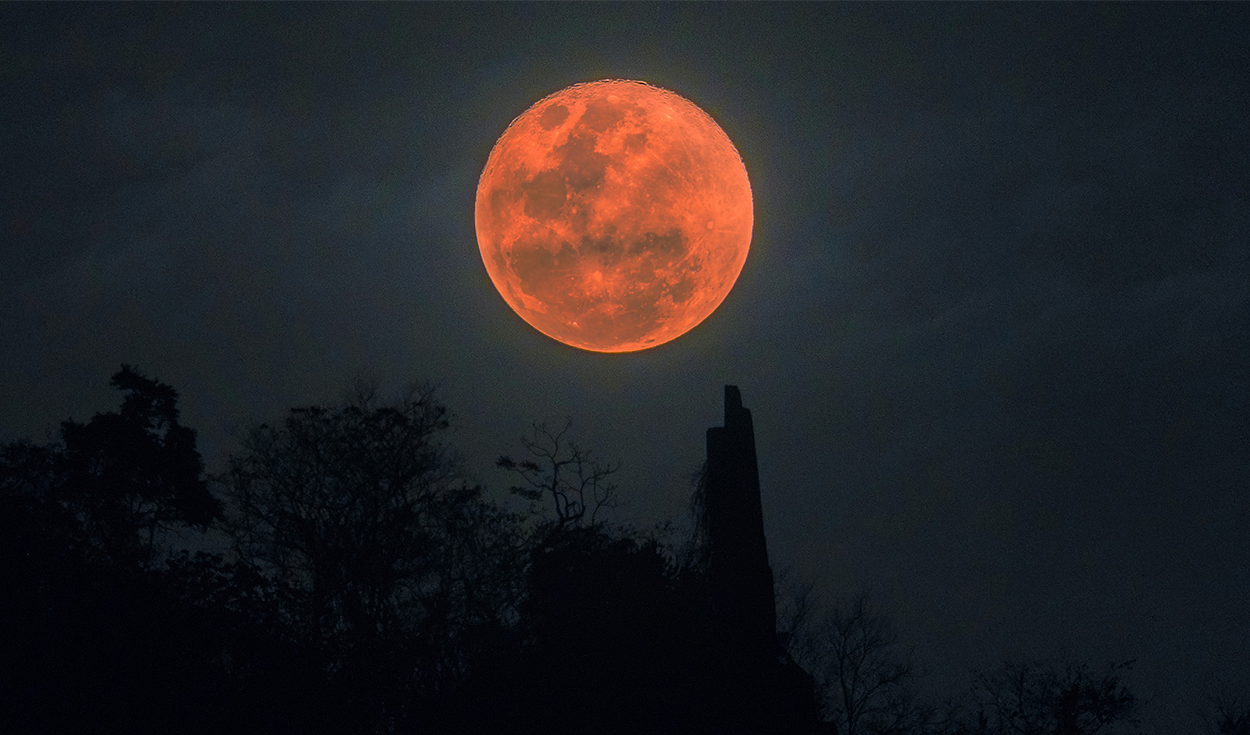
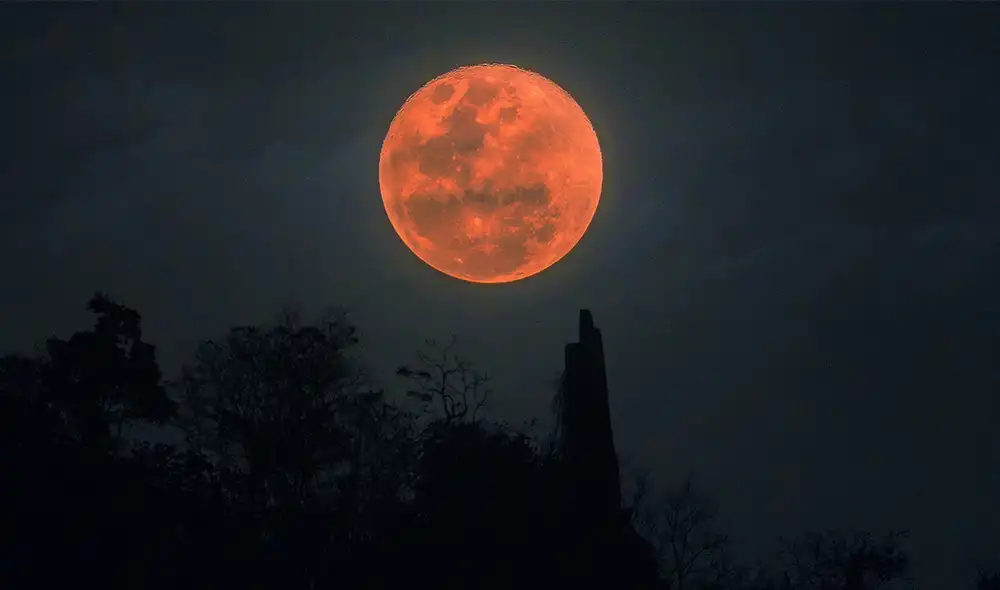
A partial lunar eclipse will darken the night sky on Thursday, August 27, 2026, covering 96.2 percent of the Moon as Earth passes directly between the Sun and its natural satellite. Peak obscuration will occur at 11:13 p.m. local time in Peru and Colombia, turning the lunar surface a deep copper red across large parts of the Western Hemisphere.
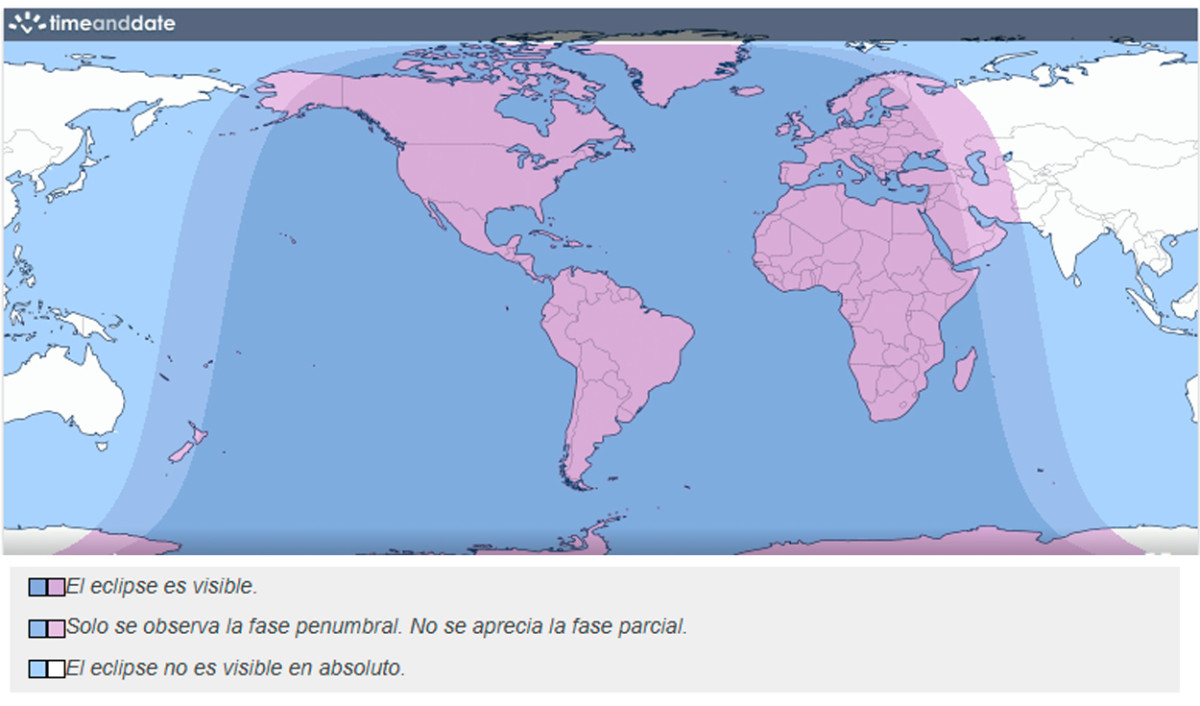
The event is the deepest partial eclipse of its kind scheduled to take place before December 31, 2028. Skywatchers across North America, South America, Europe, Africa, and Antarctica will be able to observe at least part of the phenomenon as Earth casts its shadow into space.
Although the astronomical maximum occurs at the exact same moment worldwide, at 4:13 a.m. Coordinated Universal Time (UTC) on Friday, August 28, local observation times will vary depending on timezone. In the United States, peak viewing on Thursday, August 27, will fall at 9:13 p.m. Pacific Time, 10:13 p.m. Mountain Time, 11:13 p.m. Central Time, and 12:13 a.m. Eastern Time on Friday morning.
In Mexico, the maximum alignment will take place at 10:13 p.m. local time in Mexico City and Guadalajara, and at 11:13 p.m. in Monterrey. Observers in Spain will see the maximum at 6:13 a.m. on Friday, August 28, shortly before sunrise as the Moon sets along the horizon.
Eclipse Peak Times and Regional Visibility
The penumbral phase, when the Moon first enters the faint outer shadow of Earth, will begin during the evening of Thursday, August 27, for observers across South America. Starting times for the penumbral stage include:
- Peru, Colombia, and Ecuador: 8:23 p.m.
- Bolivia and Venezuela: 9:23 p.m.
- Argentina, Chile, Brazil, Uruguay, and Paraguay: 10:23 p.m.
In Peru, the complete progression begins with the penumbral entrance at 8:23 p.m., followed by the partial entrance into the dark umbral shadow at 9:34 p.m. The peak of 96.2 percent coverage arrives at 11:13 p.m., after which the Moon starts leaving the umbra at 12:52 a.m. on Friday, August 28, before fully exiting the umbra at 2:03 a.m.
In Buenos Aires, Argentina, local timing differs slightly across the city. The penumbral start occurs at 10:24 p.m. on Thursday, with the umbral shadow taking a visible bite out of the Moon at 11:33 p.m. Peak coverage will reach roughly 93 percent at 1:13 a.m. on Friday morning. The Moon leaves the umbral shadow at 2:52 a.m. and the penumbral phase ends completely at 4:01 a.m.
Full viewing of every stage will be possible across North America, including eastern, central, and southern regions of the United States, Mexico, and Canada. The entire eclipse will also be visible throughout Central America, including Guatemala, Belize, Honduras, El Salvador, Nicaragua, Costa Rica, and Panama, as well as South American nations including Guyana, Suriname, Venezuela, Colombia, Ecuador, Peru, Bolivia, Paraguay, Chile, Argentina, Uruguay, and Brazil.
Atmospheric Physics of the Blood Moon
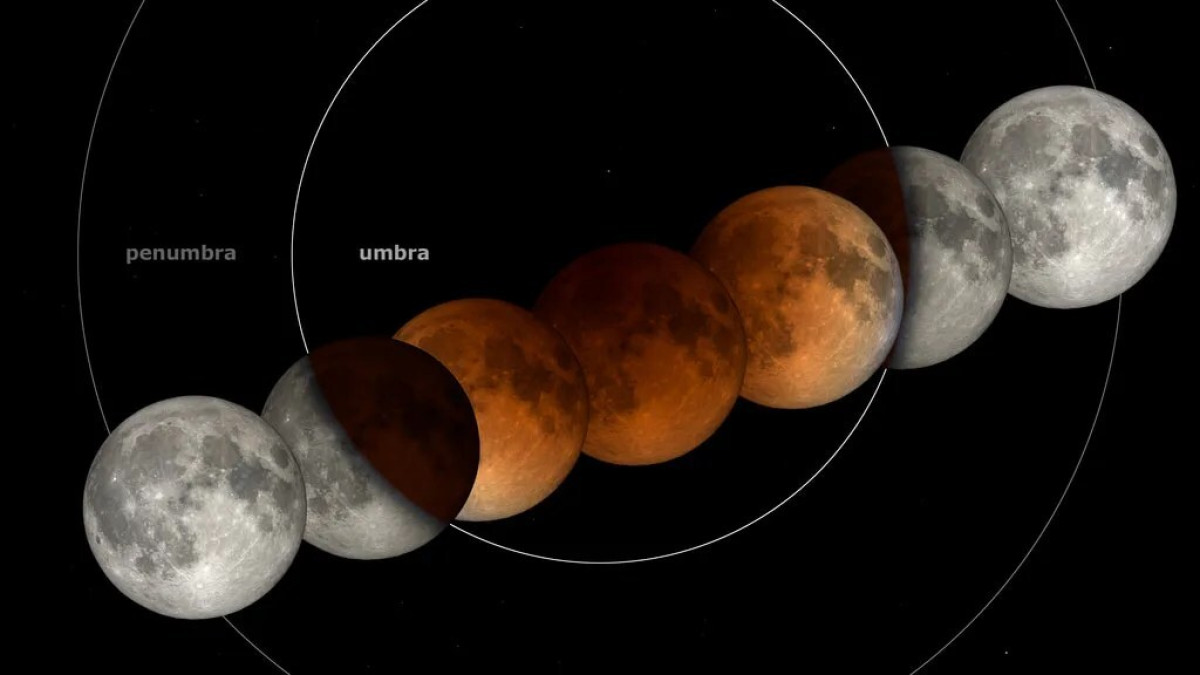
During a partial eclipse, a distinct portion of the Moon enters the umbra, the darkest inner core of Earth's shadow, creating a sharp curved bite across the lunar disk. By contrast, a penumbral eclipse occurs when the Moon passes only through the outer penumbra, resulting in a subtle dimming that is difficult to detect with the unassisted eye.
The characteristic reddish or copper tone of the Blood Moon is produced by Earth's atmosphere. When Earth blocks direct sunlight, some light rays travel through the atmospheric layer surrounding the planet. Short blue light wavelengths scatter away, while longer red light wavelengths bend and refract toward the lunar surface.
The exact hue and brightness of the Moon depend on atmospheric conditions at the time. Airborne dust, volcanic ash, and cloud particles can darken the lunar surface or alter the red tone. NASA, the United States space agency, routinely tracks how atmospheric composition affects lunar appearance during optical alignments.
Orbital Dynamics and the Sturgeon Moon
Eclipses regularly occur in pairs during periods known as eclipse seasons. These seasons take place when the Moon reaches an orbital node, one of two invisible intersection points where the tilted orbit of the Moon crosses the ecliptic, the horizontal plane of Earth's orbit around the Sun.
When alignment occurs at an orbital node, a solar eclipse during a new moon is accompanied roughly two weeks earlier or later by a lunar eclipse at full moon. An eclipse season can feature either a solar eclipse followed by a lunar eclipse or a lunar eclipse preceding a solar event.
The August full moon is traditionally designated as the Sturgeon Moon. According to the Old Farmer's Almanac, historical American Indian tribes named the monthly moon after the giant sturgeon fish of the Great Lakes and Lake Champlain, which were most easily caught during late summer and served as a vital food supply.
Observation Tips and Live Coverage
Unlike solar eclipses, observing a lunar eclipse requires no protective eyewear or specialized solar filters. It is completely safe to view the Moon directly with the naked eye throughout the entire duration of the event.
While special optical equipment is not mandatory, using binoculars or a telescope allows observers to track the fine movement of the shadow and view surface color changes in greater detail. Observers should seek out viewing locations with low light pollution and an unobstructed view of the western horizon as the Moon moves lower toward dawn.
Weather conditions will play a key role in visibility. Current meteorological forecasts indicate that western areas are most likely to experience clear skies, whereas central and eastern zones face higher chances of cloud cover.
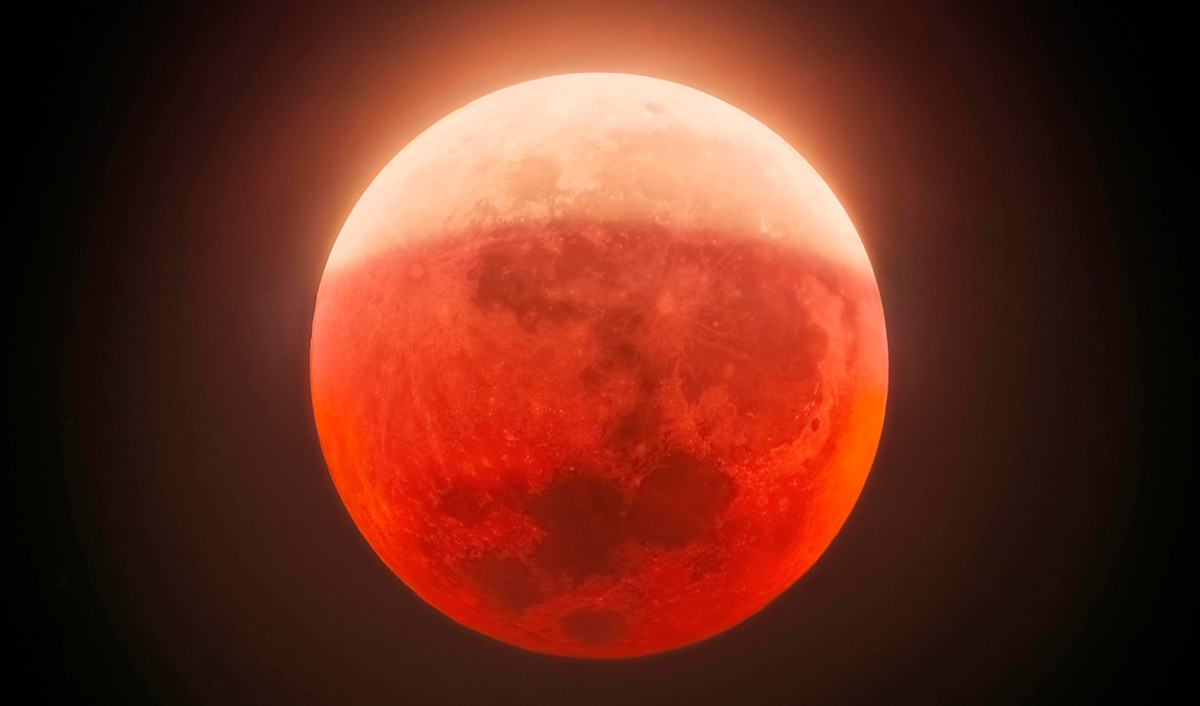
For those unable to watch the eclipse outdoors, the astronomical tracking platform Time and Date will broadcast a live stream on its YouTube channel. The broadcast will display real-time video of the Moon as Earth's shadow moves across its surface, documenting the transformation into a copper reddish disc.