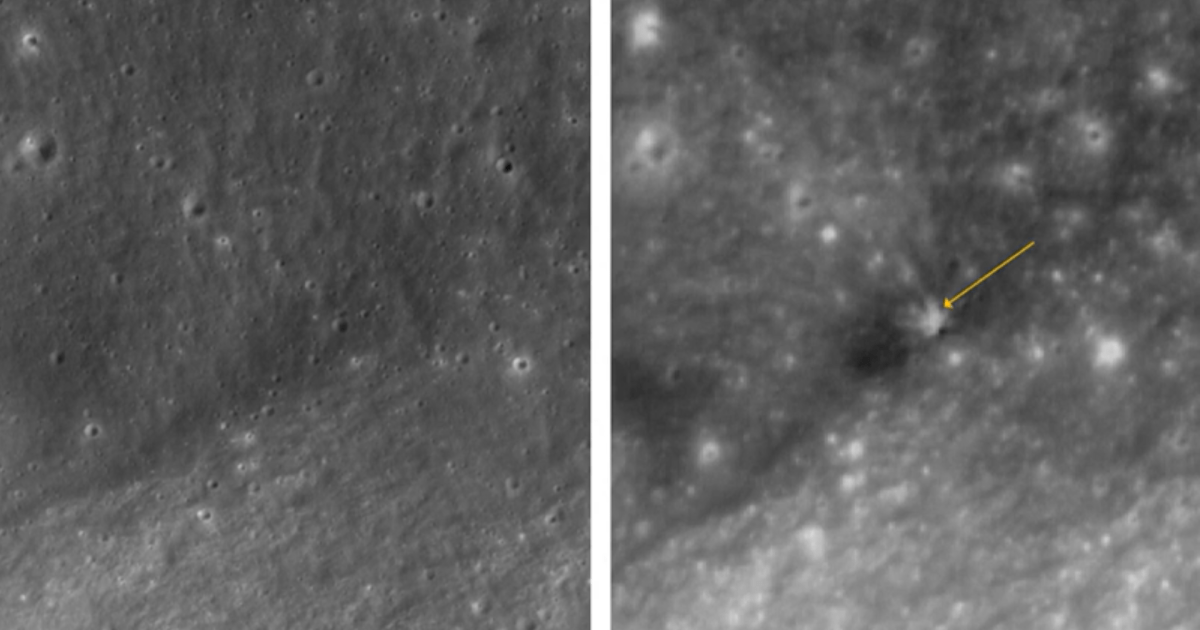
A four-ton SpaceX rocket fragment floating in space since January 2025 crashed into the Moon at 8,690 kilometres per hour on Wednesday morning. Images released on Thursday by NASA and South Korea's space agency show how the high-speed collision altered the lunar surface by overlaying current pictures with previous records of the Moon.
The space debris is the second stage of a Falcon 9 rocket launched by SpaceX to send a lunar lander for Firefly Aerospace toward the Moon. Roughly the size of a space shuttle, the 4,000-kilogram fragment had been floating in the vacuum of space since its launch before slamming into the lunar soil.
Impact site and orbit tracking
The collision of the heavy rocket body was expected early on Wednesday, August 5, as the vehicle travelled at 8,690 km/h. SpaceX stated that the impact was accidental, with the fragment striking the Einstein crater on the western limb of the Moon, a remote region that is generally difficult to view from Earth.

At the moment of collision, none of the few active spacecraft orbiting the Moon were positioned to record the impact taking place. The booster fragment now joins a long list of meteoroids, defunct spacecraft and other space debris that have collided with the lunar surface over centuries.
Commercial lunar missions and space debris
Space Exploration Technologies Corp, known as SpaceX, is an American aerospace manufacturer that operates the Falcon 9 launch vehicle, a two-stage rocket designed to transport satellites and spacecraft into orbit. Firefly Aerospace is a private Texas-based commercial space company that develops small launch vehicles and lunar landers for scientific and commercial payloads.
The tracking of discarded rocket stages after payload separation is a key part of space exploration monitoring. The National Aeronautics and Space Administration (NASA) and South Korea's space agency, the Korea AeroSpace Administration (KASA), maintain orbiting probes around the Moon to study the lunar environment and track surface changes over time.