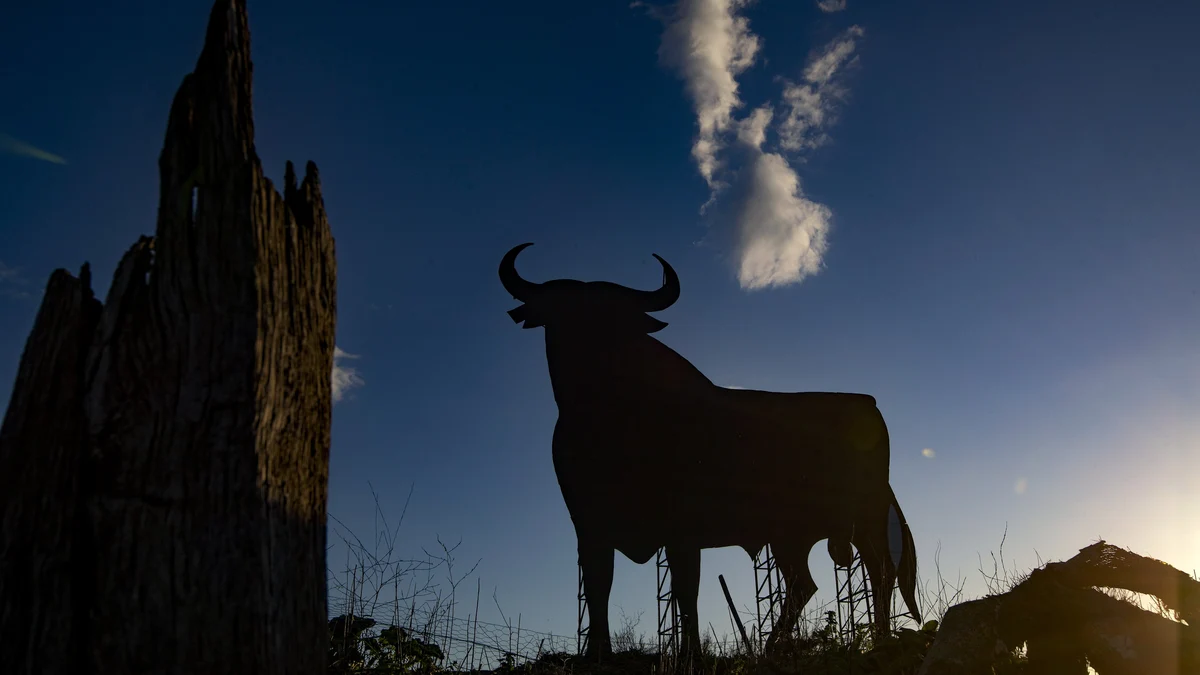
The Osborne bull icon has completed seventy years representing Spain as a nationally recognized cultural symbol, having expanded beyond its origins as a roadside advertisement to become an international emblem of Spanish identity.
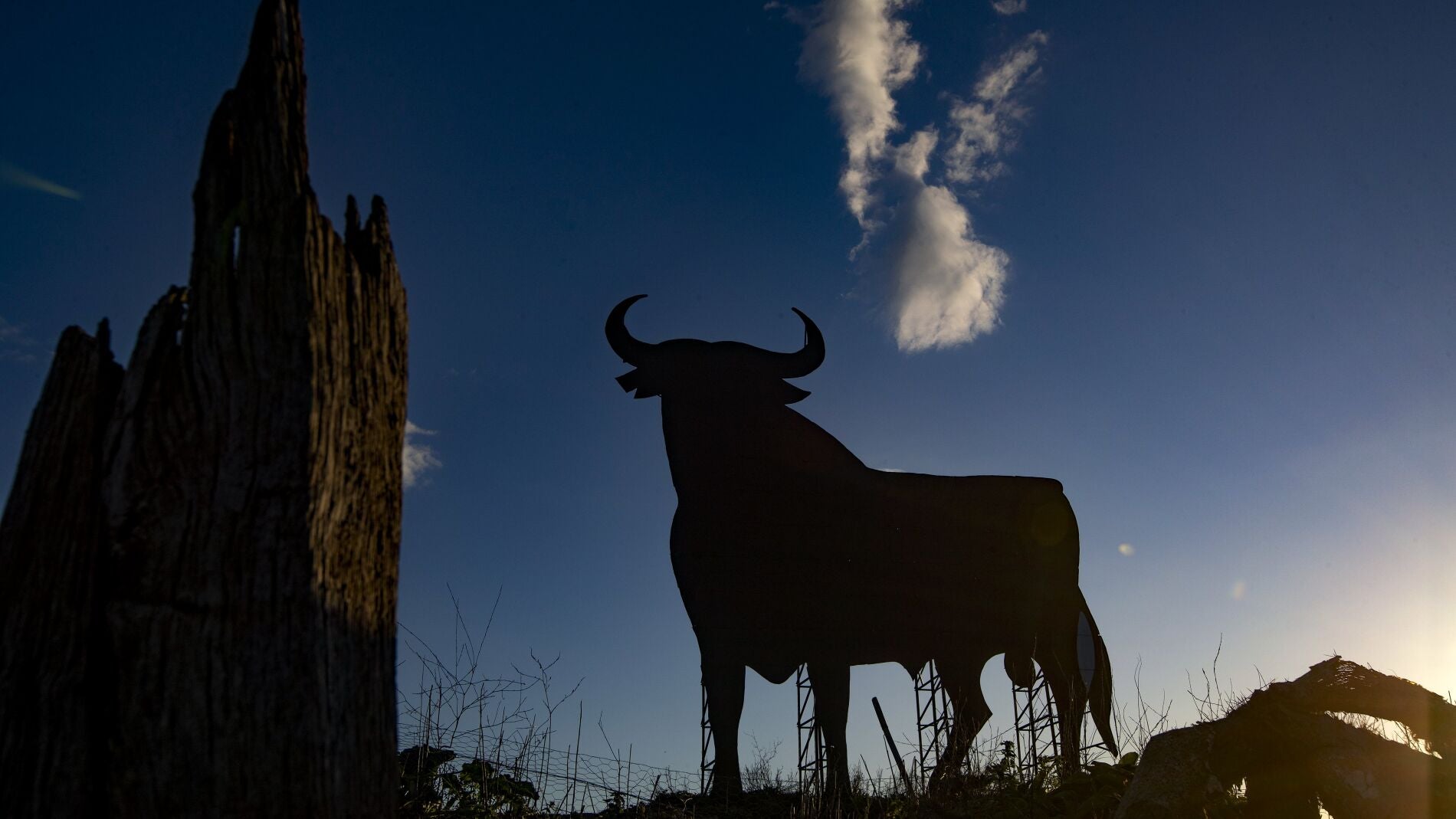
Only ninety-two of the fourteen-metre black metal silhouettes remain along Spanish highways today, but their cultural presence extends across everyday items including stickers, postcards and keychains. The silhouette has inspired artists across mediums, appearing on a guitar owned by rocker Andrés Calamaro, on a shirt worn in the 2003 Cannes Palme d'Or winning film Elephant by director Gus Van Sant, in the movie Jamón, jamón by director Bigas Luna, and in music by the duo Estopa.
Borja Cardelús, the general director of the Fundación del Toro de Lidia, stated that while famous bulls exist globally, including the Wall Street bull, the Chicago Bulls logo, and the Lamborghini and Red Bull trademarks, only the Osborne silhouette transcended its commercial origins to embody national identity. Cardelús noted that the geography of Spain was described by the ancient geographer Strabo as a bull's hide more than two thousand years ago, adding that ancient bull games eventually evolved into modern bullfighting.
The image also features on book covers, including Reiniciar España by metapolitics scholar José Javier Esparza. Esparza described the figure as Spain's totemic animal and praised Osborne's advertising choice for integrating the figure into both the physical and psychological landscape of the country. Esparza added that left-wing and regional separatist political groups launched campaigns to remove the figures to weaken national identity, but argued that the bull proved stronger than its opponents.
Vandalism and Separatist Attacks
Regional nationalist and separatist groups in Catalonia, the Basque Country and Navarre have repeatedly targeted the roadside structures as symbols of Spanish unity. In Catalonia, the final remaining Osborne bull figure at El Bruc was subjected to repeated sabotage and destruction until its permanent disappearance in 2007.
In the Basque Country and Navarre, youth organizations linked to the abertzale left, including Ernai, have systematically destroyed local structures. The last remaining silhouette on Basque soil, located in Rivabellosa in the province of Álava, was felled after its metal support beams were cut at night, mirroring an earlier destruction in Tudela, Navarre.
Design and Roadside History
Spanish artist and publicist Manolo Prieto designed the silhouette in 1956 while serving as artistic director for the Azor advertising agency. The agency had been commissioned by the Osborne winery to create a roadside billboard campaign for its flagship Veterano brandy. Osborne winery executives initially rejected Prieto's sketch as more appropriate for a livestock ranch than a wine product, prompting Prieto to travel to El Puerto de Santa María in Cádiz to defend his design and convince the owners.
The first figures were installed along the Madrid to Burgos highway in 1957. Built of wood, they stood four metres high with white-painted horns and brand lettering across the body. Due to weather damage, the structures were replaced with sheet metal in 1961 and enlarged to seven metres. When a 1962 highway law mandated that commercial advertising be set back 125 metres from roadways, the height of the figures was increased to fourteen metres to maintain visibility.
By 1972, the silhouette achieved international recognition, featuring on the cover of the New York Times Magazine for a feature on late-Francoist Spain. The sign also inspired the popular Spanish idiom describing something as bigger than the Osborne bull.
Legal Battles and Official Status
The Regional Government of Andalusia designated the silhouette a Asset of Cultural Interest in 1988. Subsequent regulatory changes led to the removal of the commercial brand name from the body, rendering the solid black outline even more distinctive. However, state authorities later imposed a fine of one million pesetas for alleged subliminal advertising.
The legal dispute escalated to the Supreme Court of Spain, which ruled in favor of preserving the signs. The court determined that the silhouette had surpassed its initial promotional function and integrated into the countryside, ruling that the collective aesthetic and cultural value of the figure superseded its commercial origin.
Global Recognition and Future Protection
Borja Montoro, an painter and graphic artist who has collaborated with Disney and the newspaper LA RAZÓN, observed that every regulatory challenge and political attack has only strengthened the symbol's standing. Montoro noted that the design evolved from promoting an alcoholic beverage into representing national character on a global scale.
Montoro advocated for direct central government protection for the remaining figures, warning of potential political threats from officials such as Culture Minister Ernest Urtasun while expressing confidence that citizens would defend the symbol. Montoro explained that official state protection should include repairing destroyed structures and removing political graffiti, such as painted Palestinian flags, while treating the silhouette as an official emblem.
Pointing to the depiction of the rooster on the French national football team jersey during the recent World Cup semifinals, Montoro suggested that Spain's national sports teams should consider stitching the Osborne bull silhouette onto their athletic uniforms as a demonstrated symbol of national strength.