OpenAI claims one of its internal artificial intelligence models has solved more than 100 mathematical problems that had been under study for years.
The San Francisco-based artificial intelligence company announced the milestone as it attempts to rebuild its relationship with academic researchers following controversy over a previous mathematical claim, according to a report by technology news outlet The Verge.
The accomplishments belong to an unreleased internal system whose training began on August 28, 2026. OpenAI has not publicly disclosed the name of the system, describing it as significantly more capable than its GPT-6 Astra model.
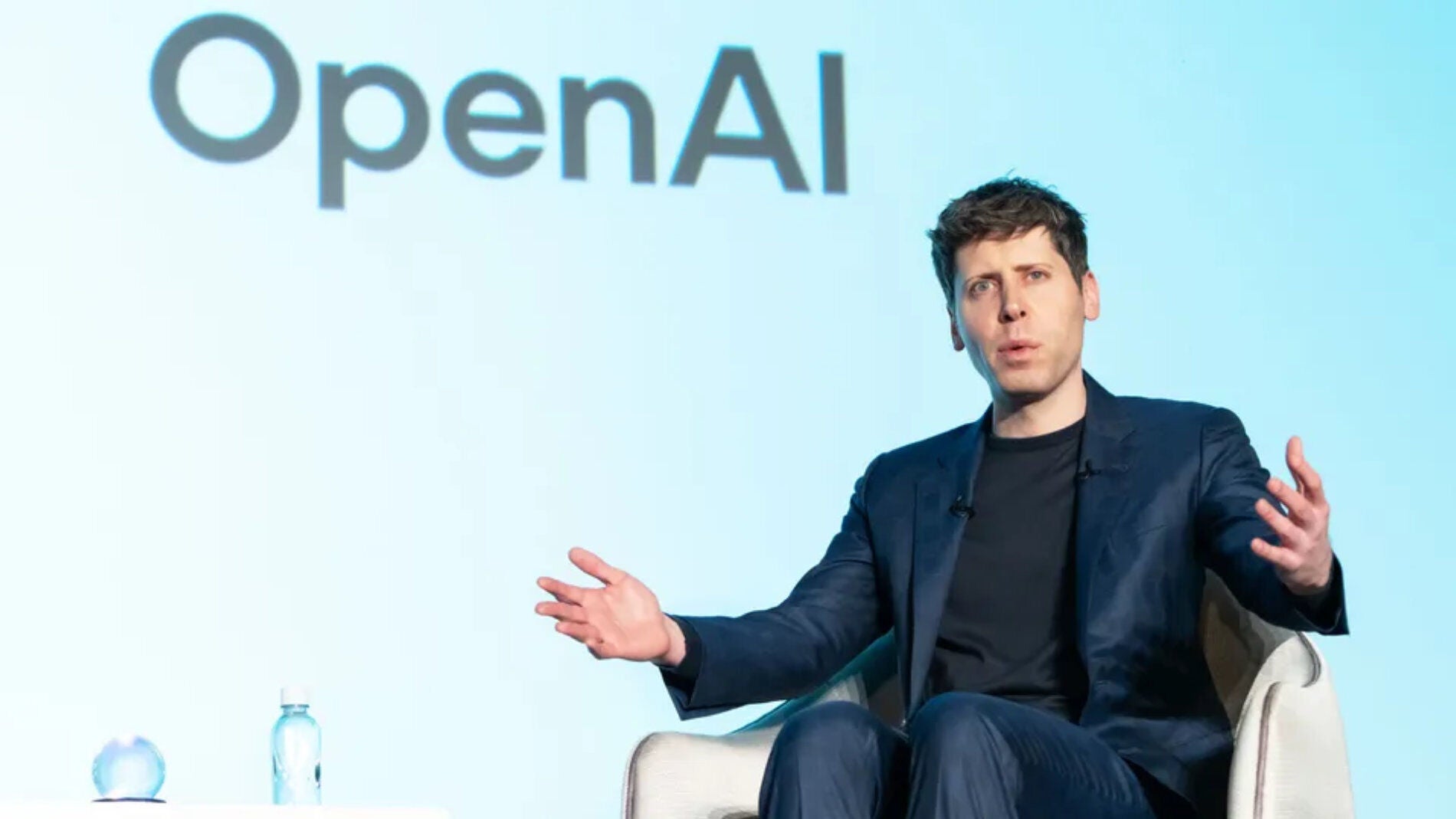
The company previously attributed a proposed solution to the Navier-Stokes problem, announced on September 8, 2026, to the same artificial intelligence system. In its latest announcement, OpenAI did not publish a list of the 100 solved problems or their corresponding proofs, nor did it clarify how many of the findings have undergone review by external specialists.
OpenAI stated that the resolved questions span most subfields of mathematics and noted that the speed of the system's breakthroughs surprised its own research team.
The Navier-Stokes Challenge
The Navier-Stokes equations, formulated in the 19th century, describe how fluids such as water and air move. The Navier-Stokes existence and smoothness problem seeks to determine whether these mathematical equations can yield physically impossible results, such as infinite velocity, which would mean the mathematical framework breaks down.
The challenge is one of seven Millennium Prize Problems established by the Clay Mathematics Institute, a private non-profit foundation dedicated to mathematical research. OpenAI claims its system resolved the nearly 90-year-old challenge after running approximately 10,000 artificial intelligence agents for 88 hours.
Academic Controversy and Codex Investigation
The September publication of the Navier-Stokes claim generated a dispute regarding authorship and the use of earlier work by mathematicians Tristan Buckmaster and Levent Alpöge. Buckmaster reported experiencing pressure to exclude Alpöge from a joint publication because Alpöge works at Anthropic, an artificial intelligence competitor.
Buckmaster also raised concerns over whether OpenAI had improperly accessed private queries he had made in Codex, OpenAI's programming tool. On September 10, 2026, OpenAI stated that an internal investigation concluded that Buckmaster's Codex queries over the preceding two months had not influenced its model's output.
Formation of the AGMAI Advisory Group
To address criticisms from the scientific community, OpenAI established an independent nine-member advisory committee named AGMAI. Supported by the Institute for Advanced Study in Princeton, New Jersey, the group includes prominent mathematicians Timothy Gowers and Martin Hairer.
AGMAI's initial assignment is to guide OpenAI on publishing its reported mathematical findings and ensuring external reviews adhere to academic standards. OpenAI said it wants to give the mathematical community a voice and gain guidance on tools to assist research and education. Advisory members will receive no financial compensation from OpenAI and retain the right to publish independent recommendations or publicly criticize the company's decisions.
Despite the creation of the committee, doubts remain among researchers consulted by The Verge regarding how much influence the panel will exert over OpenAI. Hairer acknowledged that the committee functions purely in a consultative role and that OpenAI remains free to ignore its advice.