National District Senator Omar Fernández warned on Monday that an increasing number of Haitian students enrolled in public schools across the Dominican Republic demonstrates a critical lack of planning within the national education system.
According to figures released by the senator, the proportion of Haitian students in public classrooms rose from approximately one for every 100 Dominican students in 2007 to one for every 13 in 2025. Total enrolment among Haitian children grew from just over 25,000 to more than 205,000 over that 17-year period.
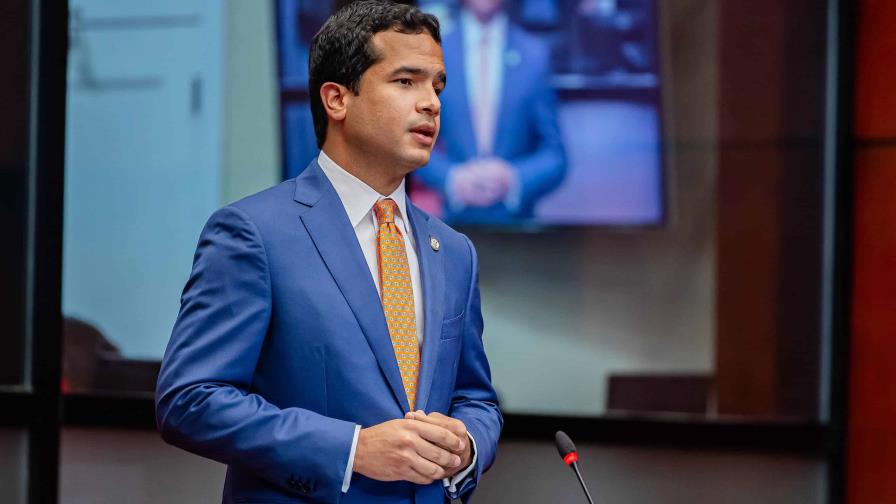
In a press statement, Fernández said that a 716 percent increase would be extraordinary if it referred to economic growth, but stressed that it instead reflects migration, much of it irregular, and places heavy pressure on public services.
Fernández serves as senator for the National District, the administrative region surrounding the capital city of Santo Domingo. Public education funding and cross-border migration from neighboring Haiti, which shares the Caribbean island of Hispaniola with the Dominican Republic, remain central topics of policy debate in the country's legislature.
Addressing constitutional obligations, Fernández acknowledged that the Dominican Constitution guarantees the right to education, stating that this right is not under discussion. However, he maintained that because the government has duties inside its territory, the state is also obligated to control who enters the country, how they enter, and under what conditions they remain in the Dominican Republic.
Border Control and School Attendance
Fernández called for strengthening and securing the border, arguing that an unmanaged migration policy transfers its negative consequences to public hospitals, citizen security, state finances, and schools.
Citing findings from his research, the senator pointed out that while more than 180,000 Haitian students joined the public school system, approximately 141,500 Dominican students left classrooms over the same timeframe. He emphasized that the country has a responsibility to examine those statistics with seriousness.
To address border security and corruption, Fernández highlighted legislative measures he introduced in the National Congress, the bicameral legislature of the Dominican Republic. The measures aim to increase criminal penalties and impose bans on holding public office for government officials convicted of human trafficking or migrant smuggling.
He noted that, with cross-party support from lawmakers, legislation was approved allowing officials involved in human trafficking to receive up to 20 years in prison alongside a 20-year ban from public service. Fernández added that his original legislative proposal had called for a permanent lifetime ban.
Private School Voucher Program
Fernández also raised concerns about a government program that places public school students into private institutions using state-funded vouchers when public classroom space is unavailable.
The voucher scheme was launched in 2022 as a temporary measure while new public school classrooms were being built. Fernández stated that three years after its implementation, the number of students lacking a public school place has tripled, significantly increasing financial strain on the national budget.
The senator questioned how public schools could simultaneously report fewer Dominican students and lower overall public enrolment while the count of children left without classroom places continues to grow.
Coinciding with the start of the new academic year, Fernández urged the Dominican government and civil society to launch a formal discussion to address the situation. He advocated for comprehensive solutions that integrate border control, educational planning, school infrastructure expansion, and fiscal protection of public resources.