

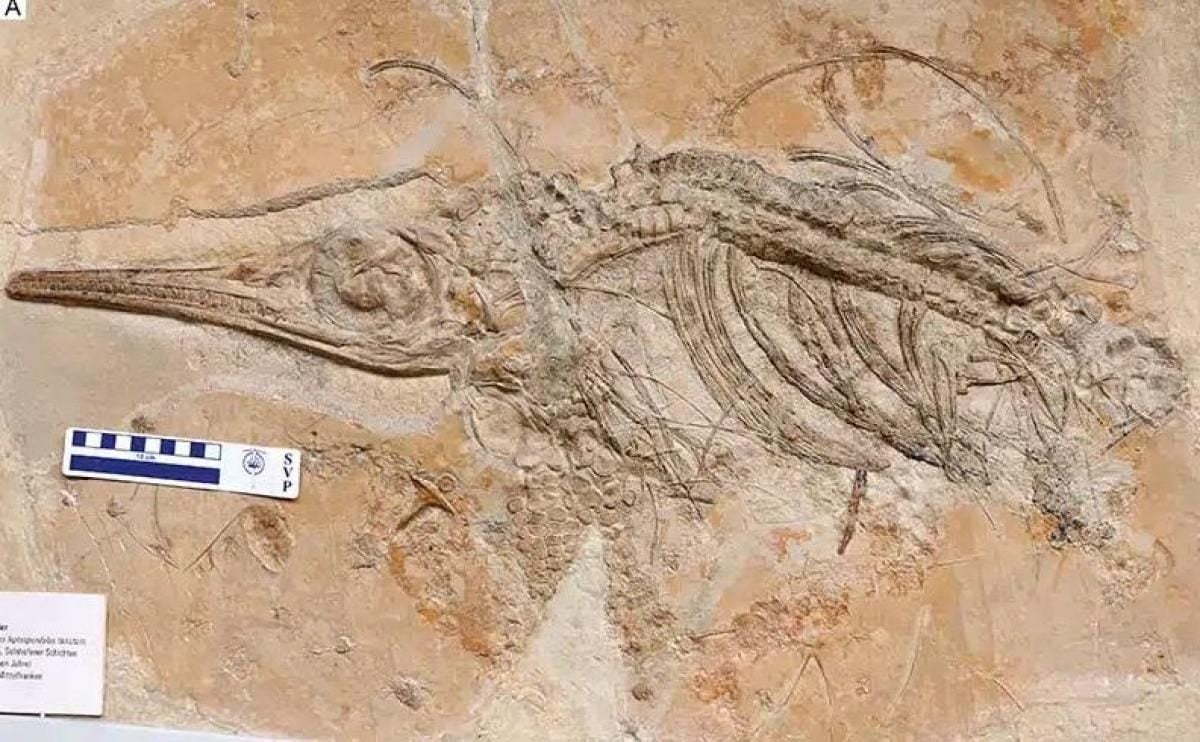
Scientists have identified a previously unrecognized species of ichthyosaur, Jabalisaurus tethyensis, in fossil specimens from the Plattenkalk limestone deposits of southern Germany, overturning a century-old assumption that only one ichthyosaur species lived in that ancient sea. The discovery was reported by Daily Galaxy.
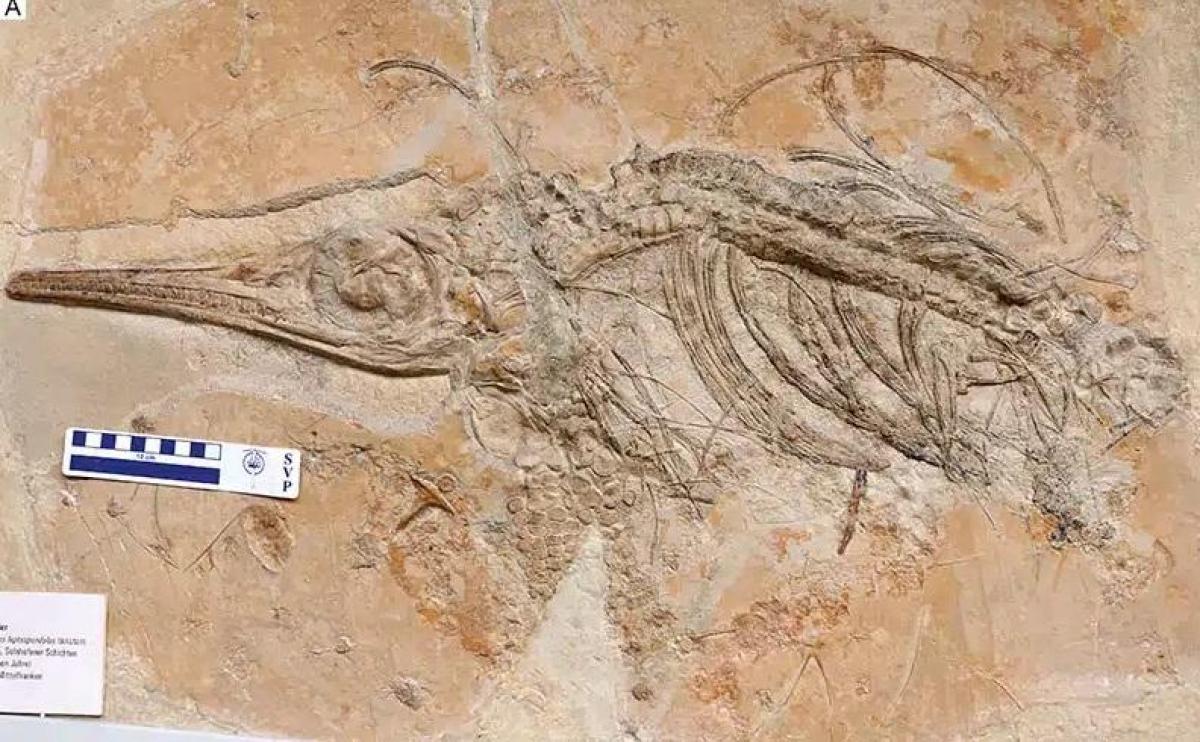
For more than 100 years, researchers believed Aegirosaurus leptospondylus was the sole ichthyosaur present in the fine-grained Plattenkalk limestone of southern Germany, the same fossil-rich layer that produced Archaeopteryx, the fossil bird that reshaped scientific understanding of the transition from dinosaurs to birds. That single-species view also shaped broader assumptions that ichthyosaur diversity declined in the late Jurassic compared with earlier stages of their evolution.
A species hidden in plain sight
A team led by Dr Erin Maxwell of the State Museum of Natural History in Stuttgart did not find a new fossil site. Instead, they identified the new species among specimens already held in museum collections that had previously been classified as Aegirosaurus.
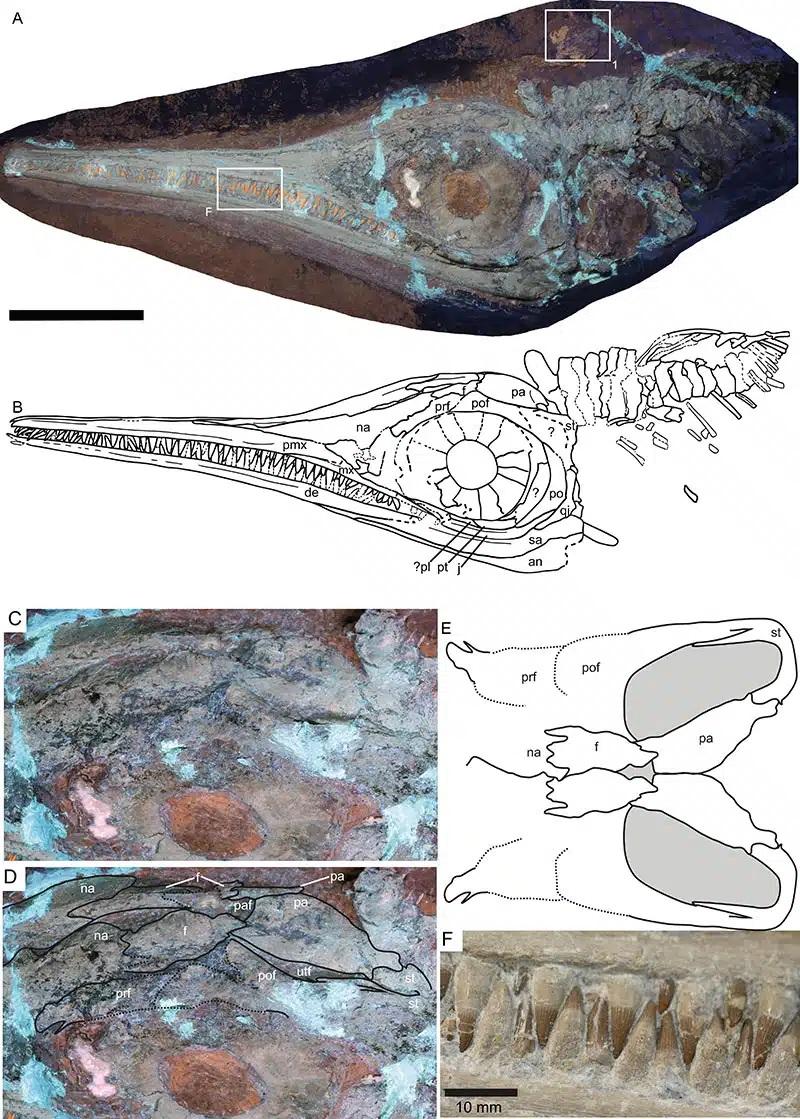
The key specimen is a small, immature skeleton held in the Bavarian State Collection for Palaeontology and Geology in Munich, originally recovered from the Geisberg quarry near Apfeltal in Bavaria. Two further specimens were assigned to the new species, one from the State Museum of Natural History in Stuttgart and another from the Jura Museum in Eichstatt, where the fossil preserved a complete soft-tissue outline.
Jabalisaurus tethyensis was a medium-sized ichthyosaur from the ophthalmosaurid group, estimated to have reached between 2 and 2.9 meters in length. According to the study, published in the journal Palaeontologia Electronica, it had a slender skull with a raised crest and finely ridged teeth, suggesting it likely fed on small bony fish. Its skin appears to have been smooth, consistent with observations of other ichthyosaurs from the same lineage. The animal lived in the warm waters of the Tethys Ocean around 150 million years ago, during the Late Jurassic.
Jurassic ichthyosaurs were more diverse than thought
Dr Maxwell and her colleagues placed the animal within a longer evolutionary timeline for ichthyosaurs. According to the researchers, these Mesozoic marine reptiles first appeared in the fossil record in the early Triassic and persisted until the start of the Late Cretaceous.
The group reached its greatest diversity and anatomical variability during the first 8.7 million years of its evolution, a period linked to rapid adaptation to different marine environments and food sources, the researchers said. The study noted: "Prior to the Jurassic, and especially before the end of the Aalenian stage (the start of the Middle Jurassic), ichthyosaurs occupied a more limited range of ecomorphotypes and have historically been regarded as having correspondingly declined in taxonomic diversity."
The identification of Jabalisaurus tethyensis changes that picture. The discovery doubles the number of known ichthyosaur species in the German Plattenkalk deposits, showing that more of these ancient marine creatures lived there than scientists had previously assumed. Some had simply gone unnoticed because their fossils had been classified differently in the past.
A lost link across the Jurassic seas
The most striking part of the discovery may not be the species itself but its geographic history. Until now, Jabalisaurus was known only from the Gulf of Mexico region. Its presence in Bavaria indicates that this ichthyosaur inhabited a much wider stretch of the ancient Tethys Ocean and connected it to the proto-Caribbean seas.
Researchers identified two closely related species pairs spread across these regions: Jabalisaurus meztli and Jabalisaurus tethyensis, and Parrassaurus yacahuitztli and Aegirosaurus leptospondylus. The study stated: "Despite the apparent high degree of connectivity of Late Jurassic marine habitats, the Late Jurassic ichthyosaur fauna of the proto-Gulf of Mexico has been interpreted as highly endemic."
Instead, the research shows these ichthyosaurs were distributed across a much larger area, from the northwestern Tethys to the proto-Caribbean region. Populations in different regions may have evolved into separate species while remaining part of the same broader tropical, warm-water fauna.
This pattern differs from what researchers have found in colder waters. Ichthyosaurs found in locations such as the United Kingdom, Svalbard, Eastern Europe and Argentina belonged to more temperate or polar groupings, according to the study.



