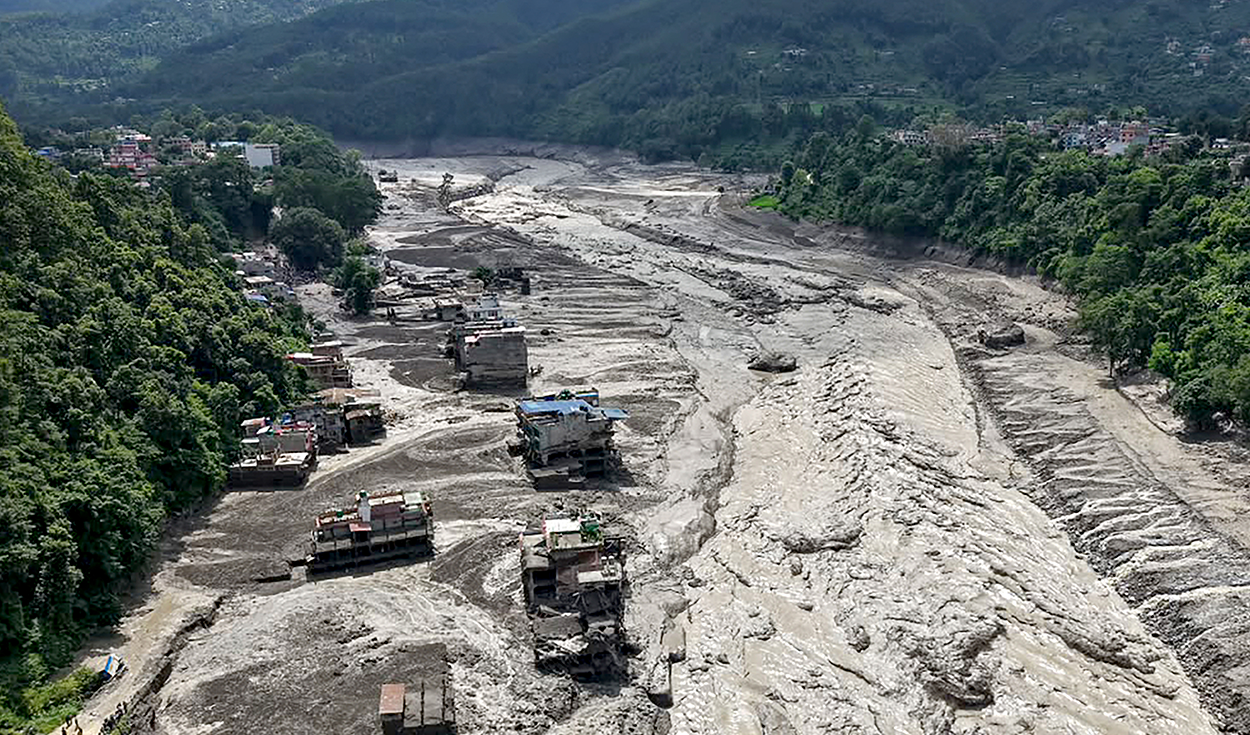
At least 98 people have died and hundreds remain missing after a devastating flash flood struck the border region between Nepal and Tibet on Wednesday.
Emergency services have recovered 95 bodies so far as search teams continue working through affected settlements along the Bhotekoshi River valley.
The missing include local residents, foreign tourists, members of security forces, and workers from hydroelectric projects who were cut off when sudden floodwaters swept through the area.
Earthquake and landslide hypothesis
Investigators are working to determine the exact cause of the tragedy, but initial evidence indicates that a morning earthquake in Tibetan territory triggered a massive landslide of ice and rocks.
Nepal Foreign Minister Shishir Khanal said early inquiries suggest the seismic movement destabilized a high mountain slope, causing a massive avalanche to collapse into the channel of the Bhotekoshi River on the Tibetan side of the border.
The fallen debris created a temporary blockade, allowing water to build up under heavy pressure before the natural dam gave way and released a torrent downstream toward Nepal.
Saswata Sanyal, an expert at the International Centre for Integrated Mountain Development, told CNN that the event represented a domino effect in which high altitude geological shifts rapidly transform into destructive floods reaching valley communities. Authorities emphasized that investigations are ongoing and the precise cause has not been officially confirmed.
Pilot describes six metre waves
The intensity of the surge was detailed by helicopter pilot Aman Budathoki, who flew over the disaster area shortly after the water began rising.
Budathoki told CNN that a few minutes before landing he saw large clouds of dust rising from the riverbed, initially leading his crew to suspect a localized landslide or road construction blasting by military forces.
The situation changed within seconds as a fast moving stream of dark water laden with heavy debris rushed down the channel. Budathoki reported seeing waves of water reaching heights of five to six metres, with large trees and vehicles being carried away by the current.
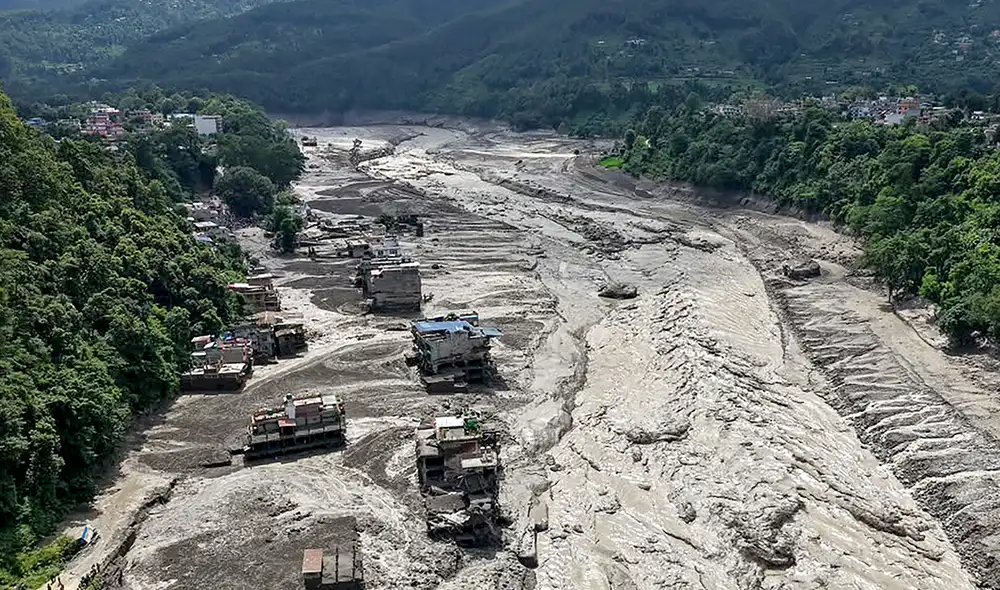
The flood destroyed roads and bridges across the border district, damaged hydroelectric power infrastructure, and severed communications with numerous mountain villages.
Himalayan glacier instability
Although scientists have yet to establish the exact role of global climate change in this flood, experts warn that regional warming is destabilizing glaciers across the Himalaya range.
Nepal contains thousands of glaciers that are losing ice as global temperatures rise. Recent research by the International Centre for Integrated Mountain Development indicates that the rate of ice loss across the Hindu Kush-Himalaya region has doubled since the year 2000.
Glaciologists warn that melting ice heightens the danger of glacial lake outburst floods, where vast volumes of impounded meltwater suddenly break through natural dams and surge down steep mountain slopes alongside boulders and debris. While such occurrences are sometimes referred to as inland tsunamis, officials have not confirmed whether a glacial lake breach played a role in Wednesday's flooding.
Authorities in Nepal are continuing to gather data from remote mountain outposts to establish a definitive count of casualties and property damage.