NASA biochemist Heather Graham and a team of scientists have found that certain terrestrial microorganisms could survive in shadowed regions of the lunar south pole.
The research, published in the journal Science Advances, used computer simulations to combine temperature, terrain, and illumination data to model microbial survival niches across the lunar surface.
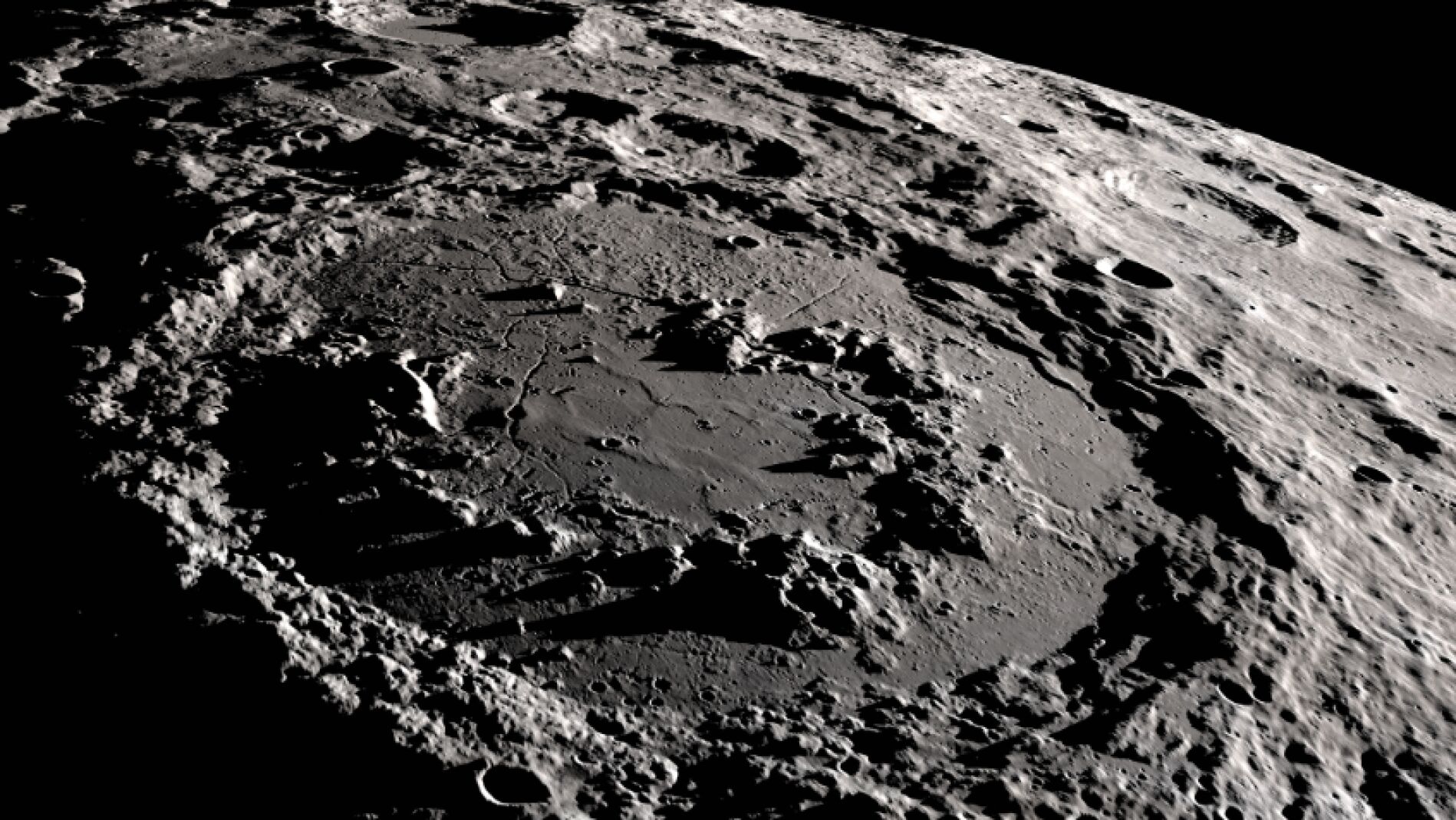
The study emphasized that researchers have not discovered living bacteria on the Moon, nor does the finding indicate that the celestial body is hospitable to life. Instead, the team created detailed maps showing microscopic environmental pockets where Earth-bound organisms might temporarily withstand harsh lunar conditions.
Simulation maps microclimates and radiation levels
The investigation focused on five specific microorganisms associated with humans or space habitats: the bacteria Bacillus subtilis, Staphylococcus aureus, and Deinococcus radiodurans, along with the fungi Aspergillus niger and several species of Fusarium. Several of these species have previously demonstrated remarkable durability when exposed to extreme conditions outside the International Space Station.
To assess surface conditions, Graham's team examined three locations near the lunar south pole: Nobile Rim, Connecting Ridge, and De Gerlache Rim. The researchers utilized elevation and surface temperature measurements gathered by NASA's Lunar Reconnaissance Orbiter probe, paired with models calculating solar radiation distribution across the terrain.
Because the Moon has a low axial tilt, the Sun remains consistently low on the horizon in polar regions. Elevated structures such as mountains and crater rims cast extensive shadows over adjacent lowlands. This topography creates stark microclimates, where constantly illuminated areas sit directly beside deep depressions that remain perpetually dark, exceptionally cold, and shielded from intense ultraviolet radiation.
Resilient species and shadow shelters
Among the organisms analyzed, Aspergillus niger proved to be the most resilient. The fungus, which is commonly found in household environments like bathrooms and ventilation systems, possesses a high tolerance for ultraviolet radiation. Model calculations indicated that it could remain viable even in areas exposed to moderate sunlight.
Other tested microbes found conditions suitable for temporary survival within permanently shadowed depressions. The researchers noted that survival does not imply that microbes can grow or reproduce on the Moon, but rather that dormant cells might not be destroyed immediately upon arrival.
NASA, the United States space agency, regularly conducts astrobiology research to evaluate environmental limits for life and to prepare for human missions under the Artemis program, which aims to land astronauts near the lunar south pole.
Contamination risks for future space missions
In an accompanying statement from NASA, the agency highlighted the impossibility of completely sterilizing human spaceflight missions. Humans carry an average of one million bacteria on every two square centimeters of skin, and microbes can inevitably escape from spacecraft habitats or protective astronaut suits.
Graham stated in the release that scientists must establish the baseline biology and chemistry of the Moon before human exploration alters it. She explained that when future missions travel to Mars to search for evidence of extraterrestrial life, researchers must be certain that any detected signatures were not inadvertently brought from Earth.
Graham added that while people do not typically associate the Moon with biology, lunar environments can preserve living cells. She urged that initial polar exploration efforts prioritize monitoring microbial transport and characterizing native lunar chemistry before visits permanently modify the landscape.
The potential persistence of terrestrial microbes introduces the possibility that the first biological material discovered on the Moon or Mars could be of Earth origin. Future discoveries of organic molecules or chemical biosignatures at explored lunar sites will require rigorous analysis to distinguish genuine lunar phenomena from contamination introduced by human visitors.