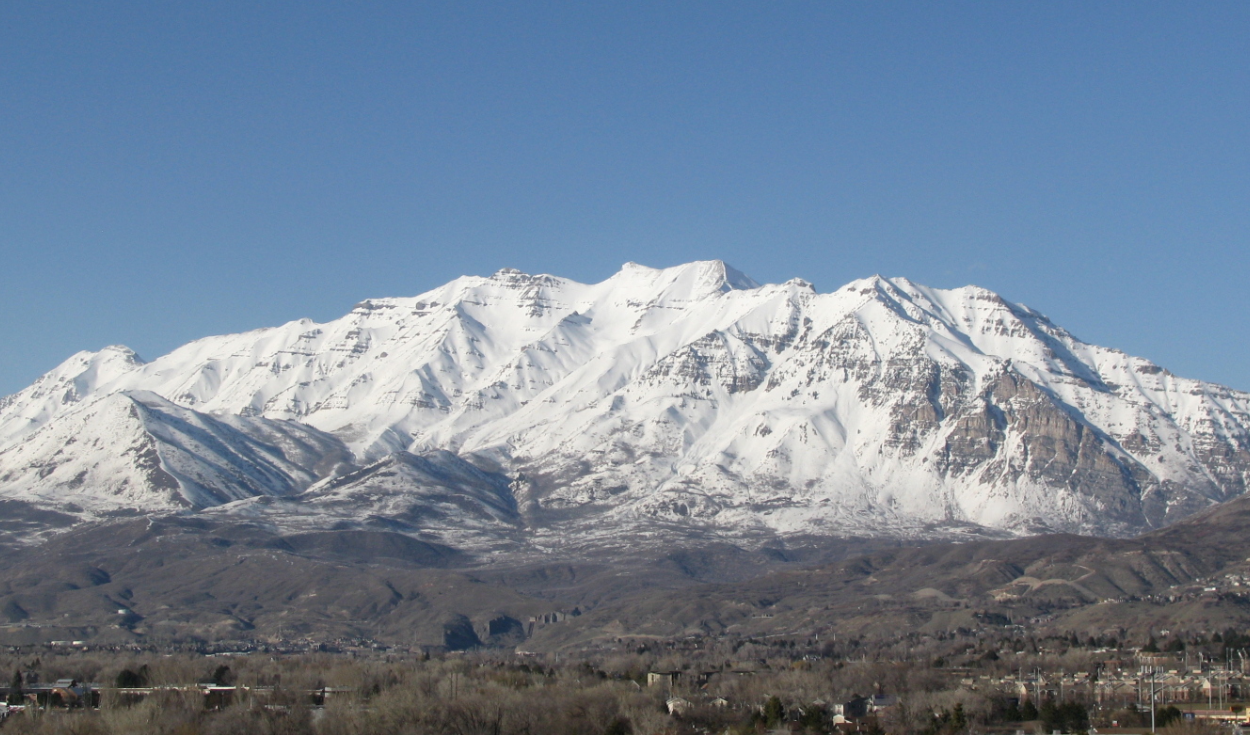
Geologists studying Mount Timpanogos in Utah have identified more than 70 ice deposits hidden beneath mountain debris holding about 396 million gallons of water.
The stored volume of frozen water buried under the rocky rubble equals roughly 600 Olympic-size swimming pools. Researchers believe these hidden reserves could play a vital role in sustaining regional water supplies during future droughts.
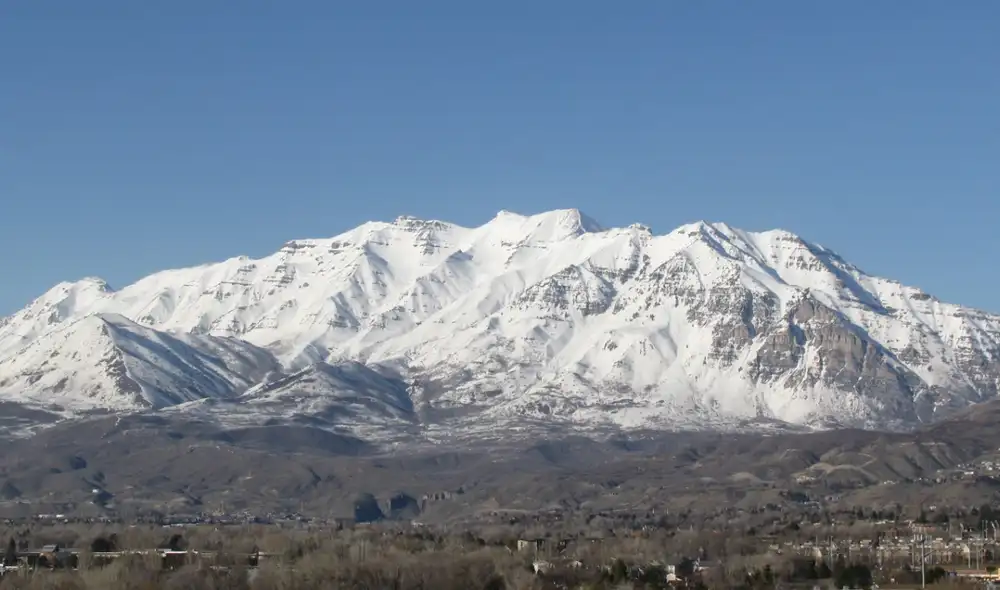
Mount Timpanogos, a prominent 11,752-foot peak in Utah's Wasatch Range, features extensive fields of loose stone and surface sediment. Beneath this rocky mantle lie rock glaciers, which are massive frozen formations composed of ice mixed with rock debris.
To examine the hidden ice reserves without invasive excavation, a scientific team from the University of Utah deployed a gravimeter. The precision tool measures tiny variations in Earth's local gravitational pull, allowing researchers to distinguish less dense ice from dense surrounding rock.
Measuring hidden ice with gravity variations
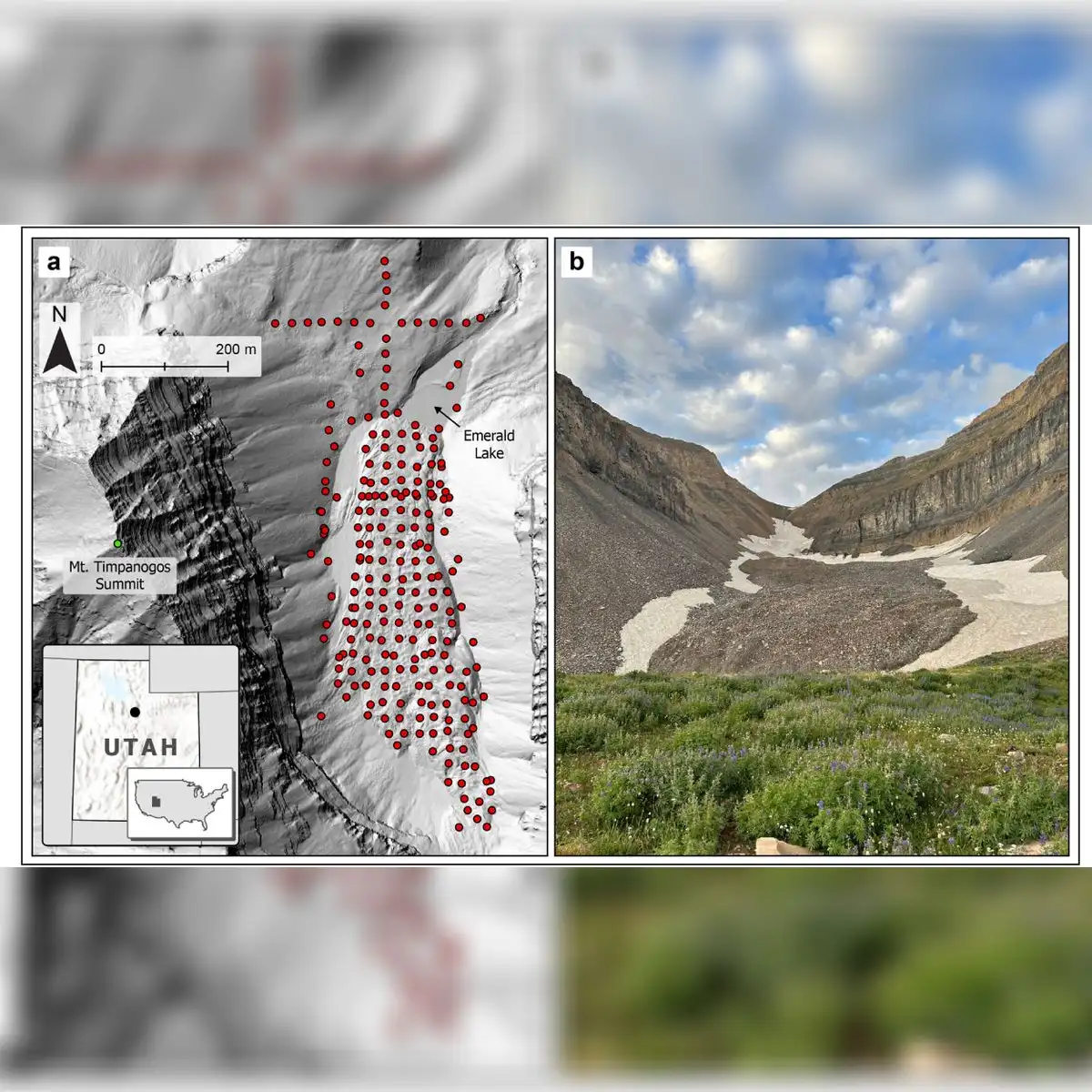
The research team conducted 232 separate gravitational measurements across the Timpanogos rock glacier. By mapping subtle density differences across the landform, geologists calculated the precise internal ratio of ice to solid stone.
Analysis of the measurements showed that the rock glacier consists of approximately 83 percent ice and 17 percent loose rock. The calculations established an average ice thickness of 18.8 meters, which equals about 61.7 feet.
Leif Anderson, a professor of glaciology at the University of Utah and co-author of the studies, said there was a vast amount of ice hidden inside the mountains of Utah. He noted that people walking across loose rocks and mountain debris rarely realized that up to 120 feet of ice could be buried directly beneath their feet.
Gravimetric mapping offers key advantages over traditional surveying techniques. Because ice possesses a lower density than rock, subtle shifts in gravitational attraction reveal subsurface ice concentrations that remain invisible to aerial photography or satellite imaging.
Natural rock insulation and ancient permafrost
Rock glaciers differ fundamentally from exposed surface glaciers due to their protective upper layer. A thick blanket of coarse rock fragments insulates the underlying ice from direct solar radiation and buffers it against rising air temperatures.
Bronson Cvijanovich, a collaborator of Anderson and lead author of one of the studies, explained that the Timpanogos glacier was surprisingly rich in ice content. He specified that ice makes up 83 percent of the total structure.
The investigation also seeks to determine how much of the deposit consists of ancient permafrost that may have persisted for 20,000 years since the Last Glacial Maximum. The Last Glacial Maximum represents the peak of the last major ice age, when ice sheets covered large areas of North America.
To evaluate the age and behavior of the formation, the researchers combined data from specialized snow probes installed in May 2024 with satellite records and meteorological station data.
Active ice accumulation on Mount Timpanogos
Anderson stated that the deposit was not merely residual ice left over from the era of Lake Bonneville and mammoths. Lake Bonneville was a massive prehistoric lake that covered much of western Utah thousands of years ago before drying into present-day remnants like the Great Salt Lake.
The glaciologist added that while scientists do not yet know which other rock glaciers in the region continue to accumulate frozen material, the formation at Mount Timpanogos shows clear evidence that it is still actively adding ice today.