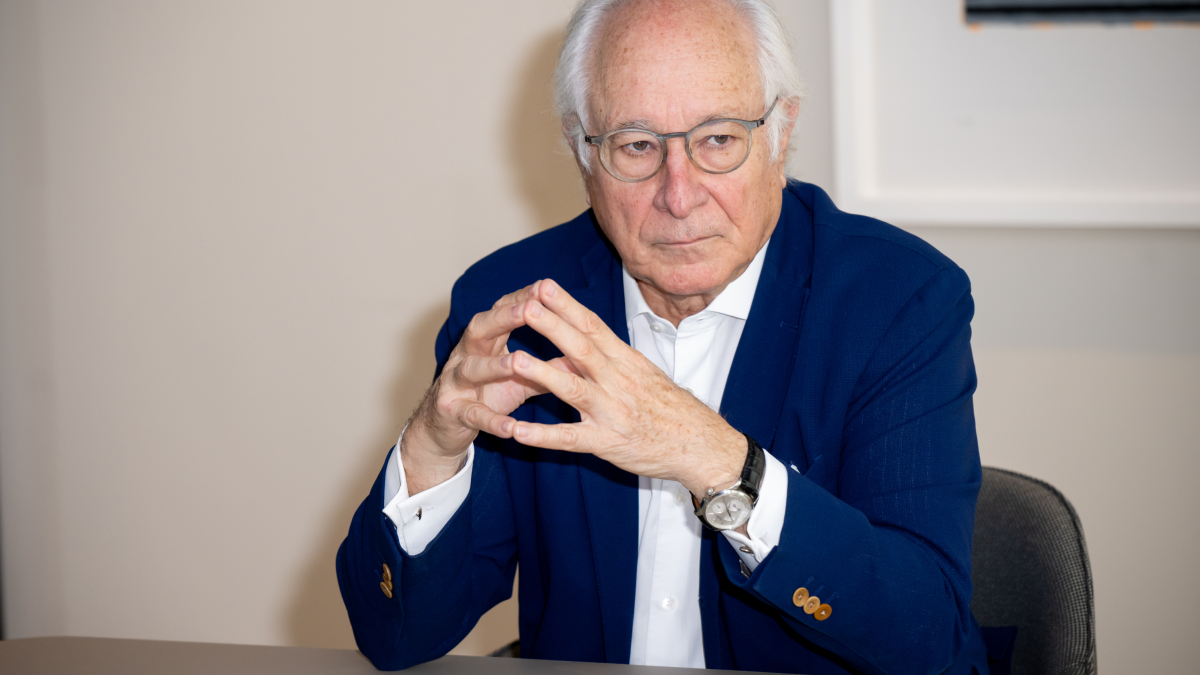
Morabanc, the Andorran private bank, is turning its attention to the United States after a string of acquisitions in Spain, aiming to double its business in Miami and Switzerland to $10 billion, according to the bank's president, Juan María Nin.
Nin, born in Barcelona in 1953, told the newspaper that a bank from a country the size of Andorra needs to expand abroad because there is a point where market share and results make further domestic growth unhealthy. He said Morabanc already has two international bases, Miami and Switzerland, and identified Spain as a strategic addition to both, which is why the bank bought the brokerage firm Tressis and Banco Europeo de Finanzas, the latter to secure a banking licence.
Spain integration and April launch
Nin said Morabanc is now merging those Spanish entities and will begin full banking operations in Spain in April next year while keeping the brokerage arm, under a private banking model. He said the bank is not N26, Revolut or MyInvestor, but a traditional private bank offering what it knows how to do. From April, he said, Morabanc will operate in Spain, Miami, Andorra and Switzerland.
Nin said technological innovation could bring difficulties and accidents, which is why banks need to be strong in capital and liquidity. He added that if bubbles burst, the opportunities for those that withstand them would be excellent.
Next acquisition targets
Asked whether Morabanc would pursue further acquisitions, Nin said the bank has the capital to grow inorganically but will first consolidate its Spanish banking operation, since deals need two or three years to become profitable. He said that after April, Morabanc will look for an acquisition target, but that there is currently little room to move in Spain, so the next targets will be Switzerland and Miami. He described the United States as a market with thousands of banks and a huge volume of corporate activity.
Why Miami matters
Nin said Morabanc's focus in Miami is not the traditional domestic American client but the Latin American capital arriving in the United States. He argued that against the world's two major blocs, the United States and China, the only hope lies in a third, Ibero-America, which he said has geography, hundreds of millions of people, culture and language, noting that Spanish is the second most spoken native language in the world.
He said the great hope for Europe is the connection between Ibero-America and the European Union through Spain. There are 800 million Spanish speakers, he said, and a portion of capital that initially went to Miami is now also arriving in Spain, drawn by legal security and capital mobility, pointing to what is happening in Madrid as an example.
A meeting point for wealth
Nin described Morabanc as a meeting point for Ibero-American capital arriving in Spain and Miami. He said a Mexican client feels very comfortable at Banco Santander in Miami, and that Morabanc, though smaller, also acts as a landing point and wealth manager. The bank offers advisory services to large Latin American family and business fortunes seeking to preserve and structure capital in jurisdictions such as the United States, Andorra, Switzerland and Spain.
He said there is a direct link between the Ibero-American businessperson who goes to Miami, Spain and Switzerland, someone who likes owning a penthouse on Calle Velázquez or Serrano in Madrid, dollar accounts in Miami, and the option of combining with Switzerland, which he called the most neutral and democratic country in the world. He said Morabanc's offer also includes Andorra, which he described as an independent, stable and well ordered country with rational taxation, low debt and a recent improvement in its credit rating.
Competing with Spain's big banks
Asked about competition from larger Spanish banks such as Banco Santander, Banco Sabadell, BBVA and CaixaBank for the same flow of wealth between Latin America and Europe, Nin acknowledged Morabanc lacks their brand recognition but said growth potential in Miami for a small player is almost unlimited. He recalled being chief executive of Sabadell when it started private banking in Miami and bought a bank there, calling it a very difficult market to enter. He said Santander and Sabadell are doing well there, and that BBVA had a strong presence in Texas and remains committed to the United States, predicting all of them would succeed in Miami.
Mora Capital's growth targets
Nin said Morabanc's Miami and Switzerland operations trade under the brand Mora Capital, which has grown at around 6% a year, with a goal of doubling its business organically by 2030. He said 33% of the assets managed in Switzerland come from Miami clients. Mora Capital currently manages around $5 billion and is targeted to reach $10 billion by 2030.
The bank has just moved offices in Miami, Nin said, following an investment in facilities. He put staff there at around 52 professionals, of whom 32 are bankers, with more hiring planned. He said Morabanc could grow client by client or buy and integrate an entire operation, describing the bank as a buyer that executes well, and said there are possibilities to combine with independent advisory firms in Miami.
What happens next
Morabanc will launch full banking operations in Spain in April next year and then pursue acquisition targets in Switzerland and Miami, aiming to double Mora Capital's business to $10 billion by 2030.
Test yourself
What is Morabanc's target for its Miami and Switzerland business by 2030?
When does Morabanc plan to start full banking operations in Spain?
According to Nin, what share of Switzerland-managed assets comes from Miami clients?
Have your say
Do you think smaller private banks like Morabanc can compete with larger rivals for Latin American wealth in Miami?
Where it happened
Miami, United States