Dominican columnist Mirope Bragui Pérez addressed the death of award-winning writer Luis Martín Gómez and warned against declining reading habits in an opinion essay published in Santo Domingo on August 28, 2026.

Writing in her regular column Estas letras for the publication World Stock Market, Bragui Pérez reflected on the loss of Gómez, who passed away in mid-August 2026 following a sudden illness. The 11-minute column examined the cultural role of literature, the impact of digital media, and the dangers of societal transparency.
Bragui Pérez opened her reflection by discussing her habit of greeting relatives in the Cibao region with the Italian phrase ciao carissimi. She explained that her relatives were surprised because they believed the word chao was used exclusively for farewells. The columnist noted that the term originated from sciavo, an ancient Venetian dialect expression meaning I am your slave, and questioned whether writers are slaves to their readers. She also expressed gratitude for reader emails containing book suggestions, remarking that trying to please every correspondent would be like the Italian folkloric figure la Befana operating without a broom.
Tribute to Luis Martín Gómez
The essay paid tribute to Luis Martín Gómez, born in 1962, whose career spanned several decades before his death at age 64 in mid-August. Bragui Pérez recalled reading his short stories about police repression in the aftermath of the 1965 Dominican revolution. Gómez received widespread acclaim throughout his career, winning the national short story award Premio Nacional de Cuento in 1999 and again in 2009, after earning initial literary recognition in the 1990s. In 2010, he received the national award for children's literature Premio Nacional de Literatura Infantil.
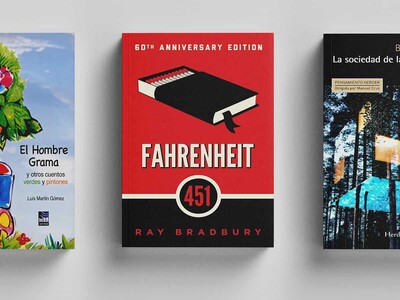
Although Bragui Pérez never met Gómez personally, she cited tributes from friends who remembered him as both an outstanding author and an excellent person. She highlighted his award-winning 2010 book El hombre grama y otros cuentos verdes y pintones, published by Mar de Tinta in Santo Domingo. The 42-page volume features illustrations by Jean Burgos, José Ceballos, and Tulio Matos, with a prologue by Aidita Selman. The work aims to motivate children and young people to combat environmental destruction.
Dominican Writers Association and Creative Non-Fiction
Turning to international literary networks, Bragui Pérez highlighted the Dominican Writers Association, a United States non-profit organization supporting creative writing in poetry, fiction narrative, and creative non-fiction. The association defines creative non-fiction as writing that applies literary techniques to convey real-life events truthfully without inventing circumstances, characters, or details. Using first-person perspectives, dialogue, and descriptive settings, the genre approaches the boundary of short stories or novels while maintaining complete factual accuracy.
The Dominican Writers Association states that its mission is to provide authors with tools and resources to reach the Western literary canon, referencing benchmark authors such as Dante Alighieri, Colette, Simone de Beauvoir, Herta Müller, Miguel de Cervantes, and William Shakespeare. Works by Dominican writers affiliated with the group are cataloged on Bookshop.org. Bragui Pérez pondered whether authors might apply creative non-fiction to write biographies of prominent Dominican figures such as media personality don Alofoke, politician Pacheco, or Senator Antonio Marte. She noted that these figures brought to mind a February 2006 statement by former Italian Prime Minister Silvio Berlusconi, who declared himself the Jesus Christ of politics, describing himself as a patient victim enduring insolence and sacrificing for others.
Byung-Chul Han on Digital Transparency
Bragui Pérez expressed concern over a sociological trend in marginalized urban and rural areas, where a generation has grown up without reading a single book yet claims the authority to rewrite social rules of civility and political life. To contextualize this shift, she cited South Korean Catholic philosopher and essayist Byung-Chul Han, born in Seoul in 1959. Han emigrated to Europe without knowing German after his family forced him to study metallurgy instead of literature.
Han began publishing in German in 1994 with a doctoral dissertation on existentialist philosopher Martin Heidegger (1889 to 1976) at the University of Freiburg. Han went on to win the 2025 Princess of Asturias Award for Humanities and Communication and has written 32 published works analyzing information overload in capitalist societies. Bragui Pérez observed that writing in a foreign language requires cultural integration, adding that digital connectivity now allows island residents to overcome geographic boundaries.
In his 2013 book La sociedad de la transparencia, published by Herder in Barcelona across 96 pages, Han argued that market-driven transparency does not expand freedom or democracy. Instead, it creates a mechanism to level, monitor, and police populations through digital metadata. Publishers noted that transparency replaces mutual trust, discretion, modesty, and shame with surveillance. Under this system, Google and social media networks function as a panopticon, referencing the 18th-century circular prison concept designed by London jurist, social reformer, and utilitarian philosopher Jeremy Bentham (1748 to 1832).
Debate Over Digital Media and Regulation
The essay examined ongoing public debate in Santo Domingo regarding the shift in public opinion control caused by social media and declining readership of traditional newspapers. Bragui Pérez referenced essays published in Letras Libres, the influential Ibero-American literary review directed by Enrique Krauze since 1999. Mexican journalist Juan Carlos Romero Puga, born in 1975, analyzed the vital role of news verification in digital outlets. Additionally, Víctor J. Vázquez Alonso, born in Valladolid in 1979 and professor of constitutional law at the University of Seville, outlined the disruption of public opinion and advocated for legal regulations governing the new communications ecosystem.
In the Dominican Republic, Bragui Pérez noted, public anxiety centers on the political influence of social media figures who position themselves as redeemers while lacking substantial knowledge. She warned that unguided media consumption risks replicating dystopian scenarios described in classic literature.
Ray Bradbury and the Warning of Fahrenheit 451
Bragui Pérez concluded her analysis by examining the dystopian novel Fahrenheit 451 by American science fiction writer Ray Bradbury (1920 to 2012). Originally published in 1953, the novel was reissued in a 250-page edition by Simon & Schuster in New York in 2012. Translated into more than 50 languages with over 12 million copies sold globally, the book has been available in a Spanish translation by Alfredo Crespo López published by Plaza & Janés in Barcelona since 1967.
Set in a future United States following a second civil war modeled on the conflict of 1863 to 1865, the story follows Guy Montag, a young book burner who questions his duty after a neighbor explains how public debate once thrived on dissent and reading. Montag discovers that books offer greater depth than the state-controlled television watched by his addicted wife. Bradbury explained that the story reflected his mid-20th-century observation of social media reducing public interest in literature. The title refers to 451 degrees Fahrenheit, equal to 233 degrees Celsius, the burning point of book paper. Bradbury received the National Medal of Arts in 2004 and a special Pulitzer Citation in 2007. Bragui Pérez noted that a 2018 film adaptation was poorly executed, concluding with Bradbury's observation that failing to read books is a worse crime than burning them.