

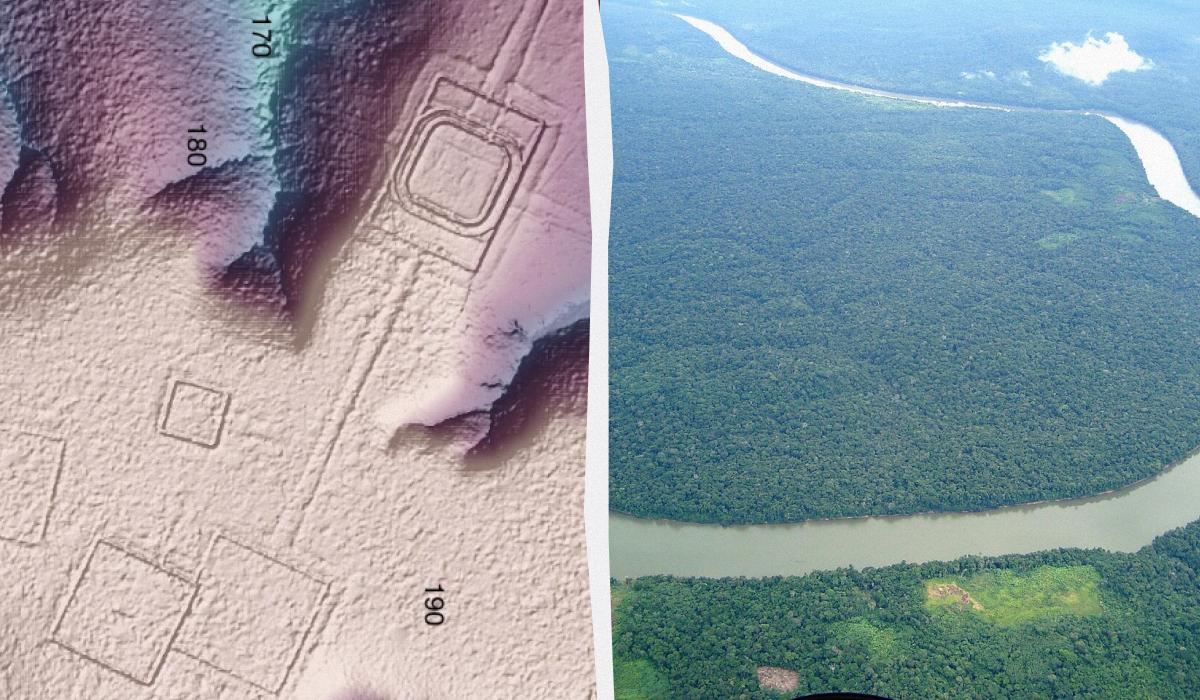
Archaeologists have found large-scale traces of an ancient civilization in southwestern Amazonia that existed roughly 2,000 years ago and may have had between 1.25 million and 3 million people at its peak, according to a new study published in the journal Nature and reported by Popular Mechanics.
Researchers are provisionally calling the civilization Aquiry. Its territory is estimated to have covered about 180,000 square kilometers of southwestern Amazonia, though scientists have so far been able to study only a small portion of that area in detail.
LiDAR reveals thousands of structures
Laser scanning technology known as LiDAR, which can map the ground surface through dense vegetation, was key to the discovery. On roughly 3% of the territory linked to Aquiry, researchers found more than 20,000 ancient earthen structures. The team documented 432 earthen objects using LiDAR, 396 of which had never been recorded before. Combined with 1,279 structures already known from satellite and aerial imagery, the total known objects in the region reaches about 1,700, including roughly 120 geoglyphs, geometric earthworks enclosed by ditches.
Martti Pärssinen, an archaeologist at the University of Helsinki and the study's lead author, told journalists that the scale and precision of the structures was simply astonishing.
Population estimates revised upward
Based on the data, scientists estimate that as many as 24,000 to 30,000 earthen structures may exist across the full Aquiry territory, with roughly two-thirds likely built by the civilization itself. Researchers said the number of large-scale structures points to a much higher population density in ancient Amazonia than previously believed. Aquiry's population is thought to have peaked between roughly 100 and 300 AD.
Villages, farming and decline
The earthworks took various shapes, including circles, squares, octagons and pentagrams, and were likely ceremonial or political centers. Average complexes covered about 2.8 hectares, with the largest reaching nearly 50 hectares; surrounding ditches could be about 5 meters deep and 9 to 13 meters wide, and researchers believe they were built without metal tools or animal labor.
The civilization is thought to have formed around 600 BC, with villages of about 300 people living in longhouses who grew squash, corn, cassava, Brazil nuts and peach palms while reshaping the surrounding landscape. Most of the earthen structures were abandoned between roughly 850 and 950 AD, a period the study's authors note coincides with the decline of other pre-colonial civilizations in the Americas.
The study states that if similar findings emerge elsewhere in the Amazon, estimates of pre-colonization population density and its effects on modern Amazonian soil and forest structure, biodiversity and even some global climate models may need to be revisited. Co-author Alceu Ranzi, a geographer at the University of Acre, said the new archaeological discoveries are gradually overturning the idea of the Amazon as untouched wilderness.



