Cultural critic Lluis Fernandez has published an ideological analysis of dystopian fiction, tracing how the genre evolved from nineteenth-century industrial critiques into a direct attack on socialist totalitarianism.
Fernandez argues that while the term dystopia emerged in the nineteenth century to oppose Thomas More's concept of utopia and criticize Industrial Revolution technology, its core political narrative eventually turned against Marxist state control and collective planning.
Marxism denounced industrial dehumanization and working-class exploitation under capitalism through class struggle. However, Fernandez notes that Marxist ideology overlooked how factory work allowed society to move from rural poverty and field slavery toward growing prosperity within capitalist society.
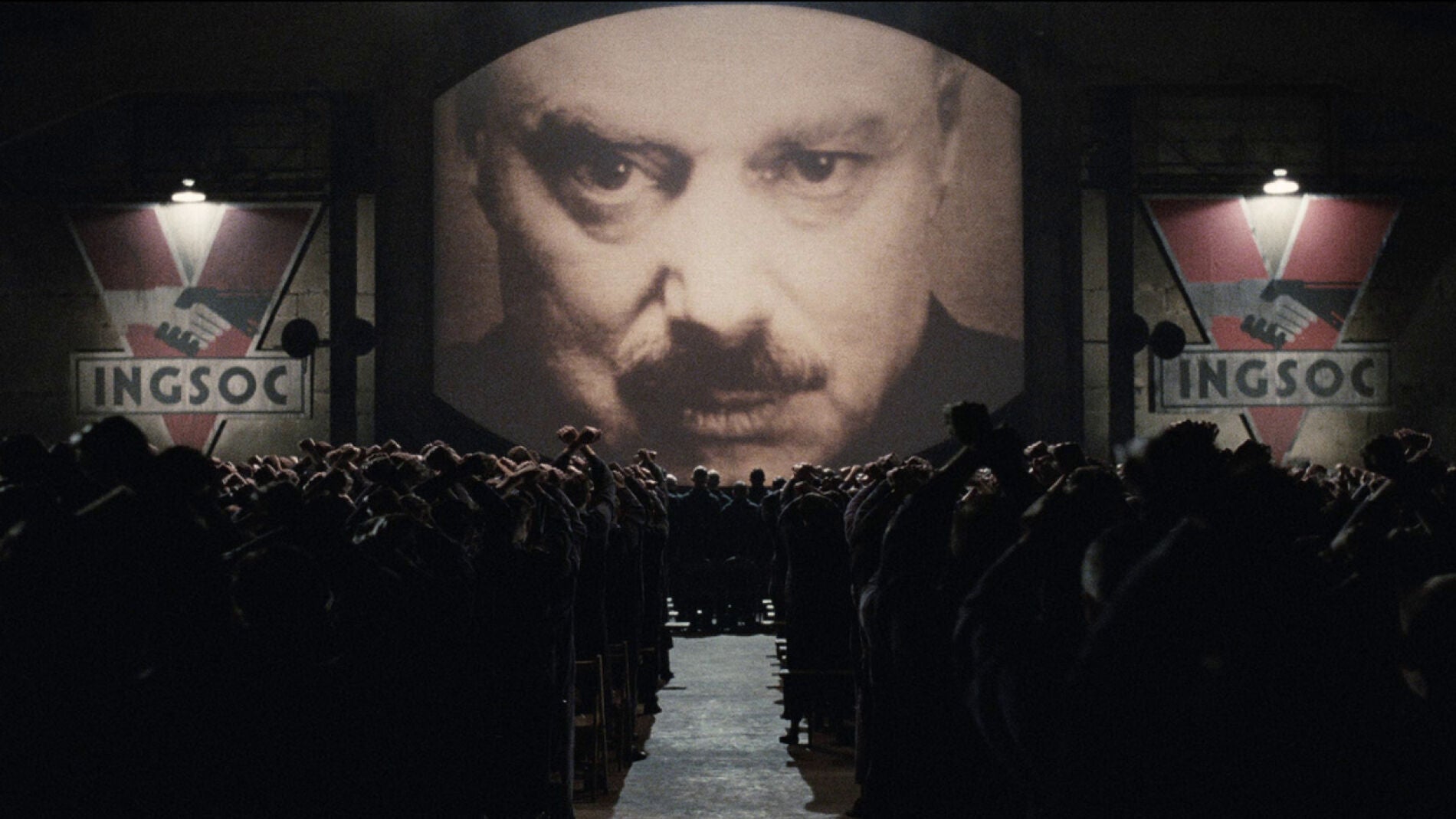
The foundational pillars of the genre, according to Fernandez, are Aldous Huxley's 1932 novel Brave New World, George Orwell's 1949 novel 1984, Ray Bradbury's 1966 novel Fahrenheit 451, and Fritz Lang's 1927 film Metropolis, which was based on the 1926 novel by Thea von Harbou. Each of these works criticizes authoritarian government control that shares clear parallels with Soviet Bolshevik communism and Nazi totalitarianism.
Origins of political dystopian fiction
Fernandez identifies Yevgeny Zamyatin's 1924 novel We as the common reference point for these seminal works. Zamyatin introduced the concept of a One State led by the Benefactor, where citizens such as the protagonist D-503 live behind a Green Wall, stripped of destabilizing passions and given identical happiness while suffering under collective planning.
Although classified as science fiction, Fernandez views these books as thesis novels that use scientific anticipation as parables. They attack the economic planning and collectivization processes instituted by early twentieth-century socialist governments, including fascist regimes.
Orwell's political critique stemmed from his first-hand experience during the Spanish Civil War. Fernandez highlights how Orwell satirized Marxist-Leninist regimes after witnessing Stalinist forces suppress the Workers' Party of Marxist Unification, known as the POUM, and experiencing the brutality of clandestine detention centers, called checas, in Barcelona.
In 1984 and his 1945 allegorical novella Animal Farm, Orwell defined political utopia in its purest form. Concepts such as Big Brother, the Ministry of Truth, and Newspeak became lasting symbols in critiques of leftist progressivism.
Newspeak alters semantic meanings to manipulate discourse and replace official truth with state propaganda. Universal slogans from the novel include war is peace, freedom is slavery, and ignorance is strength. Fernandez writes that questioning these state dogmas brought social repudiation, matching what modern culture terms cancellation.
State control and modern autarchies
Fernandez describes Orwell's division of ministries in 1984 as a satire of communist organization and a reflection of modern autarchies. He specifically points to the administration of Spanish Prime Minister Pedro Sanchez, comparing state management to Orwell's Ministry of Truth, which oversaw news, entertainment, education, and fine arts.
Animal Farm serves as a fierce fable targeting real communism in Joseph Stalin's Soviet Union during the 1940s. In the 1954 animated film adaptation directed by John Halas and Joy Batchelor, pigs replace human masters while other animals remain oppressed, embodying the famous slogan that all animals are equal, but some animals are more equal than others.
Fernandez notes that the 1954 animated adaptation of Animal Farm was commissioned and funded by the United States Central Intelligence Agency under Operation Mockingbird during the Cold War.
In Huxley's Brave New World, state control relies on drugs like soma, eugenics, and artificial reproduction techniques. The state guarantees pleasure at the cost of individual liberty, confining nonconformists and rebels to a Savage Reservation.
Bradbury's Fahrenheit 451 depicts omnipotent state authority through an absolute censorship of knowledge. Government firefighter squads search out and publicly burn forbidden books to prevent citizens from thinking.
Ecological dystopias and environmental themes
Beginning in the 1970s, countercultural movements adapted Orwell's political dystopian frameworks into ecological catastrophism. Fernandez argues that environmental ideology continuously shifts its core warnings across different eras, spanning overpopulation, water pollution, jungle deforestation, acid rain, ozone layer depletion, global warming, global cooling, climate change, greenhouse gases, carbon dioxide increases, and anti-nuclear campaigns.
According to Fernandez, environmental dystopias treat capitalism, science, and consumer society as primary enemies. He contends this occurs even though these economic systems created unprecedented levels of freedom, equality, employment, and social welfare.
Harry Harrison's 1966 short story Make Room! Make Room! established key left-wing environmental dystopian tropes by describing famine and overpopulation in a world where human corpses are recycled as food. The cinematic adaptation further detailed the destructive impacts of human activity.
Post-apocalyptic conservation themes appear in the 1972 science fiction film Silent Running, featuring three massive geodesic greenhouse ships traveling through space to preserve terrestrial flora. Richard Matheson's 1954 novel I Am Legend depicts Los Angeles after a runaway virus and bacteriological war transform humanity into nocturnal vampires, leaving a single human survivor.
Evolution of sci-fi cinema and modern media
Actor Charlton Heston starred in major post-apocalyptic films of the era, including the 1968 adaptation of Planet of the Apes and the 1971 film The Last Man Alive, known in Spanish as El ultimo hombre... vivo. Fernandez highlights the climax of Planet of the Apes, where the protagonist discovers the ruined Statue of Liberty, as a landmark moment in post-catastrophic cinema.
Modern science fiction cinema shifted toward scientistic ideology in Ridley Scott's 1982 film Blade Runner and the Wachowskis' 1999 film The Matrix. Based on Philip K. Dick's 1968 short story Do Androids Dream of Electric Sheep?, Blade Runner depicts a 2019 world dominated by bioengineering corporations that build artificial humans with built-in obsolescence who seek to be more human than human.
The Matrix depicts human reality as an artificial cyber-intelligence manipulation. Dick further questioned perceived reality in stories adapted into the 1990 film Total Recall and the 2002 film Minority Report, where police arrest suspects before crimes are committed.
Dick's alternate history of Nazi-dominated North America in his novel and the 2015 to 2019 television series The Man in the High Castle reshaped modern dystopian tropes. These themes influenced contemporary franchises such as Suzanne Collins's 2008 novel The Hunger Games, Koushun Takami's Battle Royale, James Dashner's The Maze Runner, and Veronica Roth's Divergent.
Fernandez concludes that left-wing ideology remains the underlying thread uniting dystopian literature and film from the early twentieth century to the present day.