

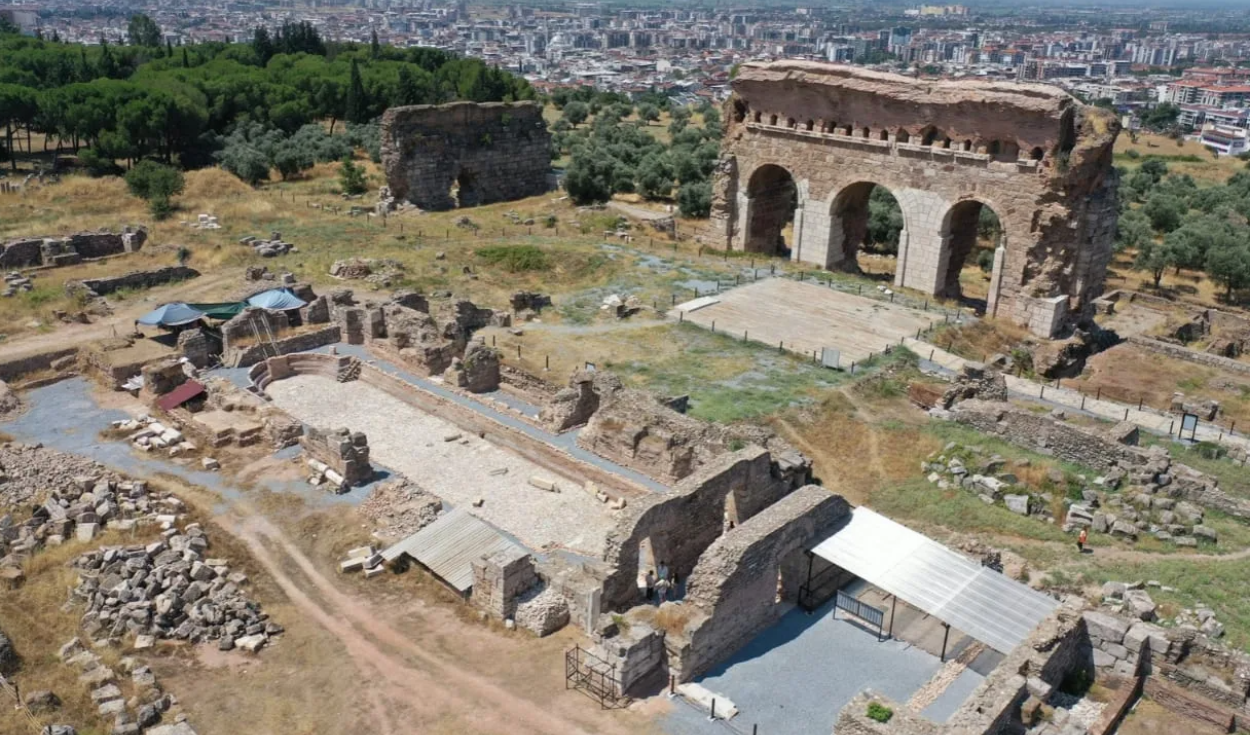
Turkish archaeologists have unearthed a 2,000-year-old swimming pool and a mythological floor mosaic in an ancient Roman gymnasium complex in Tralleis, located in Aydın province, Turkey.
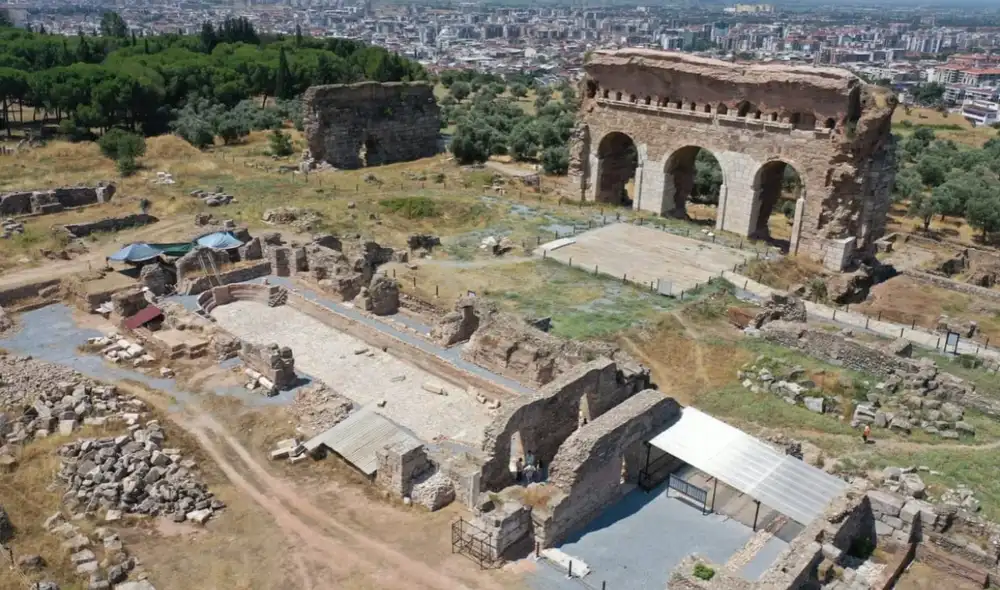
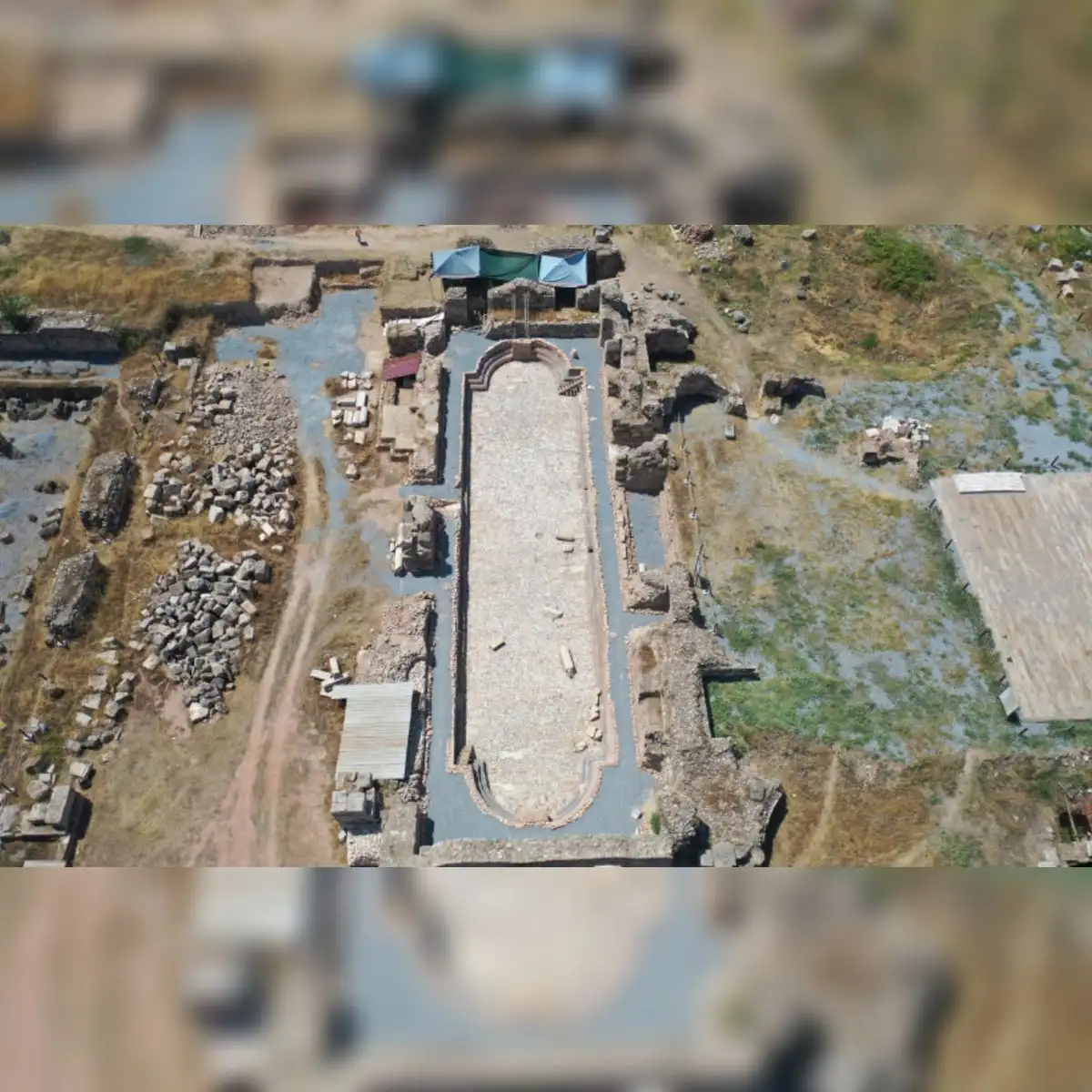
The Ministry of Culture and Tourism announced the discovery of the pool inside the frigidarium, the cold water room of the bath structure within the Gymnasium-Bath complex.
The frigidarium was typically situated at the northern end of Roman thermal baths and housed the penultimate stage of the traditional bathing circuit. Bathers used the cold pool to tone their skin, revitalise their bodies, and close their pores before applying oils.
Measuring approximately 37 metres long by 12 metres wide, the pool had space to accommodate around 300 people at once. Researchers believe it was used by young citizens who trained at the adjacent gymnasium.
Discovery of Poseidon mosaic
At the end of July, an excavation team led by Murat Çekilmez of Aydın Adnan Menderes University uncovered an almost 2,000-year-old room featuring a mosaic floor, according to state news agency Anadolu.
The mosaic depicts a hippocampus, a mythological sea creature associated with the Greek sea god Poseidon.
Archaeologists made the discovery unexpectedly during digging at the site. The area initially appeared to hold only a workshop dating to the Byzantine era, but deeper excavation revealed the ancient decorated floor pavement underneath.
Çekilmez said that finding the mosaic was an exciting moment for the excavation team because the artwork was extraordinarily well preserved within the complex. He added that the discovery was scientifically significant and revealed details about mythology and daily life during the Roman Imperial period, when the room was fully active.
Center of learning and science
Çekilmez noted that the Gymnasium-Bath complex served as a key educational institution where young people received instruction from an early age, rather than functioning solely as a sports facility.
He explained that researchers believe the complex also operated as a scientific center because the structure contains spaces dedicated to teaching. Although physical education was valued, the institution also produced accomplished minds, including doctors and engineers, contributing to the ancient reputation of Tralleis as a home to writers and scholars.
Ancient history of Tralleis
According to the ancient Greek geographer Strabo, Tralleis was founded by the Argives and the Trallians. The city later fell under Persian Empire rule until 334 BC, when it surrendered to Alexander the Great.
Control of Tralleis subsequently passed to Alexander's general Antigonus I Monophthalmus, then to the Kingdom of Pergamon, and later to Rome. The city eventually adopted Christianity and was integrated into the Byzantine Empire in the late 11th century.
Among its most famous residents was Anthemius of Tralles, the 6th-century scholar who served as one of the primary architects of the Hagia Sophia cathedral in Constantinople.


