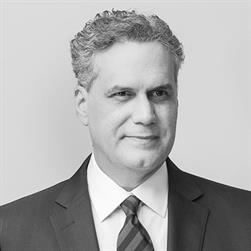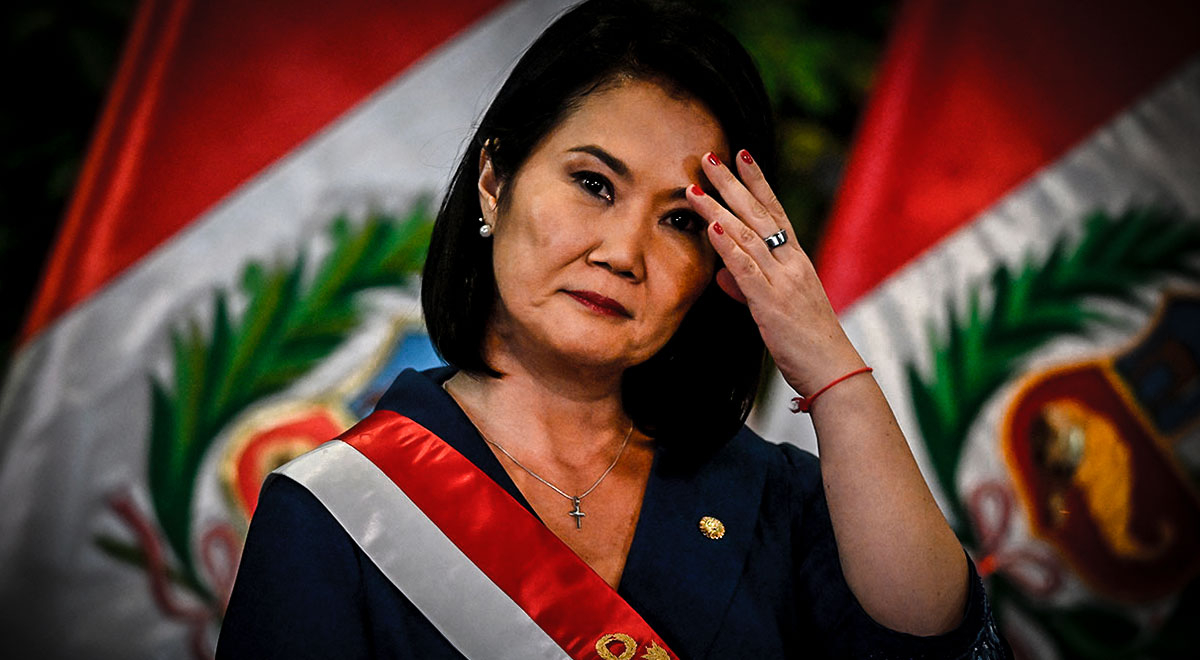
Marianella Ledesma, a former judge of Peru's Constitutional Tribunal, has accused President Keiko Fujimori of failing to address the deaths of fifty people killed during social protests in southern Peru, in an opinion column published on August 4.
Ledesma wrote that as a new period of government began, Fujimori delivered a message to the nation but did not speak, in her capacity as head of state, about the fifty people killed amid the unrest in the south of the country.
She said the omission was one of several unresolved matters, alongside the cases of Inti Sotelo, Jack Bryan Pintado and the musician Eduardo Mauricio Ruiz, known as Trvko, whose families are seeking a serious, prompt, impartial and effective State investigation into their deaths.
Sotelo and Pintado died during the November 2020 protests that followed the removal of then-president Martin Vizcarra and led to the resignation of interim leader Manuel Merino. Ruiz died during the unrest that followed the removal of President Pedro Castillo in December 2022. All three deaths have remained a point of contention over the State's handling of protest-related killings.
Constitutional duty to govern for all
Ledesma cited Article 118 of Peru's Constitution, which she said requires a president to govern not only for those who voted for them but for the whole nation. She argued that the exercise of power must begin with recognising the human being as the centre of every public decision, and said this remains a pending task for the new government.
Dignity as a constitutional principle
Ledesma pointed to Article 1 of Peru's Constitution, which states that defending the human person and respecting their dignity is the supreme purpose of society and the State. She said that in constitutional terms, dignity is not about a person's behaviour, pride or self-esteem, but about their inherent worth simply for existing, regardless of whether they are good, intelligent, wealthy or always act correctly.
She referred to a ruling by Peru's Constitutional Tribunal, the country's highest constitutional court, in file Exp. N.º 02273-2005-PHC/TC, which held that dignity humanises the exercise of power by requiring that State decisions always keep the specific human being they affect in view.
Empathy for victims' families
Ledesma wrote that human dignity requires not only respecting people's lives while they are alive, but also treating those who have lost a loved one with respect. She said a president's empathy is a way of acknowledging that every life had value and that the pain of families deserves to be heard and addressed, and that none of this has occurred.
She said showing empathy does not mean accepting legal responsibility before an investigation is carried out, but recognising that families have lost loved ones and that their grief deserves respect and consideration. In a democracy, she wrote, leadership is not only about making decisions but also about standing with the population during tragedy and contributing to social reconciliation.
Levinas and 'the face of the other'
Ledesma invoked the philosopher Emmanuel Levinas, who held that ethics begins when a person sees the face of another. She said this means that before seeing a number, a case file or an enemy, one must see a human being, an idea she said connects directly with Article 1 of Peru's Constitution, which places the person at the centre of the State's purpose.
An unfinished institutional cycle
Ledesma said the aim should not be to close a political chapter, or the 26-year parenthesis she said has opened with the new administration, but to close an institutional cycle in which victims of violence have not received the recognition, truth and empathy that the principle of human dignity demands, a cycle she said does not appear to be a priority for the current government.
She wrote that the best government is not measured only by economic growth or public order, but by a leader who never loses sight of the fact that behind every decision are specific people with names, histories and families who require a response from the State.
Peru's greatest challenge, she said, may not be improving its institutions but recovering the true meaning of Article 1 of the Constitution, understanding that the State exists for the person, not the person for the State.
Ledesma concluded that when a government fails to recognise the pain of those who have lost loved ones, the constitutional promise of human dignity remains incomplete. She wrote that when a leader instead places the person at the centre of decisions, listens to victims and acknowledges their suffering, the Constitution stops being merely a text and becomes a lived reality.