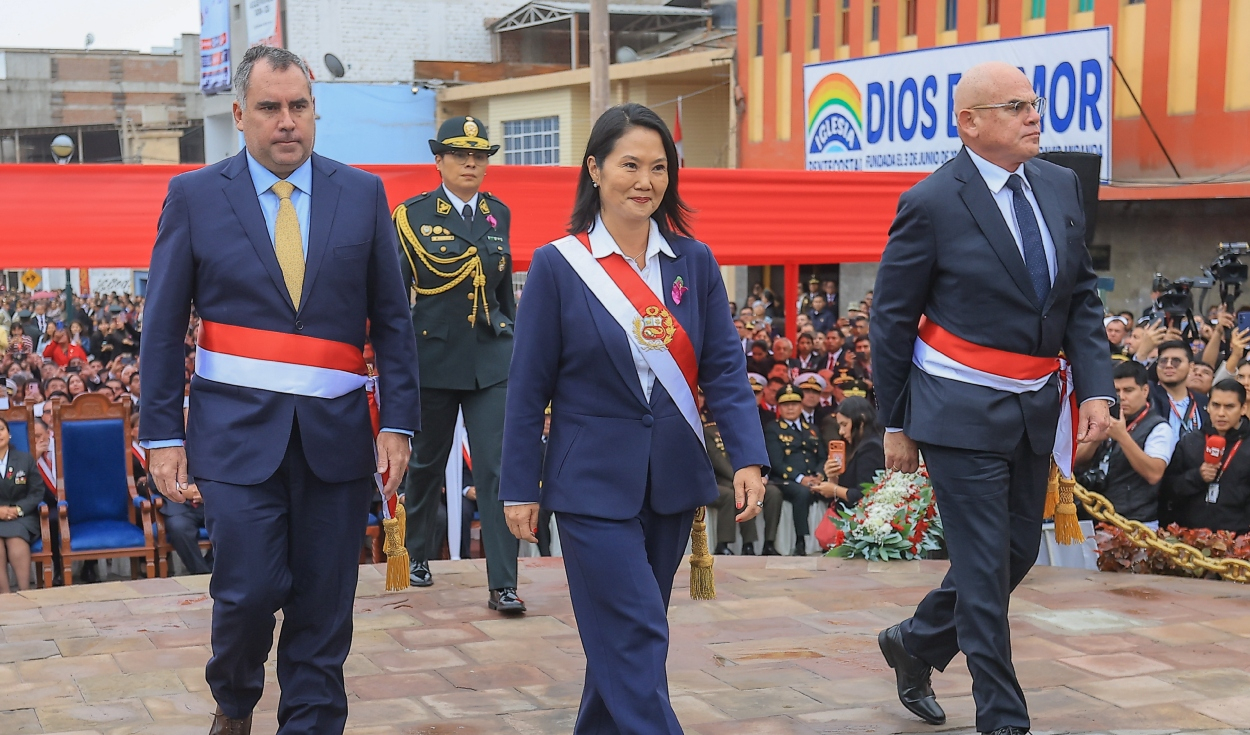
Peruvian President Keiko Fujimori has formally requested 120 days of delegated legislative powers from the Chamber of Deputies to enact sweeping executive measures on public safety, economic regulation, and state reform.
The bill, approved by the Cabinet, was delivered to the parliamentary filing office around 7 p.m. and will undergo committee review, analysis, and floor debate before lawmakers vote to accept or reject the proposal.
Under the Peruvian Constitution, the executive branch can request temporary legislative powers from parliament to pass decrees on specific issues without standard congressional debates for each law.
The requested 120-day mandate focuses heavily on citizen security, economic simplification for small businesses, tax adjustments, administrative efficiency, and structural changes across executive institutions.
Anti-Crime Proposals and Legal Omissions
In matters of citizen security, the bill outlines plans to review Peru's immigration framework to promote orderly migration and update regulations governing the oversight and traceability of firearms. The proposal also includes reforms to the national penitentiary system and allows the Armed Forces to participate exceptionally in external security actions and inside prison facilities.
The administration targets several existing statutes for modification to combat crime and organized gangs, including Law N° 32490 regarding extortion and contract killings in public transportation, Law N° 30096 on computer crimes, Law N° 30424 on corporate liability for transnational bribery, and Law N° 32332 regarding the Denuncia Digital platform for reporting property crimes.
The executive request also seeks power to issue decrees altering the Military Police Penal Code, establishing mobile phone number identification systems, and curbing the illegal trade of mobile devices. Crucially, the bill asks parliament to designate organized criminal groups as terrorist organizations and to establish a legal self-defense framework that grants a presumption of innocence to individuals who exercise it.
However, the bill omits any reference to repealing controversial criminal laws passed during the previous legislature by a majority led by Fujimori's Fuerza Popular party. Critics note those laws altered rules on plea bargaining, preliminary detention, unannounced police searches, asset seizures, and wiretapping controls.
Economic Measures and Labor Inspection Changes
In the economic realm, the proposal aims to reduce administrative barriers and simplify official procedures for micro and small enterprises seeking formal business status.
The bill includes amendments to Law N° 28806, Peru's labor inspection law, to incorporate a preventive approach without stripping regulators of their enforcement authority. The executive also proposes shifting most non-working public holidays to Mondays to boost national productivity, maintaining traditional dates only for National Holidays, Christmas, and New Year.
To streamline state services, the proposal seeks to eliminate bureaucratic hurdles across government offices and repeal Law N° 32645, which created the College of Artists. Culture Minister Alberto Beingolea previously backed the elimination of the professional body.
For energy and mining, the bill outlines updates to concession rules to activate private investment in mining exploration and extraction. It also includes measures to encourage private investment in hydrocarbon exploration, production, and storage by simplifying administrative processes along the supply chain.
On trade and taxation, the executive seeks authority to update customs rules, set pre-established compensation for intellectual property infringements, ban goods produced through forced labor, and simplify corporate tax obligations.
State Reform and Utility Restructuring
The government's proposal includes a structural reform of the executive branch to improve coordination among state agencies. Prime Minister Luis Galarreta addressed previous concerns about potential ministry closures, clarifying that the state could become leaner without cutting government departments.
The bill also calls for a public necessity restructuring of Sedapal, the state-owned water utility servicing Lima, following major flooding and drainage failures in the district of Villa El Salvador. The intervention fulfills a prior pledge made by Fujimori following the utility breakdowns.
Additionally, the measure empowers INDECI, the national civil defense agency, to take direct charge of distributing humanitarian relief supplies during the first 15 days of declared disasters or emergencies.
Executive Appeal and Parliamentary Timeline
Speaking at an official activity in the southern city of Tacna alongside Justice Minister Ernesto Alvarez and other cabinet members, Fujimori stated she remains confident that parliament will approve the request.
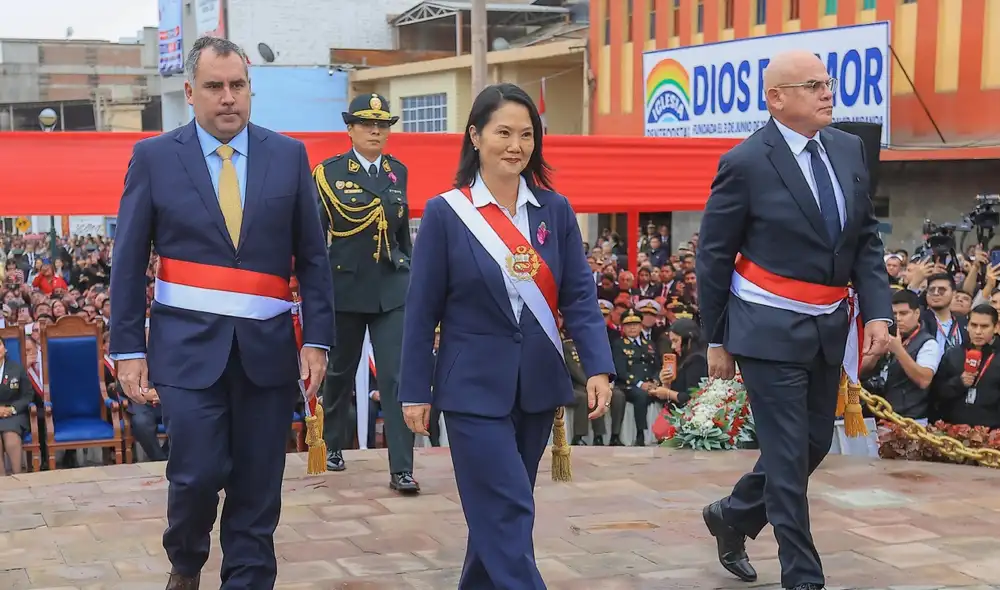
Fujimori said the administration is already making fast decisions but needs to accelerate state actions, arguing that legislative powers will allow the government to convert available public resources into infrastructure projects at greater speed. She appealed to the objectivity and common sense of lawmakers to pass the request.
To expedite the process, the executive invoked Article 105 of the Constitution, which enables fast-track parliamentary handling. Under Chamber of Deputies rules, committee leadership has up to 15 business days to submit the bill to the full floor for debate.
If passed by the Chamber of Deputies, the bill moves to the Senate, where lawmakers have seven business days to debate and vote. Upon final passage, the enabling law allowing Fujimori and her ministers to enact decrees must be published within one day.