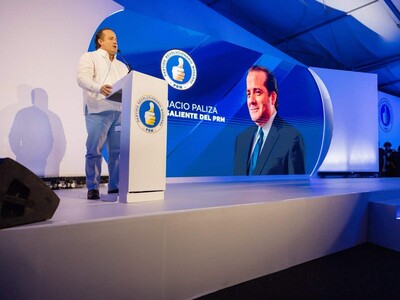
Jose Ignacio Paliza has stepped down as president of the ruling Modern Revolutionary Party (PRM) in Santo Domingo, concluding an eight-year tenure with a call for party unity and institutional stability.
His departure follows an internal convention and leadership renewal process convened this year by the party, which selected Dominican Republic President Luis Abinader to take over the formal leadership of the organization.
The Modern Revolutionary Party is the ruling political force in the Dominican Republic. Paliza, who also serves as Minister of the Presidency in Abinader's cabinet, originally assumed the party presidency at the age of 36.
In a farewell declaration titled Beyond victories: a united PRM!, Paliza expressed satisfaction in delivering an organization that he described as stronger, more cohesive, and better prepared for future political challenges.
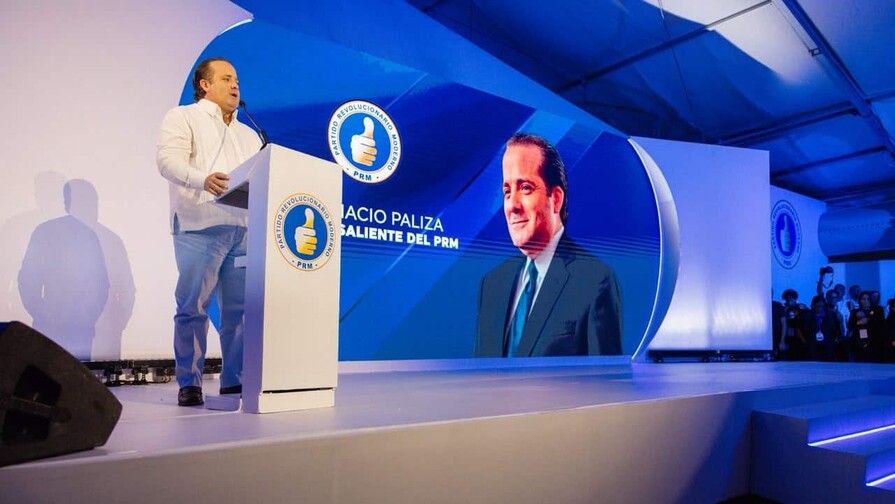
Paliza stated that the primary legacy of the outgoing leadership lies not only in its electoral triumphs, but in maintaining cohesion across a party defined by diverse internal currents and prominent leaders.
Electoral success and internal management
Reflecting on his eight years at the helm, Paliza remarked that if he had to summarize his entire presidency in a single word, that word would be unity.
He acknowledged that internal differences arose during his term, but asserted that they were managed effectively without causing fractures within the party. He stressed that no political leadership should be built on the division of others, adding that the collective party project must always take precedence over personal ambitions.
Paliza highlighted the PRM's performance in the 2024 general elections as evidence of that cohesion. The party won 80 percent of municipal governments across the country and secured three-quarters of the seats in both legislative chambers.
The election also saw President Luis Abinader win re-election with a higher margin of support than he achieved four years earlier. Paliza attributed these results to intensive territorial work and the unified efforts of the party membership.
Reflections on power and leadership
Recalling his initial appointment at age 36, Paliza noted that his administration navigated extraordinary challenges, including suspended elections, the COVID-19 pandemic, and various economic, social, and political pressures.
Throughout that period, he said the PRM strengthened its local grassroots structures, expanded its national footprint, and modernized its organizational mechanisms.
A major focus of his farewell message addressed how political figures should handle positions of power. Paliza emphasized that leadership roles are strictly temporary and warned against confusing public responsibility with personal privilege.
He stated that positions never belong to individuals, but rather individuals belong, temporarily, to positions. He added that political and state institutions are strengthened when leaders understand that no single person is indispensable.
Government role and future challenges
Although stepping down from the party presidency, Paliza confirmed that he will not withdraw from party activity, stating that he will continue to serve wherever the PRM requires him.
Paliza remains in government as Minister of the Presidency. In July, acting as technical secretary of the Council of Government, he formally presented the guidelines for the nation's 2027 Budget Policy.
Looking ahead, Paliza warned that the upcoming responsibilities facing the PRM extend beyond simply retaining power. He identified artificial intelligence, the digital economy, rapid technological shifts, new social demands, and geopolitical tensions as key developments that will require political parties to rethink their strategies and proposals.
He noted that winning elections is insufficient and that political organizations have a duty to prepare the nation for future challenges.
Presidential succession and party transition
Paliza called on the incoming leadership under Abinader to listen to dissenting opinions, protect internal institutional procedures, and maintain party cohesion.
In his strongest political warning, Paliza emphasized that no electoral victory justifies losing decency in the conduct of politics.
The leadership transition opens a new chapter for the PRM as it begins navigating the internal political landscape ahead of the 2028 presidential succession. Under the Dominican Constitution, President Abinader will be ineligible to seek a consecutive term in 2028.
Paliza departs the party presidency after eight years while maintaining his cabinet post and his active role within the PRM political structure, now relieved of the formal duty of leading the organization.