Portuguese musician, singer and songwriter Jorge Palma, one of the most prominent figures in contemporary Portuguese music, died on Monday night in Lisbon aged 76.
Palma abandoned classical piano in his youth to become a pioneering rock artist, building a career spanning more than five decades as a soloist, collaborator and composer.


Early life and classical training
Born in Lisbon in 1950, Palma began taking formal music lessons at six years old and entered the Lisbon Music Conservatory (Conservatório de Música de Lisboa) at age 10. He had started playing earlier at home on a family piano, treating the instrument as a toy and using his ear to replicate melodies heard on the radio and record player.
His mother, who had also studied piano, noticed his talent alongside other family members and encouraged his formal studies. In 1963, at the age of 13, Palma earned second place and an Honorable Mention at an international piano competition during the Juventudes Musicais Festival in Palma de Mallorca, Spain.
Switch to pop rock and early groups
Although his professional recording career is dated from 1972, Palma shifted away from classical music eight years earlier, at age 14, to focus on pop-rock. In a 2022 interview with news agency Lusa, he recalled being motivated by girls and parties, listening to Elvis Presley, The Beatles and The Rolling Stones during high school.
He abandoned his classical piano studies, failed his fourth year at Liceu Camões in Lisbon, and stopped attending gymnastics and music classes. After completing high school, he enrolled in the Faculty of Sciences at the University of Lisbon (Faculdade de Ciências da Universidade de Lisboa), attending for two years before dropping out.
Before launching his solo career, Palma played with the group Sindicato, performing at the inaugural edition of the Vilar de Mouros rock festival in northern Portugal in 1971. He also played with Black Boys while beginning work in musical composition, orchestration and studio recording.
Debut single, appliance payment and exile
In 1972, Palma recorded his debut solo single, "The Nine Billion Names of God," accompanied by the B-side "Come, Morpheus." The title was taken from an Arthur C. Clarke science fiction short story and inspired by the book "The Morning of the Magicians" ("O Despertar dos Mágicos") by Louis Pauwels and Jacques Bergier.
Palma noted in a 2022 interview with newspaper Público that he was 22 when he wrote the song in academic English, drawn to Clarke's story contrasting Tibetan monk mysticism with Western computers. He initially approached conductor Thilo Krasmann to record a piano-and-voice demo before bringing it to the Arnaldo Trindade record label.
Label director Carlos Cruz agreed to fund and handle the recording, paying Palma in household appliances, specifically a washing machine and a refrigerator, because company owner Arnaldo Trindade, who lived from 1934 to 2024, ran an appliance business. Having recently married his first wife, Palma auctioned the appliances among friends when he received a military draft notice in 1973.
Obtaining a 15-day military permit in Setúbal, Palma fled Portugal, flying from Lisbon to London and onward to Copenhagen, Denmark. His official biography, "Na Palma da Mão" by Pedro Teixeira, records that in Copenhagen he worked at a hotel performing maintenance, washing elevators and cleaning guest rooms.
Return to Portugal, debut album and Paris busking
Palma returned to Portugal following the April 25 Carnation Revolution in 1974, working as an orchestrator. In 1975, he released his debut album, "Como uma viagem na palma da mão," which reflected the influence of British progressive rock groups such as Genesis and Yes.
The album was recorded by just three musicians: Vítor Mamede on drums, Rui Cardoso on woodwinds and flutes, and Palma playing all keyboards, bass and guitars. Later in the 1970s, Palma moved to Paris, performing on streets and in the metro system, singing songs by Bob Dylan, Paul Simon, James Taylor, Crosby, Stills & Nash, and bluegrass material.
Over his career, Palma recorded 14 original studio albums in total. In a 2022 interview, he reflected that each record represented a distinct moment in his life, shaped by his friendships, living situations, reading material and listening habits at the time.
Graduation, acoustic album 'Só' and 1990s projects
Returning to Lisbon in the 1980s, Palma resumed his piano studies at the Lisbon Music Conservatory, graduating in 1990. In 1991, at age 40, he released "Só," a career retrospective recorded solo on piano at the historic Valentim de Carvalho studios.
The 15 tracks on "Só" reinterpreted songs from his previous two decades, including "Bairro do amor" (1977), "Na terra dos sonhos" (1980), "O meu amor existe" (1982), "Estrela do mar" (1984), "Deixa-me rir" (1985) and "Frágil" (1989). Palma recalled that his record label lacked funds for an artist who was not a top seller, prompting the stripped-down piano-and-voice format that listeners continued to praise decades later.
Throughout the 1990s, Palma toured his existing discography, formed the rock supergroup Palma's Gang with Zé Pedro and Kalu of Xutos & Pontapés alongside Flak and Alex Cortez of Rádio Macau, composed music for theatre, joined the group Rio Grande, and wrote songs for other artists.
He returned to original solo studio albums with "É proibido fumar" in 2001, followed by "Norte" (2004), "Voo nocturno" (2007), "Com todo o respeito" (2011), and his final studio album, "Vida," in 2023.
Family collaborations and stage shows
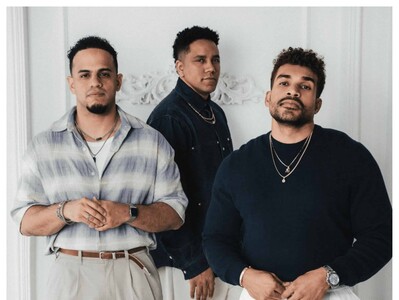
In May 2025, Palma premiered the concert show "3 palmas na mão," performing on stage alongside his two sons, Vicente Palma, born in 1983, and Francisco Palma, born in 1995. Vicente Palma had already served as a musician in his father's touring band for approximately 20 years.
The production title originated as the name of a family WhatsApp group before becoming a song on the album "Vida" and expanding into a live concert. Palma told Mensagem de Lisboa in 2024 that his sons possessed tuned vocals, with Vicente favoring piano and Francisco favoring guitar, adding that all three recorded guitars and vocals together in the studio.
Awards, national honors and final address
Palma won the Prémio José Afonso in 2002 for his self-titled album "Jorge Palma" and the inaugural Prémio Pedro Osório from the Portuguese Society of Authors (SPA) in 2012 for "Com todo o respeito." In 2020, following a concert marking his 70th birthday, Lisbon City Council awarded him its medal of cultural merit, and President Marcelo Rebelo de Sousa decorated him as a Commander of the Order of Prince Henry.
In April 2026, music publishing organization Audiogest awarded Palma the Career Award (Prémio Carreira) at the 8th PLAY Portuguese Music Awards (Prémios da Música Portuguesa). Wearing a red carnation on his chest at the ceremony, Palma expressed gratitude to supporters and praised National Health Service healthcare professionals for their dedication despite limited resources.
He urged the public never to allow the April 25 revolution to fade into a distant memory, calling for the ongoing renewal of freedom, justice and democracy in Portugal before concluding his speech with cheers for liberty and democracy.