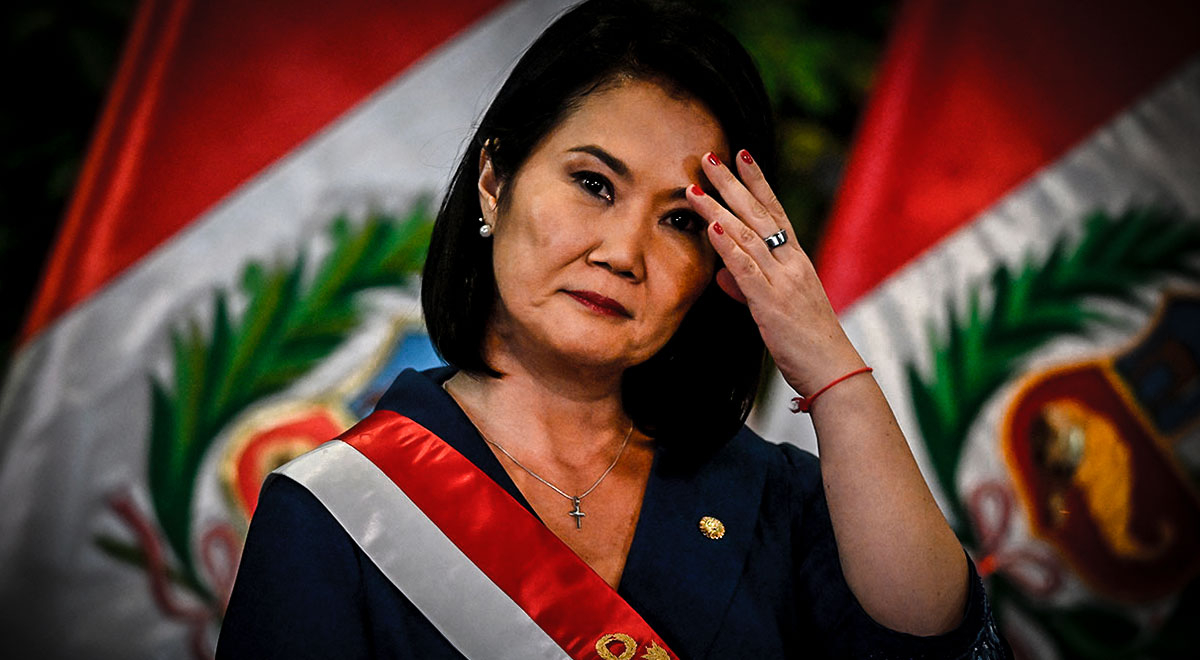
Peruvian psychoanalyst and writer Jorge Bruce has published a column arguing that Peru's new government, led by President Keiko Fujimori, has failed to deliver the order it promised voters and instead is governing through a display of falsehoods and incompetence.
Bruce, a professor at the Pontifical Catholic University of Peru who regularly writes opinion columns for various outlets, is the author of a book on racism titled "Nos habiamos choleado tanto. Psicoanalisis y racismo." In his column, he borrowed the title of Paul Thomas Anderson's film "One Battle After Another" to describe what he called an insidious feeling shared by many Peruvians under the new administration.
He wrote that many had feared an authoritarian government modeled on the 1990s dictatorship of former president Alberto Fujimori and his intelligence chief, Vladimiro Montesinos. Instead, he said, each day brings a fresh batch of bewildering or depressing measures, with nothing suggesting the country is heading toward the controlled order that Keiko Fujimori's campaign promised voters.
Police accused of abandoning citizens
Bruce wrote that the police force under General Arriola has not changed and appears to have gotten worse, leaving ordinary citizens to fend for themselves.
He cited an interview the political scientist Alberto Vergara gave to the newspaper La Republica, in which Vergara said this is the police force the government wants, not to restore order but to use as a repressive tool once protests erupt, something Vergara said was bound to happen as desperation grows among people left to face extortionists and other criminals.
Lima mayor's reelection approved
Bruce also criticized a ruling by Peru's National Elections Jury, known as the JNE, approving the reelection of Lima Mayor Rafael Lopez Aliaga, a member of the Catholic organization Opus Dei, who had run formally as a city council candidate for his party, Renovacion Nacional. Bruce said the ruling, granted by a JNE official named Burneo, defied both the constitution and prior rulings by regional electoral panels, describing it as the triumph of what he called the law of the sharpest operator, sealed and sanctified.
He wrote that once his reelection was secured, Lopez Aliaga sought to reassure Lima residents by saying that anyone who becomes a victim of extortion during his second consecutive term need only call Carlos Alvarez to have the problem solved. Bruce called the remark delirium layered on top of contempt for the law, adding that the people being asked to trust entertainers with widespread violence are the city's most unprotected and anguished residents.
Diplomatic posts as rewards
Bruce pointed to the naming of Admiral Tubino as Peru's ambassador to Argentina as an example of key international appointments being handed out as favors rather than merit. He said Peru's diplomatic service has a reputation and professionalism that would allow it to staff crucial postings with career officers, but has long been mistreated by the practice of using embassies as rewards for political service.
Bruce recalled that during the years he lived in Paris he observed the work of Ambassador Arias-Schreiber, one of the architects of Peru's 200-nautical-mile maritime boundary, a contribution he said now seems to have been forgotten.
A bet on the status quo
Bruce said the prevailing sense, as Vergara has also argued, is a bet on the status quo, comparing it to the line from Giuseppe Tomasi di Lampedusa's novel "The Leopard" that everything must change so that nothing changes. He called this a dangerous decision, saying Peruvians elected this government to free them from a precarious daily existence covering not only security but health, education and transport.
He wrote that the implicit expectation had been a pact between citizens and the father of the President, Alberto Fujimori: Peruvians would give up certain rights in exchange for the imposition of order.
According to Bruce, the only genuinely new element has turned out to be the cabinet, which he said does not appear well aligned, since in practice a congressional pact has effectively run the country since what he called Pedro Castillo's ridiculous coup, a reference to the former president who was removed and arrested in December 2022 after attempting to dissolve Congress. Given that, Bruce said, it was naive to expect real change, comparing government promises to Lopez Aliaga's own rhetoric of empty talk and crude remarks aimed at pleasing the most lowbrow instincts in everyone. He added that every person, not only Peruvians, carries an uncivilized streak drawn to coarse jokes, racism, sexism and classism.
Looking for ways to resist
Bruce wrote that under these conditions, the task ahead is figuring out how to endure difficult years that show no sign of ending, only continuing. He described recently taking part in a congress of the Peruvian Psychoanalytic Society titled "Un psicoanalisis mestizo: Raices y travesias," or "A Mestizo Psychoanalysis: Roots and Journeys," which he called a resounding success.
At one of the panels, the artist Gabriel Alayza proposed what Bruce described as a simple but brilliant idea: faced with the advance of artificial intelligence, which Bruce called the figurehead of a techno-fascism driven by Silicon Valley's wealthiest owners, the best form of resistance might be returning to the most basic acts, such as picking up a pencil and drawing.
Bruce concluded that since not everyone is an artist, the challenge for each person is to find their own way of resisting, preserving the capacity to think, symbolize and recognize others.