

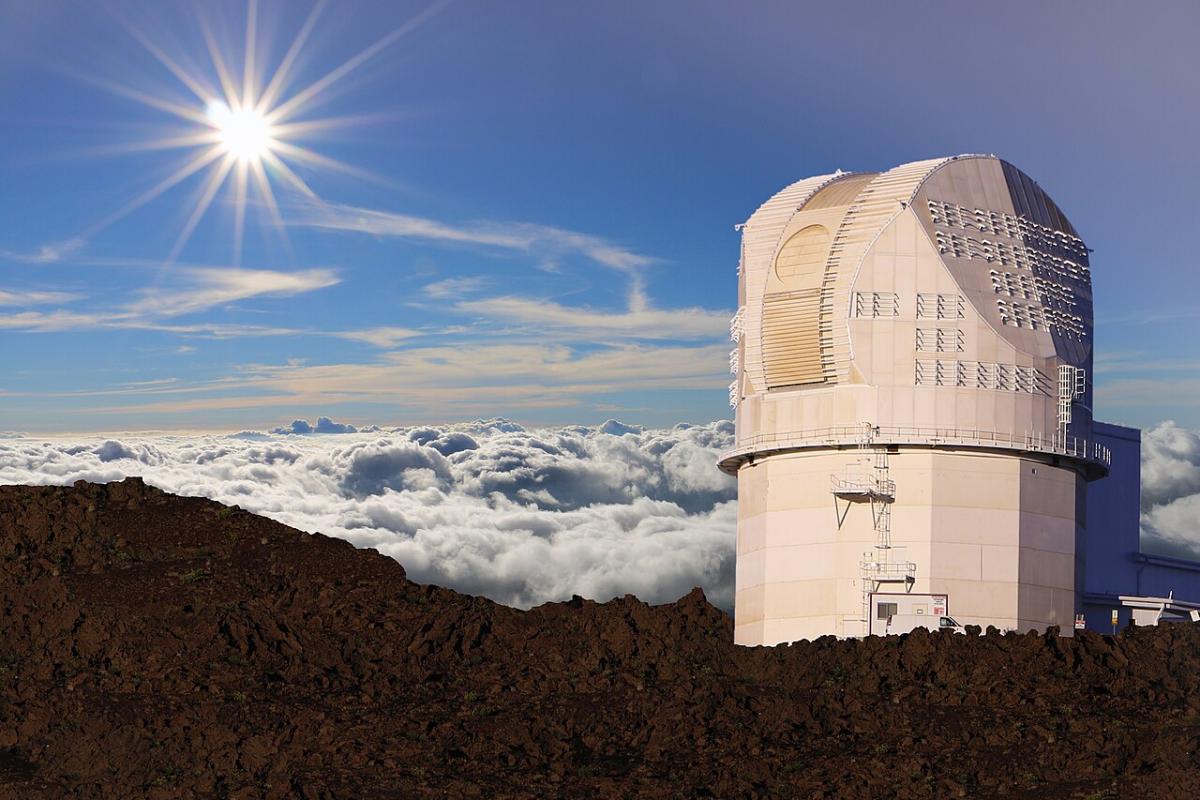
The Daniel K. Inouye Solar Telescope on the Hawaiian island of Maui requires extensive daily liquid cooling to control intense heat generated by its optics.
According to a report by autonocion.com, researchers operating the world's largest solar telescope must take extraordinary measures every day to manage the extreme thermal load. When the facility's primary mirror, which measures more than 4 metres in diameter, focuses incoming sunlight into a single beam, it concentrates roughly 12 kilowatts of solar power. That energy is sufficient to cook a bag of popcorn in approximately 20 seconds.
The observatory's optics must operate at approximately room temperature to prevent localized heating from creating atmospheric turbulence that distorts solar images. The telescope is located at an altitude of 3,000 kilometres on Maui, where it captures detailed observations of the Sun.
Cooling system and heat rejection
To maintain stable operating temperatures, more than 11 kilometres of piping containing a specialized cooling fluid called Dynalene runs throughout the building. The system maintains the fluid at 13 distinct temperatures, tailored to the specific cooling requirements of different telescope components.
The observatory dome uses a separate cooling mechanism. Massive fans measuring 6.5 metres in diameter are installed in the upper section of the dome to extract heated air, while automated shutters open to allow cooler air to pass through the structure.
The primary thermal protection sits directly in front of the secondary mirror, where solar light is most concentrated. A liquid-cooled metal disc acts as a specialized heat sink, allowing only a narrow beam of required light to pass through while absorbing and diverting the remaining energy. This device removes more than 95 percent of solar heat from the system, creating a paradox in which the telescope must reject nearly all the sunlight it was built to collect.
If the heat sink cooling system fails, automated safety mechanisms trigger immediately. A shutter blocks the solar beam, a secondary guard protects the main mirror, and the dome closes.
Solar discovery and space missions
Despite these thermal challenges, the instrument has achieved significant scientific milestones. On August 5, the National Solar Observatory announced in the journal Nature that the Inouye telescope had photographed previously unseen vortex formations at the edges of magnetic structures on the solar surface.
The observation revealed a fluid dynamics phenomenon known as Kelvin-Helmholtz instability. Scientists believe these vortices generate magnetic radiation that continues to heat the solar corona far above the surface of the Sun.
The solar research coincides with ongoing deep-space operations by NASA's Voyager 1 probe, which was launched in 1977 and continues to transmit data from beyond the heliosphere. As of April 2026, Voyager 1 continues to operate two onboard scientific instruments, a magnetometer and a plasma wave detector, sending signals that take over 23 hours to reach Earth.



