Turkish Foreign Minister Hakan Fidan announced on Saturday that a maritime advisory dispute with Greece over an undersea electricity cable project has been resolved.
Speaking in Istanbul to correspondent Manolis Kostidis of Greek broadcaster SKAI and the daily newspaper Kathimerini, Fidan said that everything was normal and everything was fine regarding recent maritime notices. When asked about the conflicting advisories issued by Athens and Ankara over survey operations in the Eastern Mediterranean, the Turkish foreign minister stated that the issue regarding navigational warnings for the electrical interconnection cable work had been settled.
The remarks signaled an abrupt easing of diplomatic friction following twenty-four hours of heightened tension between Greece and Turkey over preliminary survey work for the Great Sea Interconnector, an undersea power cable designed to link the Greek and Cypriot electricity grids.
Ankara Shifts Position on Maritime Warnings
The announcement from Fidan marked a visible shift from Ankara's earlier public stance. After Greek authorities published a maritime safety notice, known as a NAVTEX, Turkey had answered through its Antalya naval station with an opposing advisory. The Turkish counter-notice declared that Ankara had not consented to the survey activity across the area, setting its advisory to remain active until 6 March 2027, the same expiration date designated by Athens.
While Turkish officials offered assurances that the diplomatic disagreement had ended, neither side released specific details explaining the terms of the settlement. In Athens, Greek diplomatic sources reacted coolly to Fidan's comments, stating that Turkey's internal political management was of no concern to Greece. The Greek sources emphasized that Greece remains the sole licensing authority in the maritime zone, had acted strictly in accordance with international law, and would continue to do so.
French Research Vessel Readies for Departure
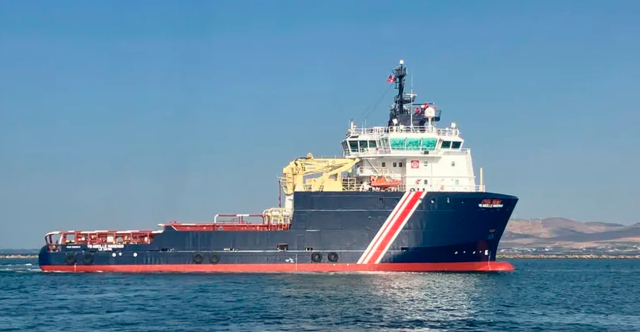
The de-escalation comes as technical operations prepare to restart off Crete. The French research vessel Abeille Marengo is scheduled to sail from the port of Heraklion on Monday, 9 November 2026, to resume seabed survey work for the cable project, according to Kathimerini, following an anticipated 72-hour operational preparation period.
Before Fidan made his remarks, officials in Athens made clear that Greece had held no talks with French authorities on establishing any compromise formula with Turkey. Greek officials stressed that any communications conducted by French representatives must not take the form of requesting a permit from Ankara. Greek diplomatic sources viewed Turkey's counter-notice as largely procedural, though French officials were reportedly irritated by the public controversy surrounding their vessel.

In a related regional contact earlier on Saturday, Turkish diplomatic sources reported that Fidan held a telephone conversation with Egyptian Foreign Minister Badr Abdelatty. The two diplomats reviewed broader developments across the Middle East and the Eastern Mediterranean basin.
Turkish Claims of Diplomatic Concessions
The sudden diplomatic friction originated when the Heraklion NAVTEX station authorized the Abeille Marengo to carry out marine surveys between 6 November 2026 and 6 March 2027. Following the Greek announcement, Turkish media outlets claimed that Ankara had secured a major diplomatic triumph.
The Turkish newspaper Hürriyet published an article claiming that Athens had suffered a cold shower and that Greek plans had been thwarted by Turkey. The report alleged that the French government had bypassed Greek authorities and approached Ankara directly for written permission, an act Turkish commentators interpreted as de facto recognition of Turkish maritime boundaries established under the 2019 Turkey-Libya maritime memorandum.
According to Hürriyet, French Ambassador to Turkey Isabelle Dumont met with Turkish Deputy Foreign Minister Mehmet Kemal Bozay to deliver formal notifications and navigational coordinates. The newspaper also cited a French source speaking to Kathimerini who indicated that Paris and Ankara were nearing agreed wording for formal correspondence, which Turkey treated as a formal application for authorization under diplomatic channels.
Athens Rejects Permit Claims and Affirms Maritime Law
Greek officials rejected that narrative entirely, insisting that no request for Turkish permission had been made that could infringe upon Greek or Cypriot sovereign rights. The foreign ministry in Athens stressed that all technical notifications and maritime notices strictly followed the United Nations Convention on the Law of the Sea.
Turkey had previously contested the survey corridor through the Antalya NAVTEX station, arguing that sections of the seabed fell within the Turkish continental shelf claims submitted to the United Nations on 18 March 2020. The Turkish Ministry of Foreign Affairs issued a statement claiming the French vessel planned arbitrary research inside Turkish waters and asserted that Greek and Cypriot directives were invalid because required consent procedures remained incomplete. Ankara maintained that its determination to protect its sovereign rights was absolute, while continuing to favor dialogue and regional coordination.
Greek Deputy Prime Minister Kostis Hatzidakis dismissed the domestic criticism on Saturday morning during an interview with the television channel Action24. Hatzidakis stated that the government did not conduct foreign policy for domestic consumption and answered challenges through concrete actions. He argued that the very existence of Turkey's counter-notice proved Athens had made no concessions, pointing out that Ankara would never have issued an opposing advisory if it had received what it wanted.
Coordinated Response and Crete Flashpoint
To ensure complete alignment between Athens and Nicosia, Greek Foreign Minister George Gerapetritis held telephone consultations with Cypriot Foreign Minister Constantinos Kombos. Following their discussions, the Greek foreign ministry issued an official statement regarding the research permit, an uncommon step for maritime survey missions of this nature.
Maritime observers and Kathimerini noted that the true test of regional stability would occur when the Abeille Marengo sailed east of Cabo Sidero, a cape situated at the northeastern tip of Crete. That location was regarded as the critical threshold where Ankara would either deploy warships to actively obstruct the French survey ship or limit its naval response to passive shadowing.
Greek Opposition Parties Question Government Strategy
The diplomatic maneuvering drew immediate scrutiny from opposition parties in Athens. Kostas Tsoukalas, spokesman for the center-left PASOK-Movement for Change party, said during an interview with the radio station Proto Programma that Turkish posturing had been entirely predictable. Tsoukalas described the cable project as an initiative of major European, energetic, and geopolitical significance, reiterating a stance championed by party leader Nikos Androulakis. He urged the government to proceed unhindered, arguing that international law stood firmly on Greece's side and warning that genuine security could not be secured through concessions.
The Communist Party of Greece said that Fidan's assurance that everything was normal raised serious questions after Ankara's unacceptable demands for prior notification. The party argued that asserting Greece was the sole licensing authority failed to address whether the French infrastructure company Meridiam had provided notifications to the Turkish government, warning that corporate communications could allow Ankara to claim jurisdiction and establish precedents damaging national sovereignty.
Kyriakos Velopoulos, leader of the right-wing Greek Solution party, criticized the ruling New Democracy administration for operating under what he termed a fear syndrome. Velopoulos argued that if the government hesitated to lay an underwater electricity cable and chose to hide behind French contractors, it would fail completely when managing future offshore energy extraction.