The television industry is struggling to produce a defining comedy series for Generation Z to match the cultural dominance of Friends, as changing viewer habits, economic pressures, and demographic shifts fragment modern audiences.
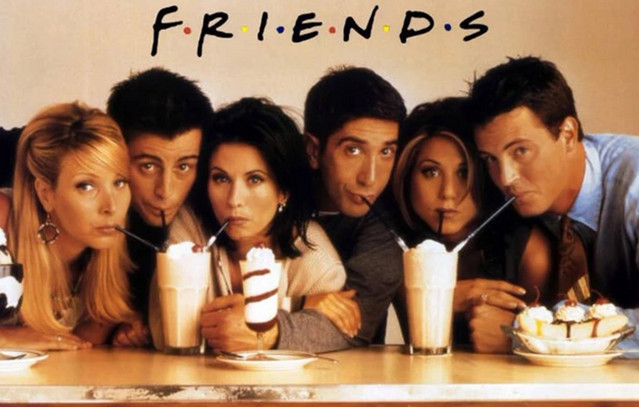
More than 20 years after Friends concluded its 10-season run from 1994 to 2004, network executives and streaming platforms have launched several youth-focused sitcoms. However, none have achieved the universal reach or cultural imprint of the NBC flagship, which followed six 20-something friends living in Manhattan.
Legacy of a television phenomenon
During its original broadcast run, Friends identified strongly with Generation X, comprising people born between 1965 and 1980. The average live audience for the series never dropped below 20 million viewers, and its finale drew approximately 52.5 million viewers in the United States, becoming the most-watched television episode of the 2000s decade in the country.
The cultural influence of the show extended to The Rachel haircut, slip dresses, and Joey's catchphrase how you doin'. Decades later, its popularity remains intact. In UCLA's Teens and Screens 2025 report, Friends ranked 16th among favorite movies and television shows for Gen Z, alongside modern hits like K-Pop Demon Hunters and The Summer I Turned Pretty.
Network creators have attempted to adapt the core Friends formula for Gen Z, born between 1997 and 2012, by focusing on chaotic personal relationships, professional dead-ends, and daily adulting struggles. Mindy Kaling's Not Suitable For Work centered on five recent graduates in Manhattan when it debuted in June, but low viewership and mediocre reviews led to its official cancellation this week.
Other recent attempts include FX's Adults, which launches its second season today following five friends cohabiting in Queens, and Kaling's The Sex Lives of College Girls, which concluded in 2025 after three seasons following four female students in Vermont. HBO's I Love LA, created by Rachel Sennott, focuses on aspiring West Coast influencers. While Adults and I Love LA earned second seasons, neither has matched the cultural sway of Friends or contemporary hits like The White Lotus and The Pitt.
High streaming competition and shorter seasons
The broadcast environment facing modern comedies differs sharply from that of the 1990s. When Friends debuted in 1994, viewers did not have endless content options across streaming services, social networks, and video platforms. Modern series must compete directly with every format of digital entertainment.
According to Activate's 2026 Media Outlook Report, 43 percent of Gen Z members prefer YouTube or other social video platforms, compared to 37 percent choosing subscription streaming services and just 12 percent preferring traditional television. If a show fails to grab attention immediately, automated algorithms recommend alternative content tailored to viewer preferences within seconds.
Episode counts also limit character development. Traditional American sitcoms produced over 20 episodes per season, establishing a volume that supported daily television syndication reruns. Modern target series are typically restricted to eight to 10 episodes per season, giving viewers far less time to bond with characters.
Age gap between writers and Gen Z audiences
An additional hurdle involves the generational gap between onscreen characters and screenwriters. Most creators of Gen Z shows belong to the millennial generation or older demographics.
Entertainment journalist Max Gao stated that few Gen Z screenwriters have established a strong presence within the television industry. Gao explained that until Gen Z creators receive broader opportunities to tell their own stories, television will struggle to depict modern youth authentically within the current social and political environment.
While older writers also scripted Friends, youth culture now evolves much faster. Viewers criticized The Sex Lives of College Girls for awkward dialogue when incorporating Gen Z phrases such as screenshotting a moment in one's mind. Similarly, Not Suitable For Work faced criticism for inserting terms like valid and unhinged, which audience members felt sounded forced rather than natural.
Economic hardship and the housing crisis
Sitcoms historically served as comfort viewing, a function Friends fulfilled for Generation X. Recreating that comfort for Gen Z is challenging because the lived reality of young adults is far less carefree.
Dr. Yalda T. Uhls, founder and chief executive of the Center for Scholars and Storytellers at UCLA, noted that Gen Z has lived through a global pandemic, encountered financial instability, and operates within a polarized political climate toward which young people feel distrustful.
In the United States, Gen Z records the highest unemployment rate of any demographic group, facing limited entry-level positions and workforce reductions driven by artificial intelligence. In contrast, Generation X entered the labor market during a period of economic optimism tied to technological expansion, with surveys at the time recording high personal confidence among young jobseekers.
Screenwriters must balance depicting real adulting anxieties without causing comedies to become excessively dark. In Not Suitable For Work, an actor named Kel, played by Nicholas Duvernay, pursued an audition that appeared to be a major career break but turned out to be an artificial intelligence motion-capture recording session. Outside such scenes, however, the series was criticized for appearing detached from everyday financial realities.
The second season of Adults attempts to address economic pressures more directly through the character Billie, played by Lucy Freyer, who spends the season trying to secure full-time employment. Realism also extends to housing. While Not Suitable For Work featured characters living in spacious Manhattan apartments mirroring Friends, Adults places five friends inside a cramped three-bedroom Queens home where character Sameer, played by Malik Elassal, grew up.
Representation across a diverse demographic
Modern sitcoms must also navigate unprecedented demographic diversity. According to the Pew Research Center, American Gen Z is racially and ethnically more diverse than any prior generation.
Gao noted that fitting such a broad spectrum of lived experiences into a single comedy format is difficult. By contrast, Friends operated in an era when American network television routinely depicted homogeneous, white, heterosexual friend groups.
Attempts to portray diversity have yielded mixed results. The Sex Lives of College Girls treated differences in race, ethnicity, and sexual identity as non-issues, which critics viewed as superficial. Adults incorporates varied backgrounds and traits, including sexually fluid Paul Baker, played by Jack Innanen, and unpredictable Isa, played by Amita Rao, who shifts constantly between social causes. While this provides character variety, it can make the show feel less unified as a sitcom.
Depicting digital culture on screen
Television writers face additional challenges integrating constant internet use into storylines without cluttering the screen. Displaying text messages and graphic pop-ups can weary viewers, leading production teams to alter their approach.
Adults avoids direct displays of smartphone screens, while Not Suitable For Work rarely referenced dating applications despite central romantic plots. In contrast, HBO's I Love LA places influencer culture at its center, with characters navigating the West Coast entertainment industry while managing online personas.
The series highlights the constant pressure of digital visibility, with one influencer claiming that stopping for even a second causes a person to disappear. However, critics note the show functions primarily as a satire of superficial influencer culture rather than a deep exploration of dual online and offline lives. Key details remain vague, such as the exact duties of talent agent Maya, played by Rachel Sennott, and the content created by influencer Tallulah, played by Odessa A'zion.
Industry analysts consider Adults to be the most cohesive effort so far, pairing relatable Gen Z characters with a light comedic tone. Positive reviews for its second season have raised interest in whether it can expand its audience. However, television networks continue to search for a formula that delivers authentic Gen Z humor while drawing the massive viewership required to create a cultural phenomenon.