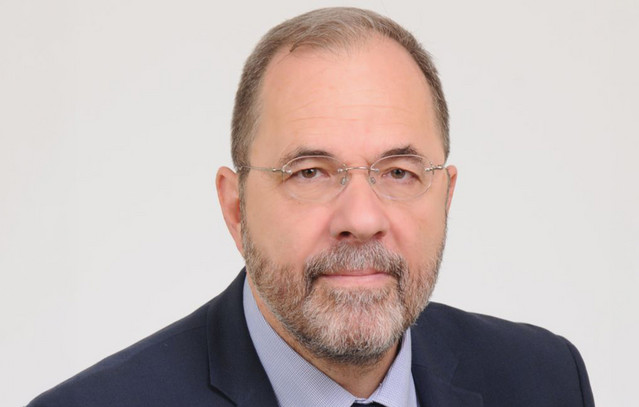
The Citizens Protection Sector of ELAS has submitted six formal questions to the Ministry of Citizen Protection and the Hellenic Police Headquarters, accusing authorities of providing unclear data on unsolved gangland contract killings and organized crime.
Marinos Skandamis, the head of the sector, and deputy head Antonis Saoulidis criticized police leadership for offering vague responses regarding gangland homicides and failing to account for decades-high violence.
The sector highlighted conflicting figures released by official bodies, noting that the Minister of Citizen Protection claimed the new specialized crime unit dismantled more than 270 criminal organizations, while Police Headquarters limited the total to 238 criminal organizations and groups.
Conflicting figures and legal definitions
Addressing the legal framework, the sector pointed to Article 187 of the Greek Criminal Code, which imposes penalties specifically on criminal organizations involving three or more individuals rather than broader criminal groups. Skandamis asked authorities to clarify how many of the 238 cases cited by headquarters truly meet the legal definition of an organized criminal network.
The Ministry of Citizen Protection oversees public security and law enforcement in Greece, operating as the cabinet department responsible for national safety. The Hellenic Police, known locally as ELAS, serves as the primary law enforcement agency under the ministry. The Directorate for Combating Organized Crime, commonly known as the Greek FBI, was established to centralize intelligence and operations against major criminal syndicates across the nation.
The sector also challenged police leadership over missing data on major violent crimes, stating that opposition officials requested specific details on 34 contract killing cases across Greece. These incidents, recorded from 2020 to the present, include 26 cases in the region of Attica and eight in regional provinces, resulting in a total of 40 deaths and 15 injuries.
Unanswered cases and casualty records
In response to the request, Police Headquarters provided data for only 28 cases rather than the 34 requested. The sector criticized officials for providing aggregate figures for a reduced number of incidents instead of supplying detailed information on crime locations, dates, casualties, arrests, and court proceedings for each individual case.
Attica, the administrative region surrounding Athens, houses the majority of the population of Greece as well as the central headquarters of national security services. Gangland rivalries and contract killings in urban centers have generated growing public concern over public safety and law enforcement effectiveness in recent years.
Skandamis questioned the timeline used by law enforcement to evaluate performance, noting that Police Headquarters claimed assessment of the Greek FBI should only cover the period after its official launch on October 21, 2024. The sector pointed out that the current minister held office in 2020 and asked whether unsolved contract killings prior to October 21, 2024, remain under active investigation or if efforts to solve older cases have been abandoned.
Investigation timelines and staffing levels
The sector further requested that the ministry publicly disclose how many police officers working in organized crime units were transferred to the new Directorate for Combating Organized Crime when it launched on October 21, 2024.
While expressing confidence in the police officers working under difficult conditions within the new unit, the sector warned that political and police leadership must not damage public trust. Skandamis stated that the concentration of contract killings since 2020 represents an unprecedented surge in gangland violence for any Greek administration since the restoration of democracy in 1974.
The restoration of democracy in 1974, known in Greece as the Metapolitefsi, marked the transition to modern democratic governance following the collapse of the military junta. The sector statement concluded that the country must move past the era of Greek Statistics, referring to the historic scandal involving manipulated public figures, and urged the ministry to focus on concrete results rather than public relations.