The American Hellenic Institute has sent a letter to US Secretary of State Marco Rubio demanding that Washington oppose F-35 fighter jet sales to Turkey.
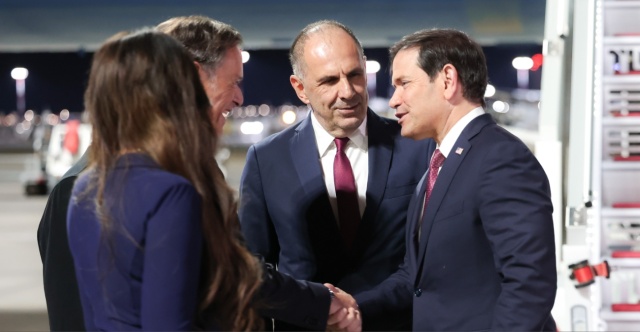
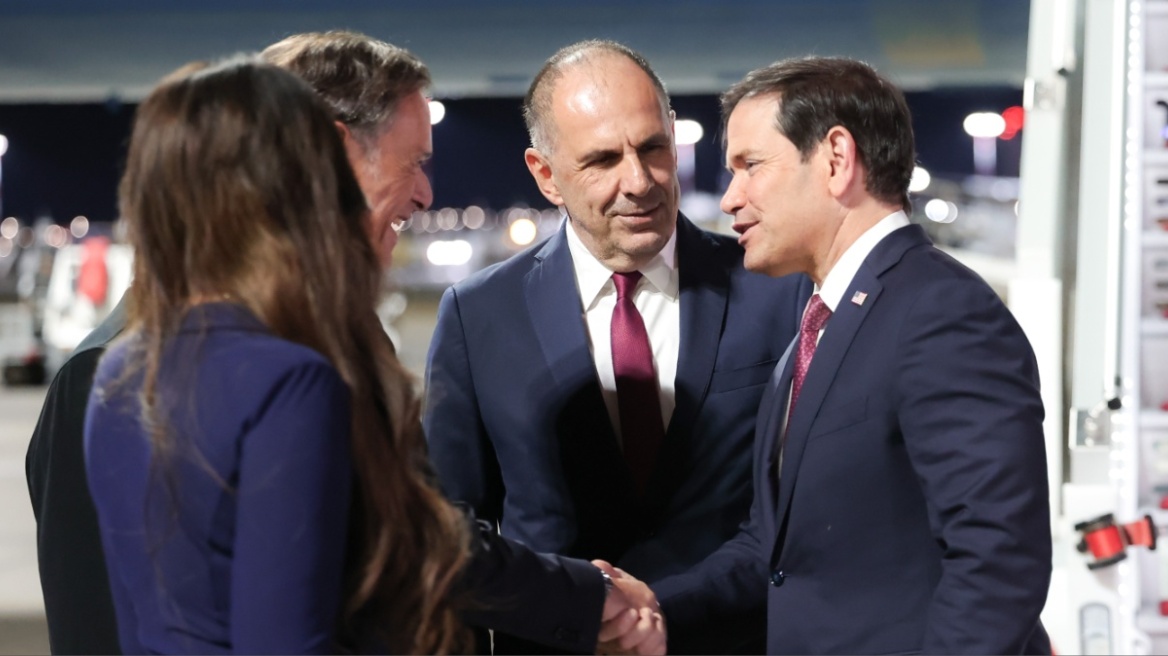
The letter, signed by institute president Nick Larigakis, coincides with Rubio's visit to Athens to lead the American delegation at the sixth US-Greece Strategic Dialogue.
Larigakis urged the US administration to maintain a firm stance against Turkish actions in the Eastern Mediterranean and reaffirm its support for the sovereignty and sovereign rights of Greece and the Republic of Cyprus.
Defense Partnership and Souda Bay
The institute described Greece as a faithful, reliable, and stable ally of the United States. It noted that Athens regularly exceeds NATO's defense spending target of 2 percent of gross domestic product and consistently fulfills its obligations under the bilateral Mutual Defense Cooperation Agreement, a defense pact originally signed in 1990 that grants US forces access to Greek military installations.
Welcoming Rubio's decision to lead the delegation in Athens, Larigakis highlighted that since its launch in 2018, the Strategic Dialogue has evolved into the primary framework for coordinating bilateral relations across defense, energy, trade, and regional security.
The letter made specific reference to Souda Bay on the island of Crete, describing the naval and air facility as a critical hub for US military presence and operations throughout the broader region. During recent regional instability in the Middle East, US fighter jets, aerial refueling tankers, military transport planes, and special operations assets have repeatedly used the base.
Greece also strengthened air defenses around the facility by deploying an American-made Patriot missile battery to Crete. The institute noted that Athens has taken on concrete costs and security risks to support its strategic partnership with Washington.
Energy Security and US Gas Imports
Turning to energy cooperation, the letter highlighted Greece's role as a major entry point for American liquefied natural gas entering Europe. Fuel arrives through specialized import terminals on the islet of Revithoussa and at the northern port of Alexandroupoli before being piped northward.
From these coastal facilities, gas moves through the Vertical Corridor initiative, a pipeline network designed to supply fuel to Central and Eastern Europe as well as Ukraine. The institute emphasized that expanding these supply lines advances US strategic interests by reducing European energy reliance on Russia while reinforcing Greece as a regional energy hub.
Larigakis also cited the 3+1 diplomatic mechanism, an initiative bringing together the United States, Greece, Cyprus, and Israel, alongside the establishment of the US Eastern Mediterranean Energy Center. He called on Washington to ensure the new institution is provided with adequate resources and political backing.
Maritime Disputes and Blue Homeland Doctrine
An extensive portion of the letter addressed Turkey's role in Eastern Mediterranean energy and geopolitical affairs. As a primary example, the institute cited the Great Sea Interconnector, a European Union funded subsea power cable project designed to link the electricity grids of Greece, Cyprus, and Israel to end Cyprus's energy isolation.
The letter noted that Ankara claims its formal consent is required for any maritime survey or construction work conducted between Crete and Cyprus. It referenced a specific standoff off the Greek island of Kasos, as well as Turkish demands for prior notification regarding marine research activities in the region.
Larigakis linked these actions to Turkey's Blue Homeland maritime doctrine and its long-standing casus belli declaration against Greece, under which Turkey's parliament threatened military action if Athens extends its Aegean territorial waters. According to the institute, these moves violate international law and conflict with US strategic interests in the Eastern Mediterranean.
Sanctions and F-35 Fighter Jets
Expressing concern over Turkish military activity in the Aegean Sea, the institute urged the US government to keep CAATSA sanctions in force against Ankara. The Countering America's Adversaries Through Sanctions Act penalties were imposed after Turkey purchased the Russian S-400 air defense missile system.
Larigakis took a firm line on stealth aircraft sales, arguing that Turkey must not be readmitted to the F-35 Joint Strike Fighter program or permitted to purchase advanced US weaponry while it continues to threaten a NATO ally and challenge the sovereign rights of Greece and Cyprus.
In closing, Larigakis called on Rubio to use his visit to Athens to explicitly reaffirm US backing for Greece and the Republic of Cyprus as they defend their sovereignty in accordance with international law.