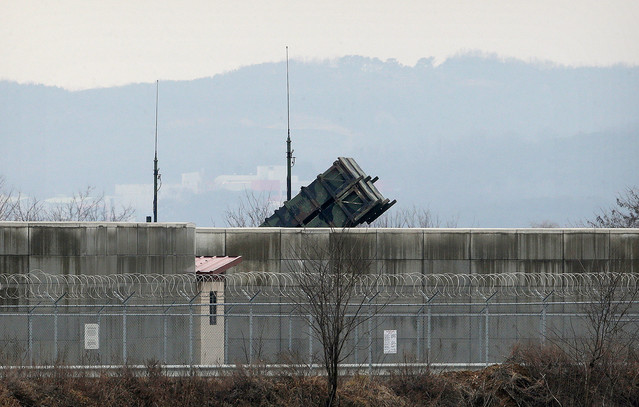
Greece is examining the transfer of a Patriot surface-to-air missile battery from the island of Karpathos to Souda on the island of Crete to protect the military base located there. The potential deployment comes amid rising Middle East conflict and Iranian threats to attack U.S. targets in Europe if military operations led by Washington escalate.
A report published earlier today by the Financial Times indicated potential Iranian strikes against targets in Cyprus and Bulgaria. The Greek Ministry of Defence considers the intelligence reported by the newspaper to be credible.
Planned defense measures
Greek television network Open reported that defense officials in Athens are considering three specific operational steps in response to the security situation. First, officials are evaluating moving the Patriot missile battery currently stationed on Karpathos to Souda Bay to reinforce defense around the military installation on Crete.
Second, if Bulgaria submits a renewed request to the Greek government for support with Patriot missile systems, Athens will examine the request and is likely to respond positively. Bulgaria was specifically named in the Financial Times report as a potential target.
Thirdly, Greek military forces currently stationed in Cyprus will remain unchanged at their present strength.
Iranian targeting and regional security
According to the Financial Times, two insider sources from within the Iranian regime said that Iranian forces have evaluated hitting U.S. assets in southeastern Europe, including Bulgaria. Last month, Bulgaria approved the use of an air base for American refuelling aircraft.
One of the sources added that Cyprus, where a British air base was struck by a drone in March, is also listed among potential targets for retaliation if a new U.S. attack takes place. The same sources stated that Iranian forces have separately examined attacking undersea fibre-optic cables in the Strait of Hormuz if the conflict escalates.
Diplomatic deadlock and military stance
In Tehran, many figures within the regime increasingly view a resumption of war as likely. Negotiations aimed at reopening the Strait of Hormuz have reached a dead end, while Iran's Supreme Leader, Ayatollah Mojtaba Khamenei, promoted hardliners to top military and security positions last week.
Trump stated on Tuesday that no talks or discussions were being held or planned with Tehran. The statement follows heightened rhetoric from military leadership in Iran.
The Islamic Revolutionary Guard Corps and other military commanders have warned that in the event of a new full-scale conflict, Iran will go beyond its previous strategy. They stated that Iran would expand past attacking U.S. military facilities, energy infrastructure and other infrastructure in the Middle East to target locations further away.