A series of earthquakes struck Granada on Tuesday morning, injuring three people, damaging buildings and prompting over 600 residents to evacuate their homes.
The strongest tremor, measuring magnitude 4.8, occurred at 10:37 a.m. with its epicenter located in Gójar. The event triggered widespread panic across the provincial capital and surrounding municipalities as six distinct quakes recorded magnitudes above four in less than an hour.
Antonio Sanz, the first vice president and regional minister for health, presidency and emergencies, confirmed that three individuals sustained minor injuries during the seismic activity. He added that an injured minor was transferred to a local hospital for medical treatment.
Multiple Tremors Strike Vega de Granada
The initial earthquake at 10:37 a.m. registered a macroseismic intensity rating of V-VI at a shallow depth. Spain's National Geographic Institute originally pinpointed the epicenter in neighboring Alhendín before revising its calculation to Gójar, an adjoining municipality.
Less than 15 minutes after the first shock, a second shallow earthquake with a magnitude of 4.0 struck Churriana de la Vega. Before an hour had elapsed from the initial tremor, a third quake measuring magnitude 4.2 occurred at a depth of five kilometers, with its epicenter located five kilometers from Alhendín.
Seismologists recorded a total of six separate seismic movements between 10:37 a.m. and 11:34 a.m. across the metropolitan region. The sudden succession of tremors caused heightened alarm among residents, coming just days after a previous major earthquake hit the province early Saturday morning.
The National Geographic Institute serves as Spain's official state agency for monitoring seismic activity, operating a nationwide network of recording stations that measure earthquake magnitudes and depths. The affected municipalities of Gójar, Alhendín, Churriana de la Vega and Las Gabias lie within the Vega de Granada, a fertile depression in southern Spain known as one of the country's most seismically active regions.
Eyewitnesses Describe Moments of Panic
Carlos, a resident of Granada capital, was inside a local coffee shop when the 10:37 a.m. quake began. He said he had just been served a cup of coffee when a sudden loud sound provided the first warning of the shaking.
He said customers initially froze in disbelief, questioning whether another earthquake could be occurring so soon after Saturday's tremor. He said items quickly began falling off shelves, prompting everyone inside the establishment to react and run out into the street.
María was traveling on the Granada Metro light rail system toward the hospital when the tremor struck. She said the intense shaking made passengers feel as though the train was about to derail, causing people to cry as panic spread through the carriage.
Francisca and José, a local couple who spent Saturday night sleeping outdoors due to the earlier quake, said the latest tremors forced them to leave the area entirely. They said that while their own house remained undamaged, the building across the street had developed even larger structural cracks, leading them to pack their suitcases and travel to the coast.
Víctor, a resident of the Zaidín district whose home suffered cracked walls and misaligned windows during Saturday's earthquake, described the situation as a horror movie. He said streets were filled with frightened residents and noted that widespread property damage was driving people to abandon Granada due to safety concerns.
Evacuations and Structural Damage
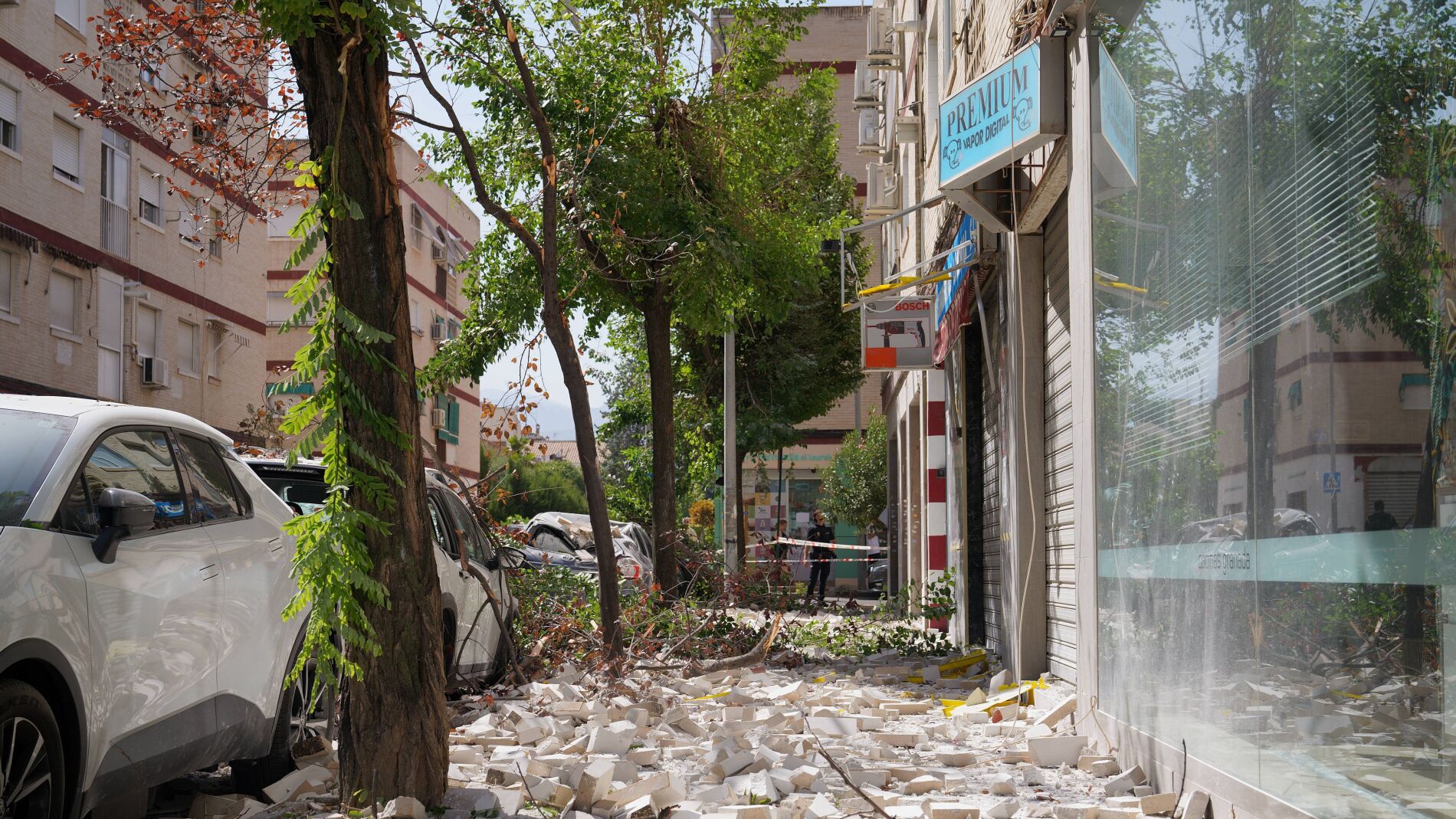
Because Tuesday's seismic swarm struck during daylight hours, authorities implemented preventive evacuations across several districts. In Las Gabias, emergency responders evacuated five residential buildings containing 100 apartments after discovering structural damage.
Zaidín suffered the heaviest impact among neighborhoods within the capital city, leading officials to clear multiple affected properties. At the Nevada Shopping complex, staff and shoppers were evacuated to the upper parking deck following physical damage to the facility, as ongoing aftershocks continued to shake the area.
The Alhambra administration evacuated visitors from the historic Alcazaba fortress and suspended public entry to the Nasrid Palaces after inspectors identified decorative damage inside the complex.
The Alhambra, constructed primarily during the 14th century under the Nasrid dynasty, is a historic Islamic palace and fortress complex that stands as a UNESCO World Heritage site and one of Spain's most prominent monuments. The Alcazaba represents the oldest fortified military section of the citadel. Zaidín is the most populous residential neighborhood in Granada, located in the southern sector of the city.
Institutional Closures and Emergency Protocols
Public institutions across the province responded by shuttering facilities. The Provincial Council of Granada suspended its president's official schedule and closed all administrative offices, museums and the provincial Sports City, keeping operations active only at essential care centers.
Minutes later, the Granada City Council issued a similar directive, closing all municipal buildings and public facilities until further notice. The regional government maintained level 1 emergency operations under the Andalusian Emergency Plan for seismic risk in Granada.
Granada is the capital city of Granada province, situated in the autonomous community of Andalusia in southern Spain at the foot of the Sierra Nevada mountain range. Home to approximately 230,000 residents, the city functions as an administrative and cultural center. The regional government, known as the Junta de Andalucía, oversees regional emergency management protocols during natural disasters.
Temporary Camps and Coastal Exodus
Fearing additional aftershocks, hundreds of residents established temporary campsites in public parks throughout Granada province, while others left the metropolitan area for coastal towns.
The Tuesday tremors followed a major earthquake that struck the region early Saturday morning, which had already weakened building structures and left windows warped throughout local neighborhoods.
Emergency services and structural engineering teams continue to assess property damage and monitor seismic activity across the Vega de Granada basin as emergency protocols remain active.