Peruvian literary critic Ricardo González Vigil has detailed how Pablo Picasso's mural Guernica inspired poet César Vallejo's landmark Spanish Civil War collection.
Speaking to writer Eduardo González Viaña, the scholar explained that the 1937 painting served as a crucial catalyst for Vallejo's poetry book Spain, Take This Cup from Me.
The analysis comes amid reports from neighbors near the Museo Reina Sofía in Madrid, where Picasso's painting is displayed, claiming to hear ghostly cries of pain at night. An elderly man, Nelson Oviedo, rejected those claims, stating that no pain remained in Spain after fascist forces bombed the sacred Basque town of Guernica. Oviedo said crime was enthroned under General Francisco Franco, and that no subsequent ordeals could surpass what Franco and his forces inflicted.
The Museo Nacional Centro de Arte Reina Sofía is Spain's national museum of 20th-century art in Madrid. Picasso's black-and-white oil painting Guernica, created in response to wartime destruction, is one of the museum's central exhibits and a global symbol against armed conflict.
Details of the Guernica Bombing
Historical accounts from April 26, 1937, record that Hitler's Condor Legion bombarded Guernica for three hours in support of Franco. At the time, the town was comparable in size to the small Peruvian municipality of Santiago de Chuco. Twenty-five aircraft dropped 100,000 pounds of explosives on the settlement, while 20 additional planes hunted down fleeing survivors.
Santiago de Chuco, a town in the Andean highlands of northern Peru, is widely known as the birthplace of César Vallejo. The Condor Legion was a military unit of the German air force composed of volunteers who served alongside Nationalist forces during the Spanish Civil War.
Picasso depicted the atrocity through six human figures, comprising four women, one man, and a child, alongside a horse and a bull. The canvas portrays a grieving mother holding her dead child while a horse tramples a fallen man whose arm has been severed. Picasso declared at the time that his canvas expressed his horror toward the military caste looting Spain in an ocean of misery and death.
González Vigil stated that the artwork captures the extreme dehumanization of violence unleashed by rebel forces against the Spanish Republic, which had won democratic elections. Supported by Nazi aircraft, rebel units bombed Guernica despite its lack of involvement in armed combat. The town held sacred status among Basques due to an ancient oak tree symbolising their historic rights as free citizens, and was populated solely by women, children, and elderly residents at the time of the attack.
Influence on César Vallejo
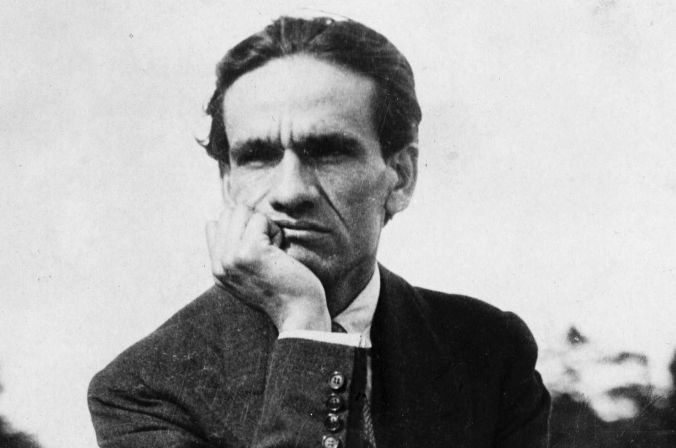
González Vigil, who works as a professor, essayist, and literary critic while also publishing poetry, is recognized as the leading scholar of Vallejo's literary output. Vallejo, who lived from 1892 to 1938, is regarded as one of the most influential Latin American poets of the 20th century. González Vigil noted that both the Spanish Civil War and Picasso's visual masterpiece were fundamental to Vallejo's poetic creation.
Picasso's painting was first exhibited in 1937 during the opening session of the Paris International Exposition. Following the display, dozens of prominent writers traveled to Spain, including Vallejo, Pablo Neruda, Vicente Huidobro, Nicolás Guillén, Alejo Carpentier, Octavio Paz, Ernest Hemingway, Georges Bernanos, and Stephen Spender.
Seeing Guernica proved decisive in planting the seed for Vallejo's final collection, according to González Vigil. Vallejo held Picasso in such high regard that he sought to accomplish in written language what Picasso achieved in the visual arts. Moved by the conflict, Vallejo created a series titled Battles of Spain, which he later condensed into Poem II of Spain, Take This Cup from Me. The third section of Poem II focuses directly on the bombing of Guernica, while the fifth section addresses the desperate flight of civilians in Málaga, the birthplace of Picasso.
The Sublime in 20th-Century Poetry
González Vigil described Spain, Take This Cup from Me as the highest peak of Vallejo's poetry, possessing extraordinary human depth and universal resonance. He described the work as perhaps the supreme 20th-century example of the aesthetic category of the sublime. The collection blends epic, tragic, and lyrical forms, translating biblical themes from the prophets, psalms, and the Book of Revelation onto a socio-political plane, drawing heavily on gospel accounts of Christ's redemptive passion.
In one passage of the collection, Vallejo wrote that all the men of the earth surrounded a fallen combatant, causing the emotional corpse to sit up slowly, embrace the first man, and begin walking again. Eduardo González Viaña noted that he had studied both Vallejo's early work, The Black Heralds, and the analytical studies written by González Vigil. González Viaña concluded that the human resurrection envisioned by Vallejo feels more tangible than any supernatural cries reported near Picasso's painting in Madrid.