

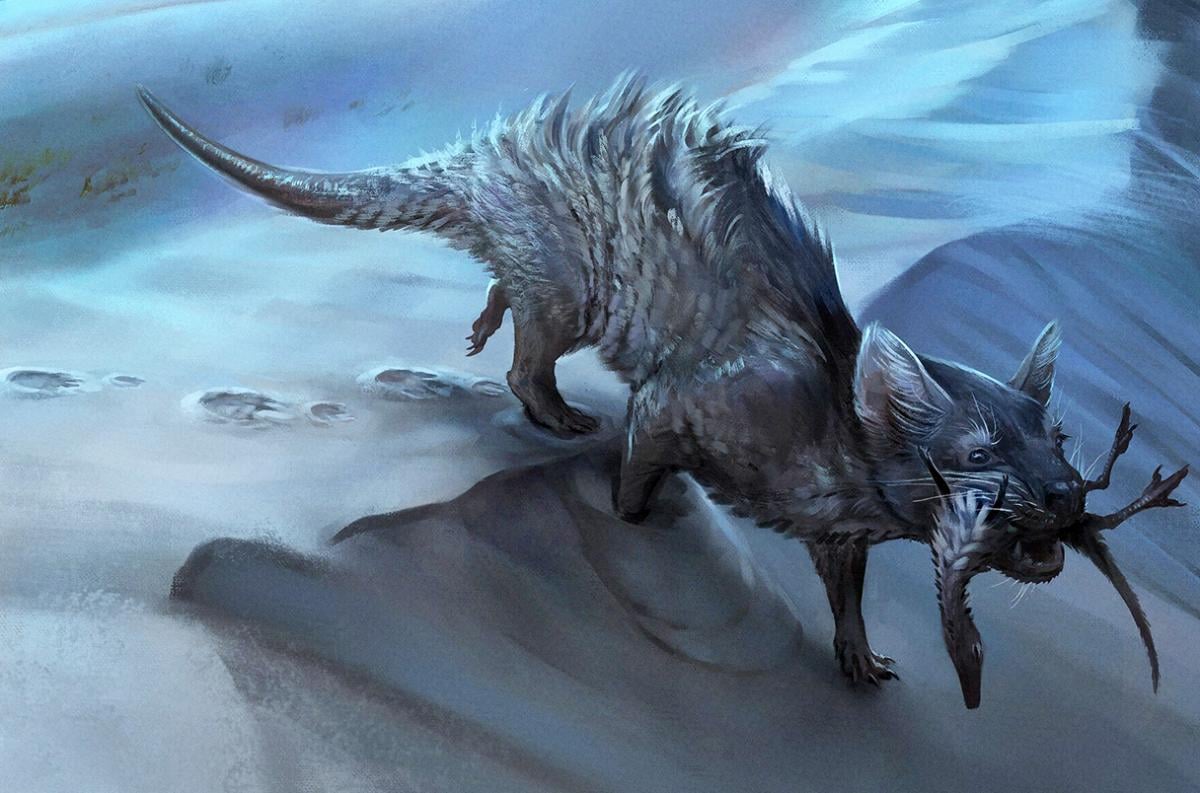
Paleontologists in Brazil have discovered 130-million-year-old footprints that indicate a mammal measuring approximately 1.55 metres long roamed the Earth during the dinosaur era. The findings, published in the Journal of South American Earth Sciences and reported by The Daily Galaxy, reveal the largest mammal track from the Cretaceous period ever documented.
The fossil tracks were discovered in the Botucatu Formation in Brazil. Researchers estimate the creature was roughly twice the size of any previously identified Cretaceous mammal, making it comparable in size to a large dog or a cougar rather than the small shrew-like creatures long thought to dominate the era.
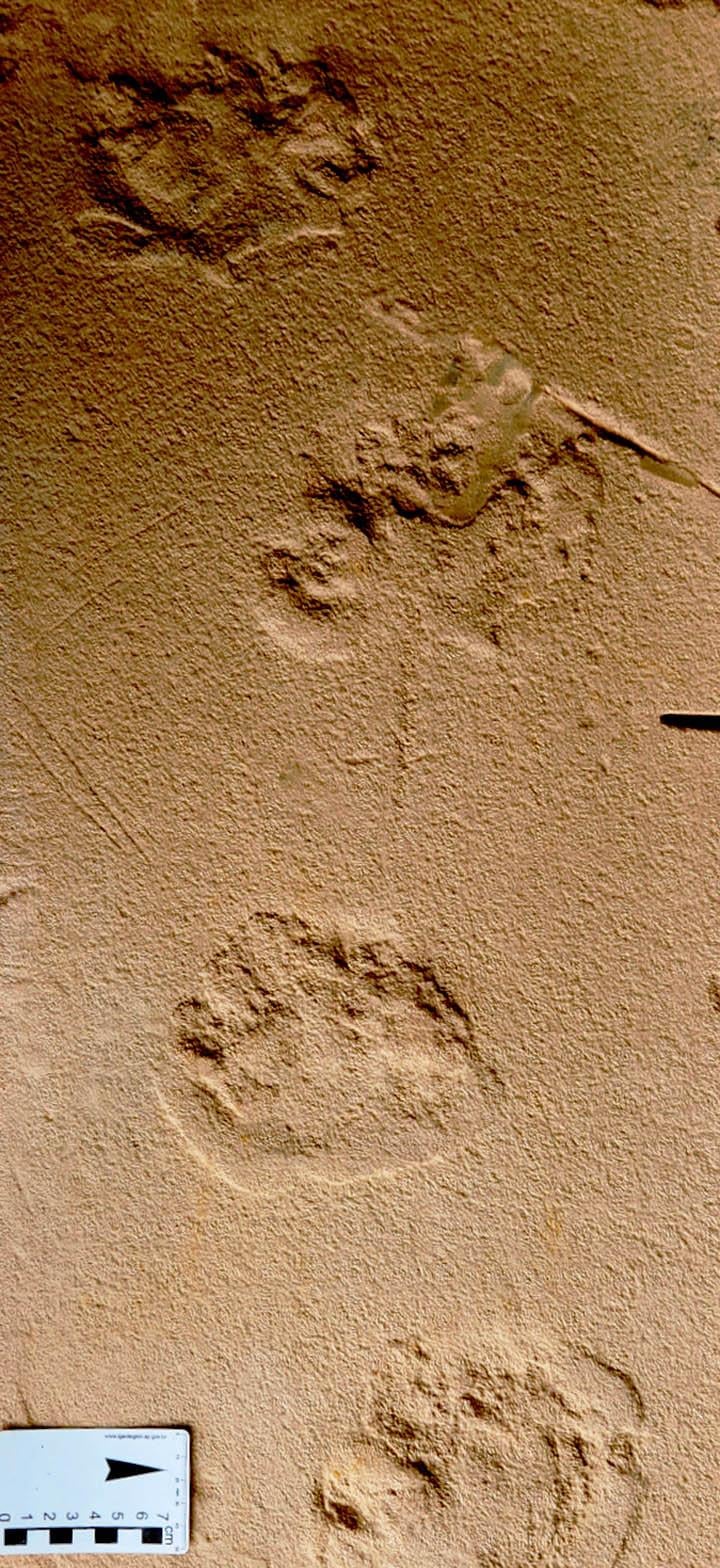
The tracks include a largest print measuring 11.4 centimetres in length and 13.4 centimetres in width, with a stride distance of approximately 40 centimetres. Lead author Dr Pedro Bak and his research team stated that the distinct physical proportions of the prints, rather than their overall dimensions alone, confirmed they belonged to a mammal rather than a dinosaur.
Describing the preservation of the site, the study authors noted that most vertebrate tracks in the Botucatu Formation were preserved in conditions of low substrate cohesion. This environment typically resulted in a simplified morphology and a partial loss of fine anatomical detail in the fossil record.
Footprint evidence challenges mammal evolution theories
The research team assigned the footprints to the family Chelichnopodidae. However, they refrained from naming a new species because no skeletal remains were found alongside the tracks. For decades, the standard scientific consensus held that Mesozoic mammals were tiny creatures that scurried beneath the feet of giant dinosaurs to avoid predation.
Dr Bak said the preserved print was significantly larger than any mammal species previously known from skeletal remains or fossil tracks, describing the finding as a major breakthrough. Fossilised bones from Mesozoic mammals remain extremely rare, particularly across the Southern Hemisphere where complete skeletons are seldom uncovered.
During the Early Cretaceous period, 130 million years ago, the Botucatu Formation formed part of an immense inland desert located far from any ocean. This arid landscape was later split between present-day South America and a small isolated region in Africa following the tectonic breakup of the supercontinent Gondwana.
The discovery is not the first evidence of sizable mammals in the region. In 2017, researchers in the Botucatu Formation identified two other tracks, named Aracoaraichnium leonardii and Brasilichnium anaiti, which belonged to animals roughly the size of small dogs or large domestic cats.
Ecological niches and the search for skeletal fossils
In an interview with Science magazine, Dr Bak suggested that larger predatory dinosaurs might have been absent from this specific desert environment for reasons that remain unclear. This absence may have allowed ancient mammals to expand into open ecological niches and grow to unexpected sizes.
While footprints offer limited details about diet, the authors suggested the creature was likely an omnivore. Given its size, it would have been capable of preying on juvenile or small dinosaurs, as well as smaller mammals, invertebrates, and whatever other food sources were available in the desert environment.
Co-author Dr Herminio Ismael de Araujo-Junior explained that no fossilised mammal body remains have yet been discovered in Jurassic or Early Cretaceous rocks in Brazil. He said the skeletal record of Early Cretaceous mammals in Gondwana remains sparse, making the Botucatu tracks exceptionally valuable for revealing species absent from the body fossil record.
Dr Araujo-Junior added that future discoveries of bones might depend on finding adjacent sediment layers formed under conditions more suitable for preserving skeletons rather than footprint tracks. He urged paleontologists to keep an open mind, noting that the long-standing assumption that Mesozoic mammals were uniformly small could lead scientists to misidentify unusually large tracks or fragmentary fossils.



