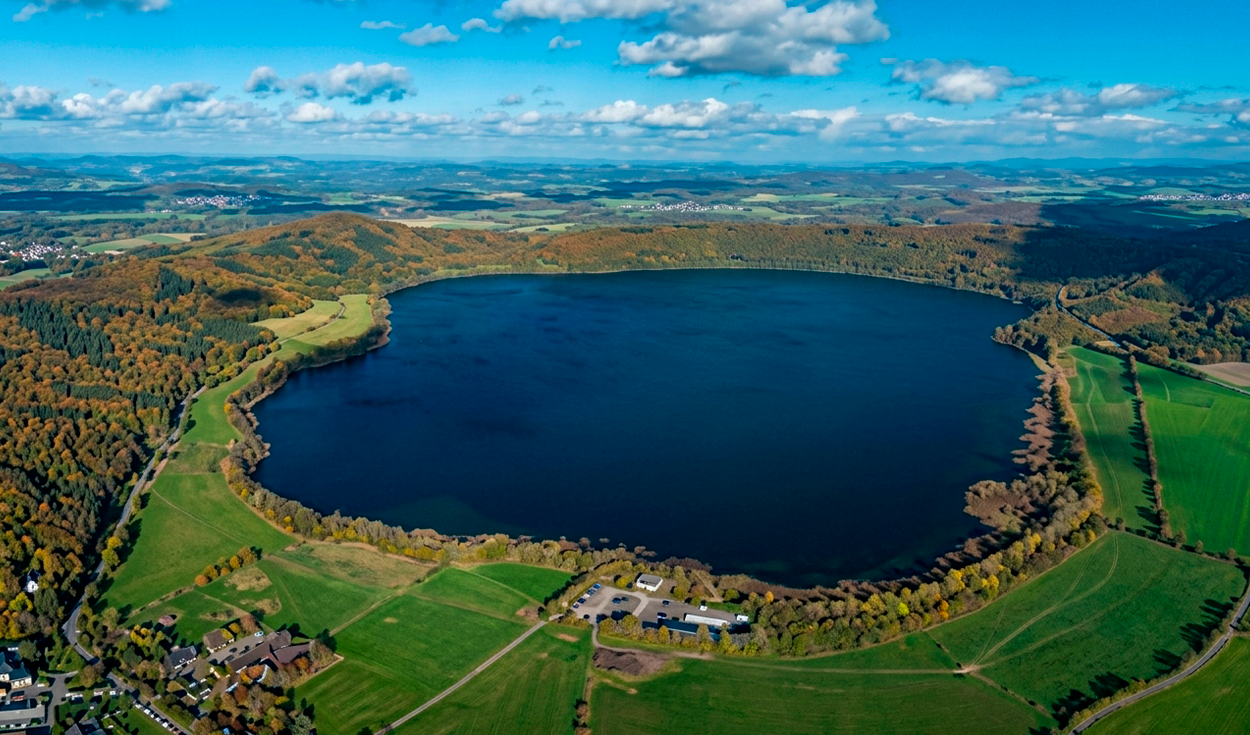
A network of 500 seismic monitoring stations deployed across western Germany has detected more than 500 imperceptible micro-earthquakes beneath Lake Laacher, confirming that the largest volcanic system in the country remains active.
The findings, gathered from a comprehensive survey of the Eifel volcanic region, revealed significant accumulations of subterranean fluids located several kilometres beneath the surface, ruling out long-held assumptions that the volcanic field is extinct.
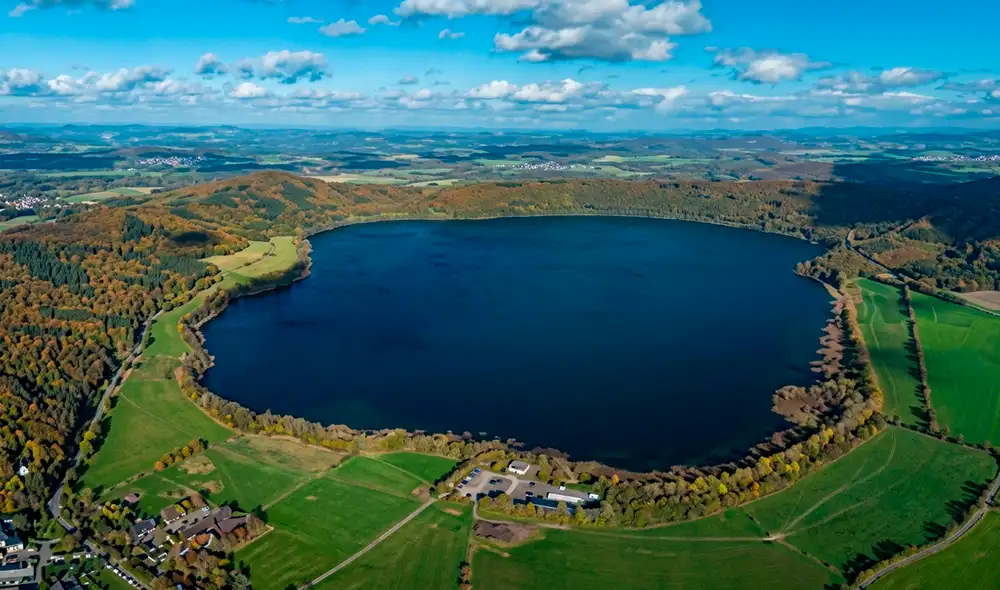
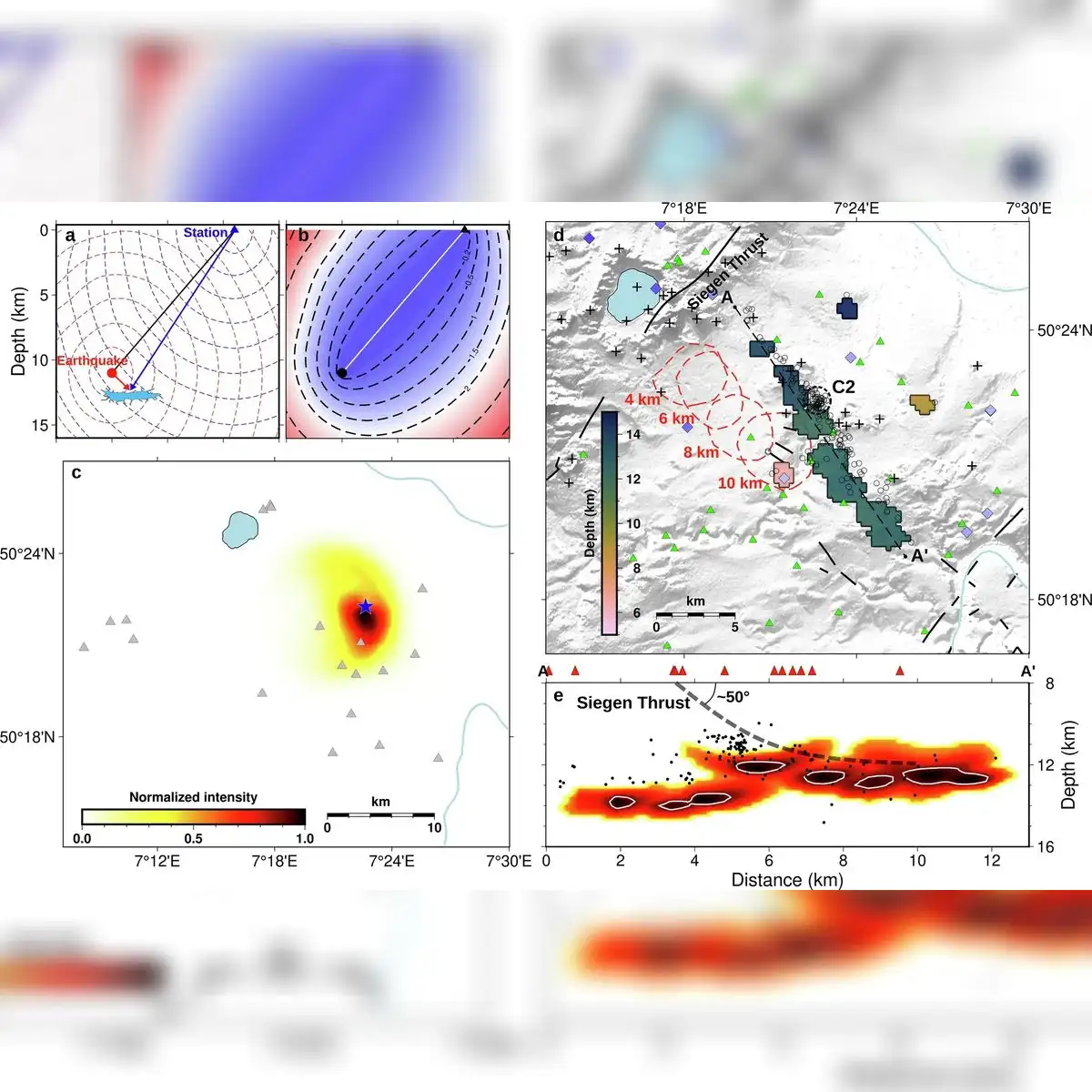
An international team of scientists placed the 500 monitoring stations throughout the Eifel area between September 2022 and August 2023 to record low-level seismic activity. Their instruments registered hundreds of tiny local tremors, which were concentrated primarily around Ochtendung, a community situated near Lake Laacher.
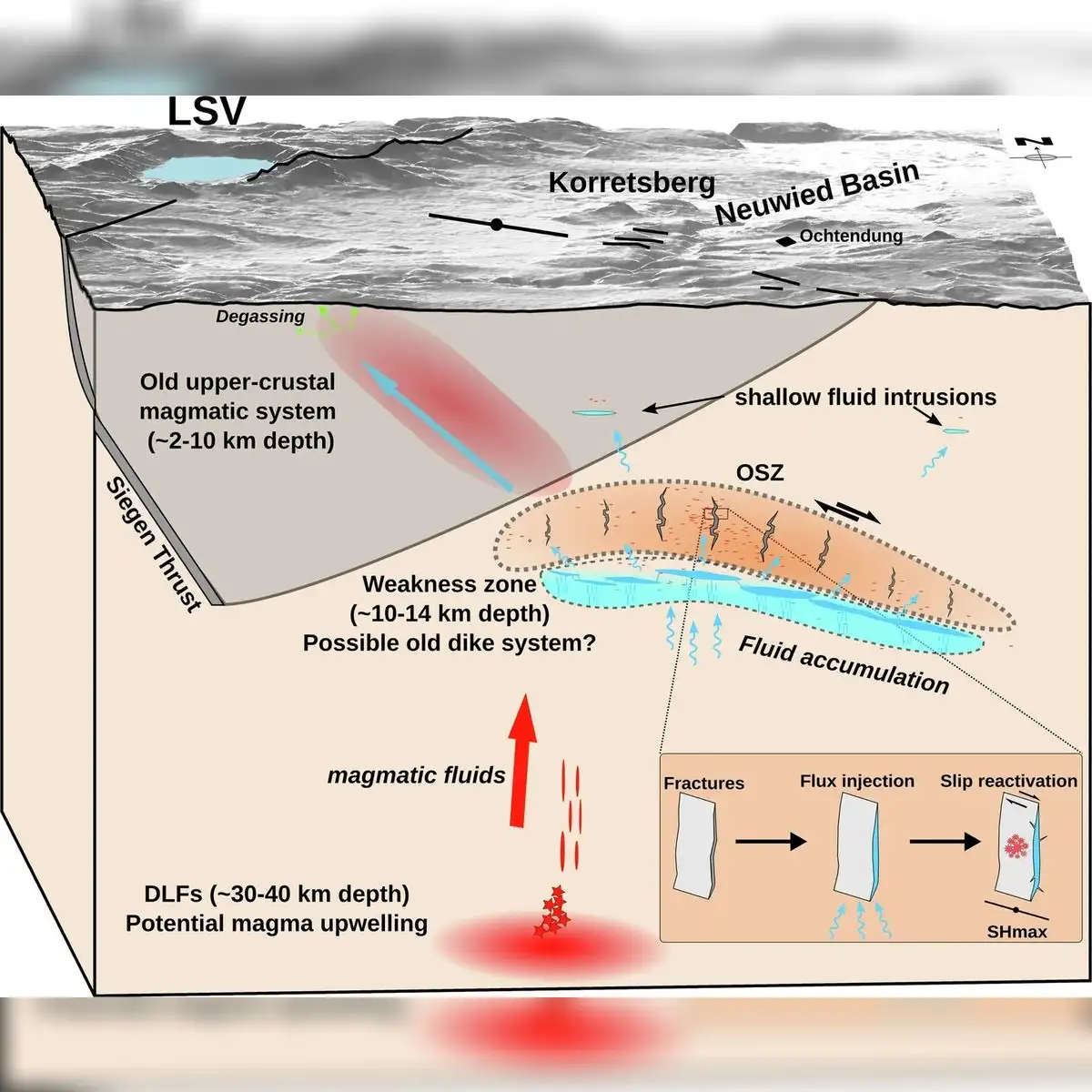
According to the study published in the peer-reviewed scientific journal Communications Earth & Environment, the underground structure beneath the Eifel region is crisscrossed by extensive rock fractures. These subterranean cracks form pathways that allow magmatic fluids and gases to circulate deep within the Earth's crust.
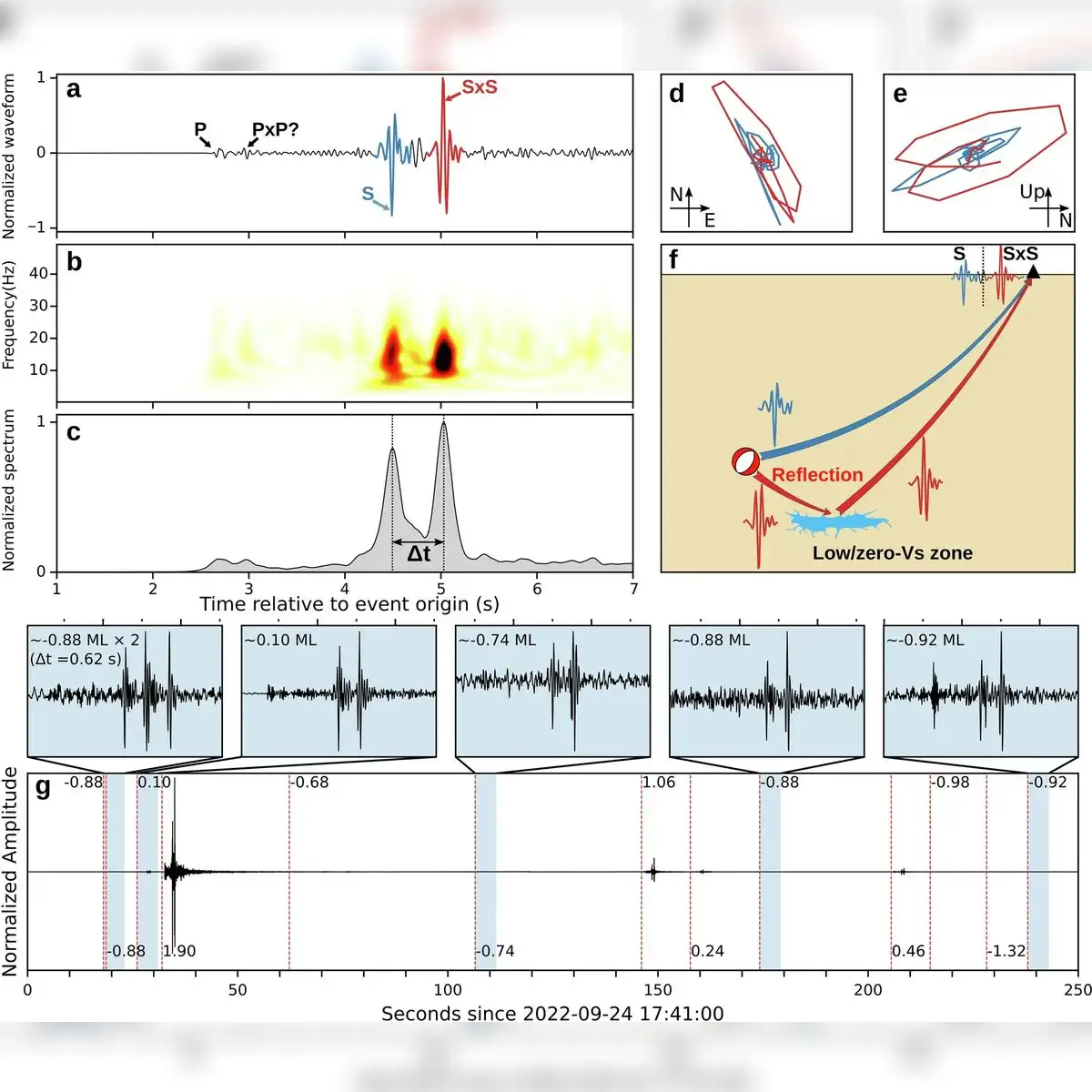
By tracking the propagation of seismic waves through the subsoil, researchers identified deep reservoirs containing either liquid magma or magmatic gases. These subterranean pockets lie between 12 and 14 kilometres beneath the surface and extend horizontally across a distance of approximately 15 kilometres.
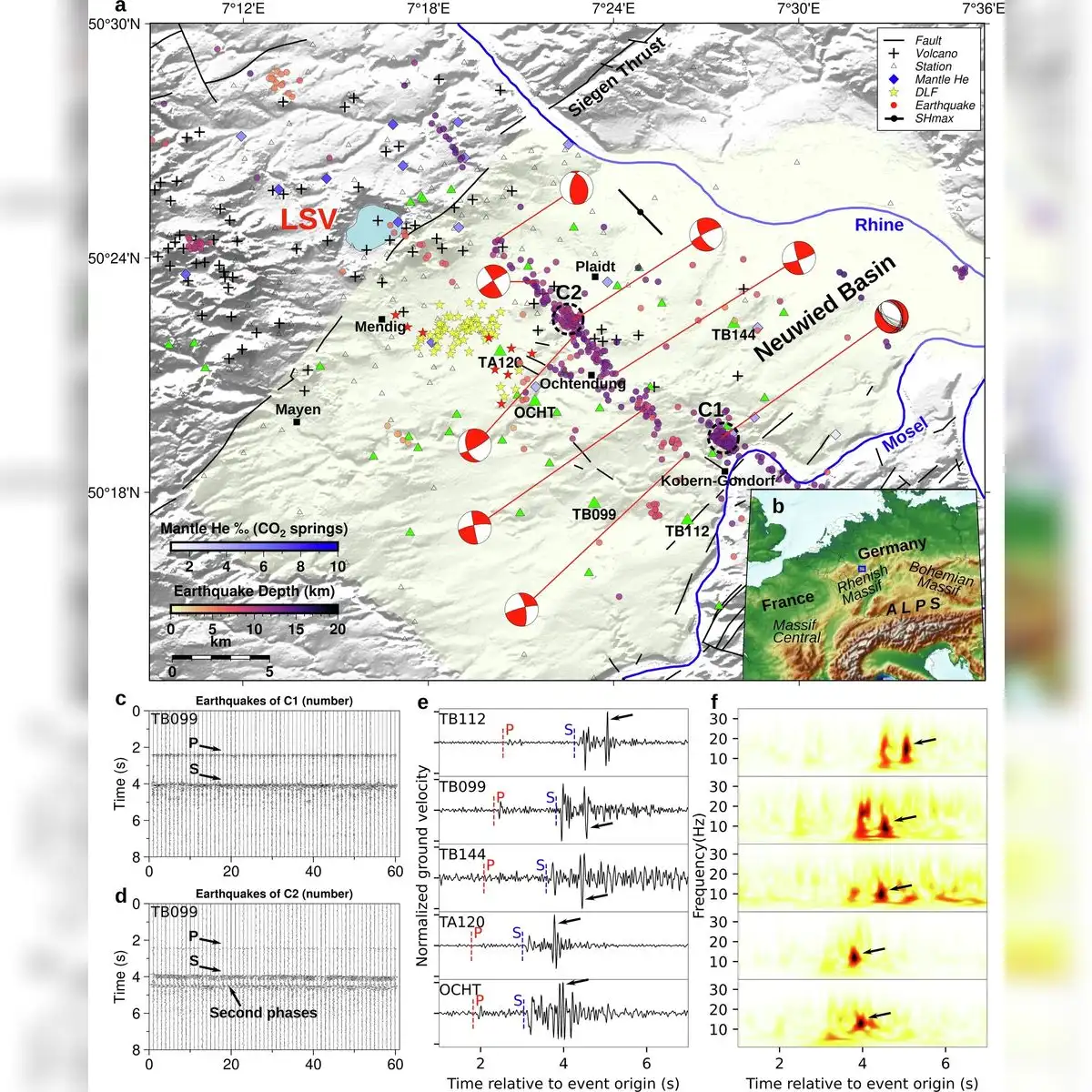
Torsten Dahm, a geophysics expert at the GFZ German Research Centre for Geosciences, explained that specific wave reflections in the readings confirm the existence of these fluid reservoirs. Dahm noted that scientists still need to determine whether the signals indicate molten rock or gases released from incandescent material beneath the volcano.
The newly published data provides crucial confirmation for a previous 2019 study that recorded low-frequency deep tremors at depths ranging between 10 and 45 kilometres under German soil. Dahm stated in a GFZ report that low-frequency earthquakes at such depths are recognized by geoscientists worldwide as a key indicator of magmatic fluid movement.
The collected evidence indicates that a slow, long-term process of underground magmatic recharge is taking place beneath the Eifel volcanic field. However, researchers stressed that it is currently impossible to predict the exact timing or certainty of any potential future volcanic activity.
History of the Laacher See volcano
Lake Laacher, known locally as Laacher See, is a water-filled volcanic caldera situated in the Eifel region of Rhineland-Palatinate. The lake marks the site of one of the most cataclysmic volcanic events in central European history, which occurred approximately 13,000 years ago.
During that prehistoric blast, the Laacher See volcano expelled six cubic kilometres of magma into the atmosphere, reaching a rating of six on the Volcanic Explosivity Index. The colossal explosion submerged surrounding areas in devastating pyroclastic flows and lofted massive clouds of volcanic ash across Europe.
Geological evidence of the ancient explosion remains visible today, with ash deposits from the Laacher See eruption identified as far north as Sweden and as far south as Italy. The massive accumulation of tephra drastically altered the local topography, temporarily damming the Rhine River and transforming the Rhine Valley.
The exact date of the ancient cataclysm remains the subject of active scientific debate among geoscientists. Research published in the journal Nature dated the massive eruption to 13,006 years ago, while subsequent studies suggested the event took place 12,880 years ago.
Because preserved ash layers from Laacher See can be traced across thousands of kilometres, the region serves as a vital laboratory for researchers studying the continental environmental impacts of large-scale volcanic eruptions.
Seismic monitoring and volcanic risk assessment
Recent subsurface monitoring beneath the Laacher See crater has confirmed ongoing micro-seismicity, mantle carbon dioxide gas emissions, and fluid movement. In and around Lake Laacher, degassing processes remain visible as carbon dioxide bubbles escape from the lakebed to the water's surface.
Despite the active underground processes, the GFZ German Research Centre for Geosciences clarified that monitoring networks have detected no high-frequency earthquake swarms or major surface deformations. Because high-frequency swarms and noticeable ground tilting are the standard indicators of an imminent magmatic ascent, experts confirmed that there are no signs of an approaching eruption.
Geoscientists pointed out that the subterranean magma chamber that powered the historic eruption 13,000 years ago required roughly 30,000 years to form and consolidate beneath the crust. As a result, the present activity indicates a slowly evolving system rather than an emergency.
Researchers concluded that continuous long-term monitoring across seismic, geochemical, and geodetic disciplines remains essential to track the evolution of the Eifel volcanic system, even though the volcano poses no immediate danger to nearby populations.