Florette, the Navarre-based producer and seller of ready-to-eat salads and fresh vegetables, has cut its carbon footprint by 14% over the past six years, the company said.
The reduction brings Florette closer to its target of a 35% cut by 2035. The company said the progress does not rest on any single breakthrough but on an environmental policy built around two main goals: lowering its environmental impact and promoting the circular economy, with a focus on water, emissions, biodiversity, eco-design, food waste and waste management.
Two measures in particular have driven the cut in emissions, according to Florette: the biosolarization of protected crops and the eco-design of the packaging used for its salads.
How biosolarization works
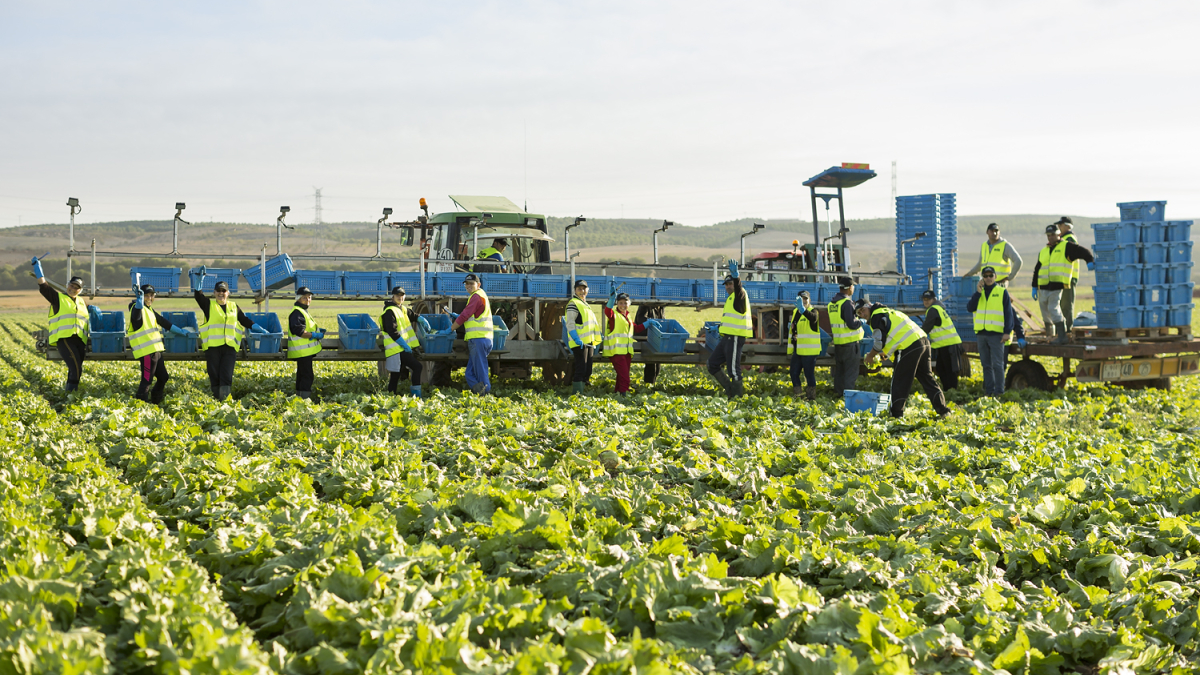
Sonia Muro, Florette's head of sustainability, said biosolarization was a highly effective practice for controlling and improving soil performance and quality naturally. She said it involved adding organic matter to the soil, particularly in protected crops, and covering it with plastic sheeting during the summer. The heat generated under the plastic kills weed seeds and reduces the impact on the soil, she said. The plastic sheeting is then collected and reused the following growing season.
Muro said the food and agriculture industry depended directly on the conservation of essential natural resources such as soil, its biodiversity and water, which is why adopting sustainable farming practices was essential to securing the future of the business.
Redesigning packaging
Over the same six-year period, Florette has also pushed eco-design changes to its packaging, reducing its weight, replacing non-recyclable materials and incorporating recycled plastic. The company said this has brought its packaging to a 94.7% recyclability rate and allowed it to avoid putting around 270 tonnes of plastic onto the market in 2025.
Muro said the company's aim was to develop packaging that preserved and protected its products with the lowest possible environmental impact, by cutting materials and adding recycled content.
The recycling challenge
Florette identified its main challenge in this area as ensuring that recyclable materials are actually recycled and fed back into the production cycle. Muro said it was essential to strengthen the recycling industry and guarantee the availability of recycled materials, in order to move toward a circular economy and meet European requirements.
Role of data and digitalisation
Florette said digitalisation and data analysis had also driven significant sustainability gains in recent years. The company said these tools help optimise water and energy consumption, reduce the use of pesticides and fertilisers, and improve soil quality. Predictive tools, it added, allow for more efficient management of crops, producing better results with less environmental impact.
What happens next
Florette is continuing efforts toward its goal of a 35% reduction in carbon footprint by 2035.
Test yourself
By how much has Florette reduced its carbon footprint over six years?
What is biosolarization used for, according to Florette?
How much plastic did Florette avoid putting on the market in 2025?
Where it happened
Navarre, Spain