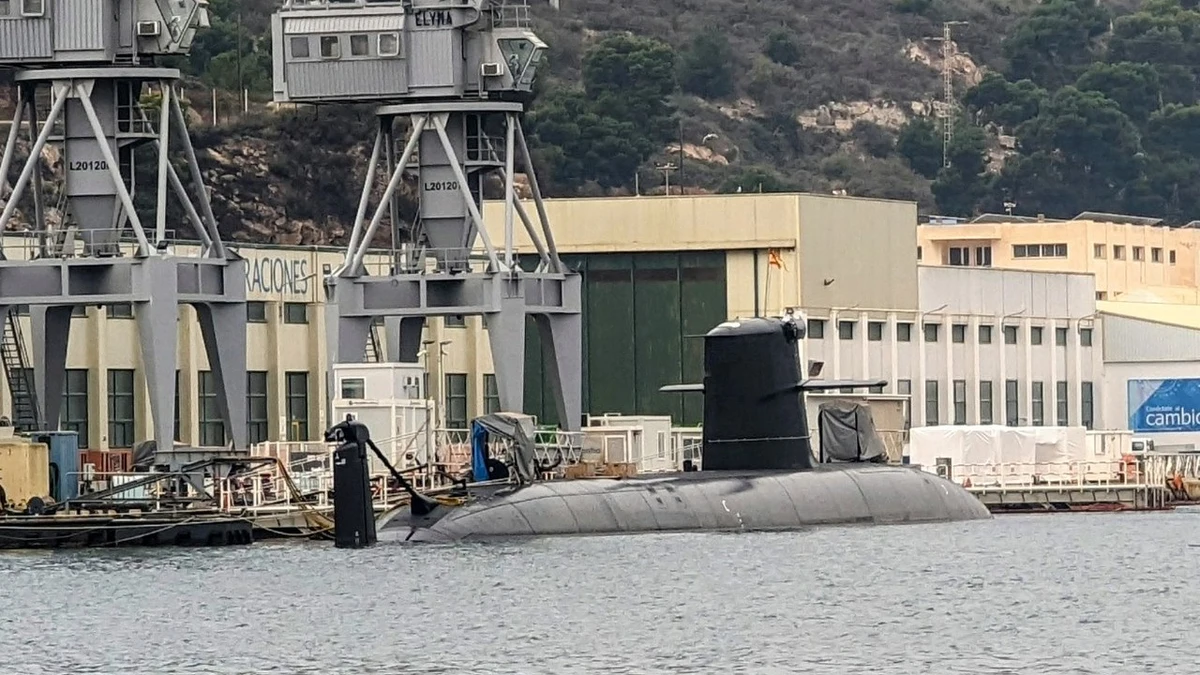
Spanish shipbuilder Navantia and Norway's Kongsberg have agreed to study fitting autonomous underwater drones to conventional submarines, including Spain's S-80 class, under a memorandum of understanding signed at the Euronaval defense show in Paris.
The agreement was signed on November 4, and Kongsberg issued a statement describing the deal on November 9. Under it, the two companies commit to exploring the relevant technologies and identifying opportunities to integrate them. The Spanish Navy still has to decide whether it wants the equipment, which vessel it would go on, and how much money to commit to buying it.
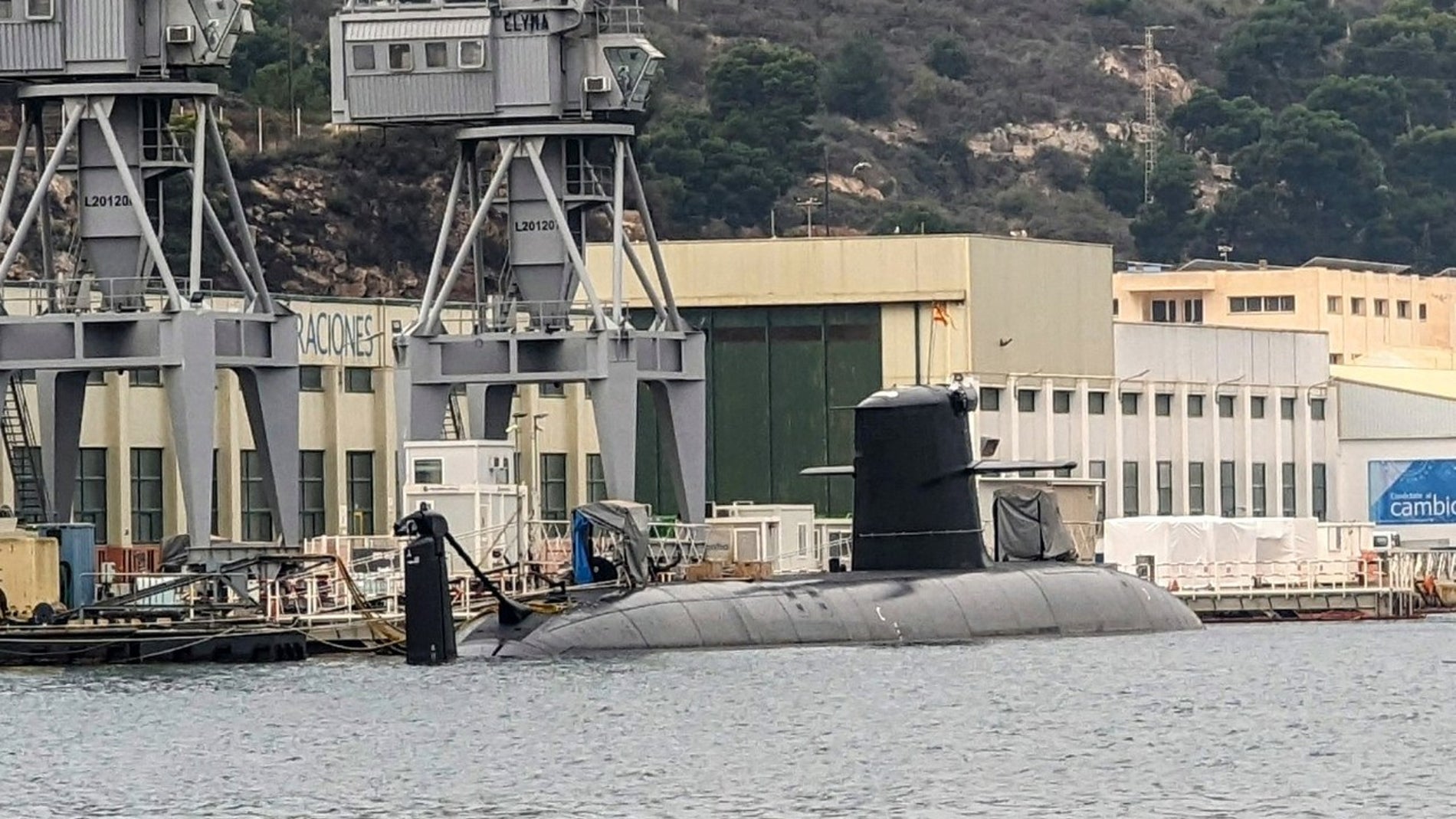
Some reports on the agreement have been illustrated with a photograph of the HUGIN Edge, an autonomous underwater vehicle. HUGIN is the name of a family of such vehicles made by Kongsberg, and the Edge is one model in that range. The defense outlet Defensa.com has named it as a possible candidate for the S-80, but the companies' announcement leaves the choice of model open and also covers other submarine designs and future upgrades to existing vessels.
What an unmanned vehicle would add
On the seabed, a photograph or a detailed map can answer questions that a ship's sonar alone cannot. HUGIN vehicles are used to survey and document submerged areas, work that can matter both to a hydrographer mapping the seafloor and to anyone responsible for protecting undersea cables. The value of such a mission depends on the instrument the vehicle carries and the kind of information being sought.
A submarine fitted with a HUGIN vehicle would carry a device with a very different job from the host vessel itself. While the crew stays aboard the submarine, the drone could move off to survey an area and gather information underwater on its own.
The memorandum splits the work between the two firms. Kongsberg would bring its experience in autonomous systems and sonar, while Navantia would study how that equipment could fit into the submarines it designs and builds. For a shipyard, accommodating a vehicle like this means setting aside space, planning for its maintenance, and working out what extra tasks it creates on board. On Spanish submarines, where a crew shares a confined space for weeks at a time, any new addition competes with needs that are already well established.
Sonar upgrades also on the table
The two companies have also flagged advanced sonar systems as a separate area of work. The scope of the memorandum goes beyond the drone used to illustrate the project, covering everything from future newbuilds to upgrades for vessels already in service. That means an eventual first contract could cover a sensor or a feasibility study, leaving the decision on a full underwater vehicle for later.
A partnership with a shipyard history
Navantia and Kongsberg already know each other through Norway's F-310 class frigates, which Navantia originally designed and built. The two companies have since worked together again on maintaining and modernizing those ships. Their relationship also extends to the Naval Strike Missile, the program equipping Spain's S-80 submarines with that weapon, which has its own objectives and funding separate from this new agreement.
The Spanish precedent shows how much a submarine's equipment can change between the design stage and its working life at sea, which is why upgrading certain systems after delivery often becomes necessary rather than optional.
For the HUGIN project, the next sign that a drone will actually end up aboard a Spanish submarine would be a concrete decision on which platform to use, what trials to run, or a purchase order. The memorandum signed in Paris names the partners who would carry out that work but leaves all three of those decisions open.
What happens next
The next concrete step would be a decision on which platform to use, what trials to run, or an actual purchase order, none of which has been made yet.
Test yourself
Where was the Navantia-Kongsberg memorandum of understanding signed?
What has Kongsberg agreed to contribute to the project?
What has Defensa.com named as a possible candidate vehicle for the S-80?
Have your say
Should navies invest in autonomous underwater drones for submarines?
Where it happened
Cartagena, Spain