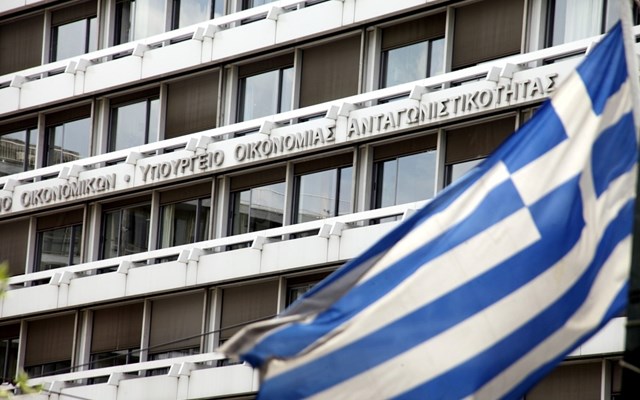
Greece's Minister of National Economy and Finance, Kyriakos Pierrakakis, who also serves as president of the Eurogroup, pledged that any fiscal space Athens secures through ongoing talks with European institutions will be redirected to wherever the need is greatest. He said the government does not tie the timing of its support measures to the election calendar.
The commitment followed similar remarks a day earlier from Deputy Prime Minister Kostis Hatzidakis, who left open the possibility of additional support measures if the cost-of-living crisis continues.
Pierrakakis chairs the Eurogroup, the body that brings together the finance ministers of eurozone countries to coordinate economic and fiscal policy, giving him a direct role in the negotiations he referenced.
A Growing Fiscal Reserve
Unofficial estimates cited in the report suggest the Greek economy's better-than-expected performance could gradually build a reserve of close to 1.7 billion euros by the end of April. Tax revenues have been on an upward trajectory for a fourth consecutive year.
Greece has already asked for greater fiscal flexibility under the energy escape clause the European Commission approved for the country a month ago. Specifically, Athens wants to use only 600 million euros of the 1 billion euros in national-resource investment it was required to carry out under the clause, with the remaining 400 million euros redirected to emergency support measures.
Why the Spending Ceiling Matters
The government's reasoning is that investment spending carried out through the energy escape clause would be recorded in the deficit and debt figures but would not count against 2027 spending ceilings. Those ceilings have already been used up because of 2.28 billion euros in measures for next year that parliament approved a few days ago.
Combining the requested 400 million euros with 200 million euros already written into the budget, also drawn from the economy's overperformance, the government expects to have a 600 million euro reserve for emergency measures through the winter months, which are expected to be difficult.
Measures Planned for Spring
The government believes the 600 million euro reserve will let it have measures ready for March and April. Confirmation of the full 2026 fiscal data at the end of April is expected to settle two further questions.
The first concerns how far Greece exceeds its primary surplus target for 2026. Against a goal of roughly 9 billion euros, or 3.7% of gross domestic product, Greece is expected to post a primary surplus of at least 4.2% of GDP. The extra 0.5 percentage points equate to about 1.3 billion euros, of which fiscal rules would allow Greece to spend roughly 0.3% of GDP, or about 800 million euros, while remaining compliant.
Extra Revenue From Active Measures
The second question involves additional revenue from what are known as active measures, funds that flow into public coffers after member states adopt specific policy steps. Under EU rules, a country that has met or exceeded its fiscal targets may direct this extra revenue toward emergency or permanent measures, depending on its needs. This year's estimates put that additional revenue at 350 to 400 million euros, which would add to the government's resources for broader support, not necessarily limited to fuel subsidies.
What happens next
Confirmation of the full 2026 fiscal data at the end of April is expected to settle both the size of the primary surplus overshoot and the additional active-measures revenue, which the government plans to use for support measures in March and April.
Test yourself
Who pledged that fiscal space won in EU talks would go toward the greatest need?
How large a fiscal reserve could Greece have by the end of April, according to unofficial estimates?
What primary surplus is Greece expected to achieve for 2026, versus its original target?
Have your say
How should Greece use extra fiscal space from its budget surplus?
Where it happened
Athens, Greece