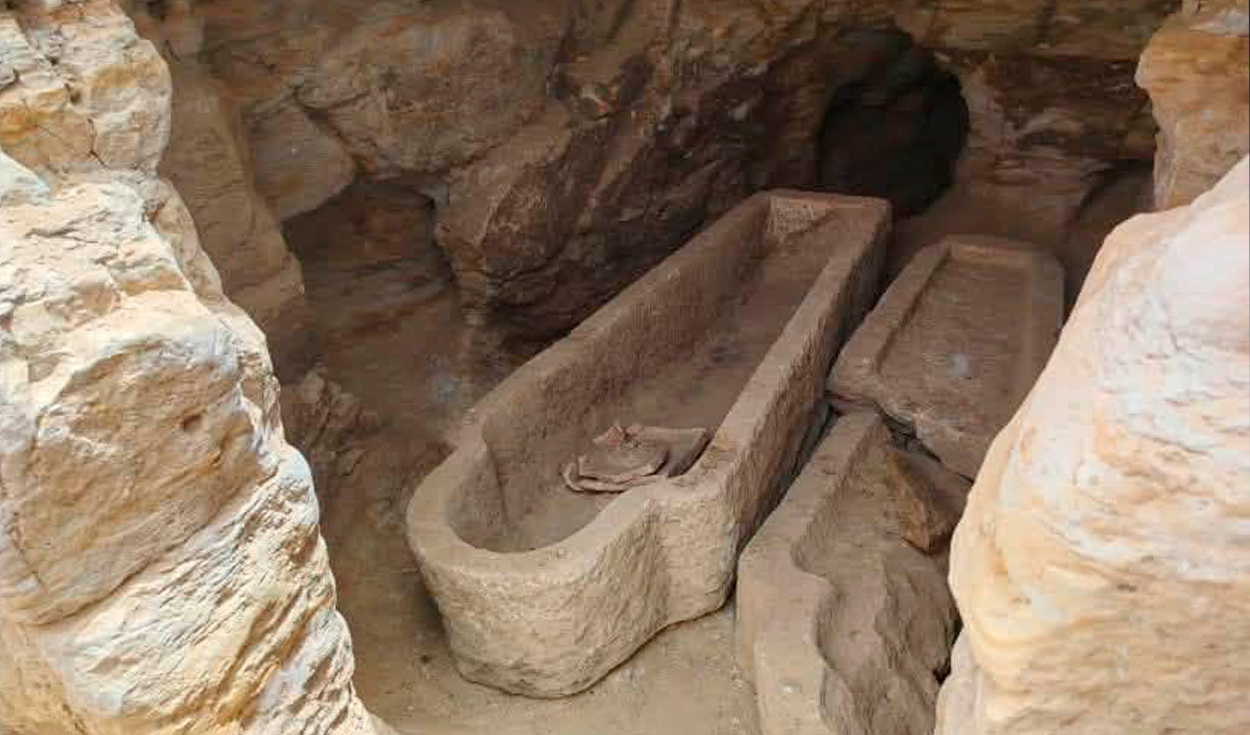
Egyptian archaeologists have discovered three ancient tombs containing five mummies and stone sarcophagi at the Sheikh Sobi archaeological site in the Bahariya Oasis.
According to Egypt's Supreme Council of Antiquities, the three structures display distinct burial traditions, offering new insight into how funerary practices in the Western Desert evolved over time.
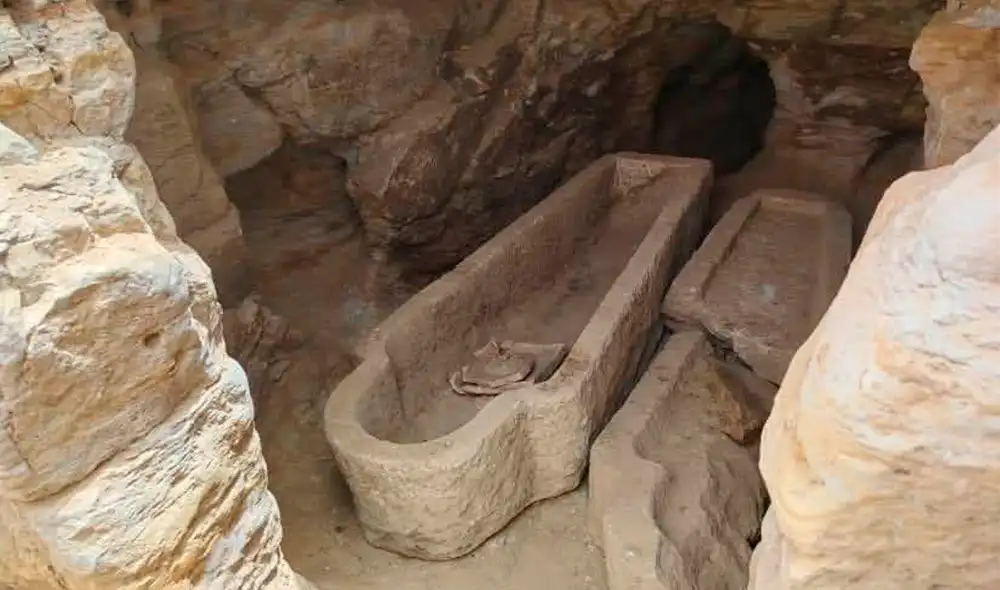
The Bahariya Oasis is an agricultural depression in Egypt's Western Desert, located approximately 370 kilometers southwest of Cairo. It has long served as a major center for archaeological study due to its location along ancient desert trade routes and its extensive burial grounds.
Family tomb with five mummies
The first structure is a collective rock-cut tomb excavated into sandstone bedrock. A square shaft measuring about three meters deep leads down to two separate burial chambers.
In the western chamber, archaeologists uncovered a limestone coffin placed inside a hollow cut directly into the floor. The coffin contained a mummy wrapped in linen bandages, arranged in a style matching known burial practices from other Late Period tombs at Sheikh Sobi.
The larger northern chamber served as a burial space for additional members of the same family. Researchers found four limestone coffins inside the chamber, each containing a linen-wrapped mummy, bringing the total number of burials in the tomb to five.
Tombs from the Roman period
The second tomb features a much simpler design, consisting of a small shaft leading to a three-step staircase and a single burial chamber. Archaeological evidence indicates that the structure was never used for an interment, though researchers believe it dates from the Roman period.
The third tomb also dates from the Roman era and has a more complex architectural layout. A rectangular shaft opens into a small roofless room that functioned as a transition space during funerary rituals before mummies were moved to their final resting places.
This third tomb leads into two chambers. One chamber contains fragments of a ceramic coffin, while the other holds a limestone coffin missing parts of its lid.
A secondary burial within the third tomb revealed a cylindrical ceramic coffin broken into several pieces. The lid of the coffin features a relief carving of a human face with clearly defined facial features.
Funerary artifacts and votive figures
Excavators also recovered numerous objects connected to ancient religious and burial practices. The items include ceramic vessels, small bottles, and plates of various shapes and sizes, along with offering tables carved from limestone and sandstone.
The team also found small terracotta votive figurines depicting female figures and stylized animals. Archaeologists said these artifacts provide fresh evidence about spiritual beliefs and ritual customs in the oasis.
Historical significance of Sheikh Sobi
Sheikh Sobi is part of an ancient necropolis associated with the local rulers and priests of the Bahariya Oasis, representing one of the primary archaeological sites in the region. The surrounding area also houses the temple of El-Bawiti, which was built during the 26th Dynasty.
Archaeological excavations at the site will continue during future field campaigns. Researchers expect to find additional tombs that will help scholars better understand the generations who lived and died in the Bahariya Oasis.