Dominican educator Kitty Heinsen argued in an opinion column published on September 15, 2026, that modern schooling must move beyond the memorization-based model inherited from the industrial era, calling instead for active, personalised learning built around each student's emotional and cognitive development.
Heinsen writes for the Ágora opinion section and draws on her own long career in the education sector to make the case. She said the traditional system was designed to prepare students for factory work, with teachers transmitting knowledge through repetitive exercises while students listened and memorised passively. Today, she argued, schools should instead prioritise the fundamental skills a person needs to acquire knowledge, understand information and build new capabilities effectively.
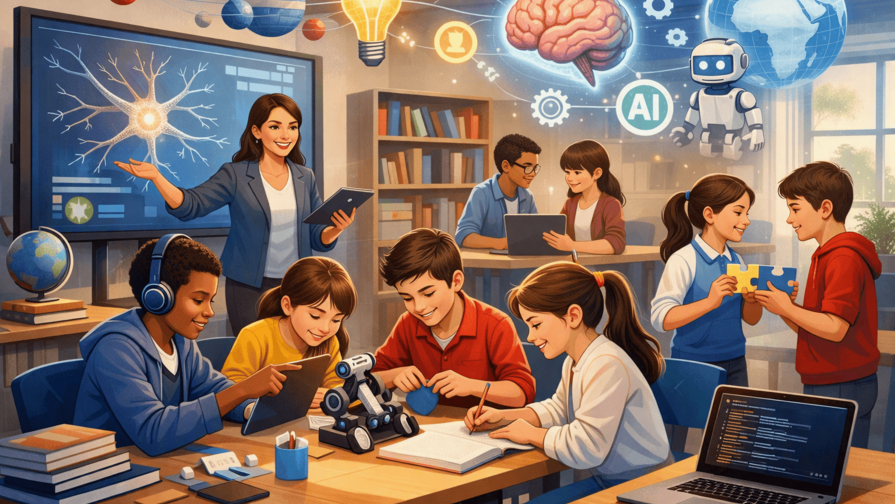
From Passive Classrooms to Active Learning
According to Heinsen, the modern teacher must be able to recognise how each individual student learns and shape lesson planning around that observation. She said classrooms need an active, collaborative learning system in which knowledge is genuinely retained rather than absorbed as a superficial experience.
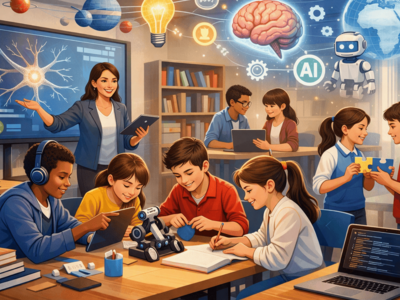
She linked this need for personalised learning to neuroeducation, a field that studies how the brain functions in order to improve teaching and learning processes. Citing that discipline, she said the brain needs motivation and positive emotions to learn, and that this in turn exercises decision-making and the creation of original ideas.
Technology, AI and Cognitive Skills
Heinsen said the pace of modern life, reshaped by social media and constantly advancing technology, requires students to keep evolving and updating their skills. In her view, digital literacy today goes beyond simply using devices: it requires developing computational thinking and learning to coexist ethically and productively with tools such as artificial intelligence, while maintaining healthy digital habits.
Even amid this technological shift, she argued, cognitive and emotional skills remain the most valued qualities in the most demanding jobs in modern society. She singled out intrapersonal skills, which allow a person to manage themselves, recognise their own strengths and weaknesses, control their emotions and frustrations, and identify their values. People with these skills, she said, take responsibility for their own learning and continually seek to grow. She placed equal value on interpersonal skills, which she said are essential for building relationships, working in teams and resolving conflict.
Heinsen said classrooms today receive students with many different needs, but also children who could become the adults who change the world for the better. Given a full school year with these students, she asked how teachers can carry out the teaching and learning process in a way that changes their lives for the better.
The Role of Parents
Heinsen extended the same question to parents, noting that every child who enters a family is different. Just as teachers must observe those differences, she said, parents need to recognise them and offer support accordingly.
She asked parents to picture their child twenty years from now and consider what skills that child will need to navigate a fast-changing world. If parents imagine their child as whole, happy, critical-thinking and empathetic, she said, they should begin working toward that today.
She asked whether parents are currently giving children the support they need to believe in themselves, teaching them to see things from others' points of view, and guiding them to cope with difficult moments. More importantly, she asked whether the values practised at home match the ones parents want their children to carry into adulthood. Heinsen said her many years in the education sector have shown her that the best students are, in most cases, accompanied by parents who are dedicated and committed to that role.
Building 'Whole Citizens'
Heinsen concluded that society and the world need, more than ever, to clear away the confusion surrounding education, which she said tends to be denser in some homes than others. Raising well-rounded citizens who find purpose in contributing positively to society, she said, is a team effort that must begin from day one.
In her view, success should ultimately be measured not by how many people schools turn out as uniform workers, in the manner of past factories, but by how many free, empathetic minds capable of transforming the world are helped to grow.