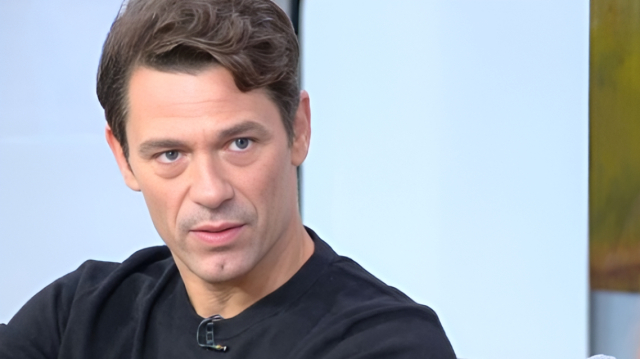
Haris Doukas, the mayor of Athens, said his best-case scenario for the next municipal election would be a rematch against former mayor Kostas Bakoyannis. Doukas said such a race would let Athenians compare two different periods of leadership in the city and judge the work done during his own term.
Doukas said projects he had fought to get built were often opened by other people, who took the credit and said "we did it." He described the pressure, criticism and toxicity that he said come with his public role.
He spoke to Viktoras Montzelli at his office for Newsbeast's Networking programme, discussing what he found on his first day at city hall and the priorities he set on taking over the administration of the Greek capital. Doukas recalled feeling awe on entering the historic building, which he said has 150 years of history, but quickly realizing that Athens had no time to lose.
He described a city with accumulated problems, including a lack of green space, poor roads and pavements, and schools not in good condition. He said this was why the municipal administration chose to focus on projects that directly affect residents' daily lives and quality of life, rather than showcase projects.
Green Space as a Legacy
Doukas said green space is the footprint he wants to leave in the Municipality of Athens, for two reasons. The first is a pre-election pledge to plant 5,000 trees a year within the urban fabric, or 25,000 over five years, a target he said has been met so far. He pointed to an app called "Athens Trees" that lets residents see in real time what is being planted, where and what type of tree, which he described as a matter of accountability and transparency.
The second reason, he said, is a project about 1.5 kilometres from city hall, in the Votanikos and Elaionas area, where an illegal landfill is being turned into a new green neighbourhood. Doukas said the site will include not only Panathinaikos football club's new stadium but also a large green space, half the size of the National Garden, built on the former dump. He said he is very proud of the change and will continue the work for the next two and a half years to show that even a heavily built-up city can be transformed.
Cleanliness Under Pressure
Doukas acknowledged that an overflowing bin causes justified complaints from residents. He said the city runs a minimum of six collection rounds a day in the commercial triangle at the centre of Athens, covering both green and blue bins, meaning a garbage truck passes at least every four hours. Citywide, he said, the municipality runs 160 collection programmes a day.
He said the department has been modernised with 300 new staff, 20 new small trucks for narrow streets, and 20 new washing trucks due to arrive in September. The city is also adding more underground bins and has built a transfer station to compress waste and cut the number of trips. Doukas said Athens receives 8 million visitors a year, meaning a cleaning system designed for a resident population of 700,000 must now serve about 9 million people. The municipality has introduced a new appointment system for garbage truck pickups to help manage the load.

He called for a change in mentality, noting that businesses in London, Rome, Paris and Lisbon use underground waste systems and put out rubbish once a day in an organised way. Athens tried a rule requiring collection four times a day, which he said did not work well, but is gradually changing the situation through cooperation with local businesses.
Overtourism and Plaka
Doukas said cities across Europe are seeing a wave of resistance to overtourism. He said Athens was the first capital to carry out a detailed study of carrying capacity in each neighbourhood, identifying areas where tourism had begun to hurt quality of life for residents. He said the data was given to the government, and short-term rental permits have been frozen in specific communities for the past two years, along with checks on hotels. The city has also created a sustainability observatory involving industry representatives.
Doukas said he was the first to argue that order needed to be brought to Plaka, the historic neighbourhood he called the "neighbourhood of the Gods." The municipality created an office to check compliance with a presidential decree governing the area and has sealed properties where necessary. He said new hotels cannot open in Plaka without meeting required conditions, and shops must meet specific standards. He said some accused him of harming tourism, but he believes the opposite is true, since Athens is not just the Acropolis but also its residents, atmosphere and daily life. If residents are not happy, he said, visitors will not be either, and Athens will not be allowed to become one giant hotel.
Friction With Central Government
Doukas criticised the government, saying the Greek state remains too centralised. He argued that the relationship between local and central government should be based on cooperation and respect, with the state trusting municipalities to solve problems close to where they occur. Instead, he said, the government prefers to hold on to key powers and organisations while handing municipalities only the responsibilities it does not want to manage.
He pointed to the dispute over Vasilissis Olgas street as an example. Reopening the street was one of his pre-election pledges, which he said some parties opposed. He said the government eventually recognised that a "caprice" should not be allowed to create serious problems for the city, and the street was reopened. Doukas said the municipality is moving ahead with other major projects, including new art deco lighting for Dionysiou Areopagitou street, similar to the lighting used at the Acropolis, to be announced in the autumn in cooperation with the Onassis Foundation.
A Possible Bakoyannis Rematch
Asked whether he wants Kostas Bakoyannis as his opponent again in the race for mayor, Doukas said it would be his best-case scenario. He said he wants the public to see how Athens was under Bakoyannis and how it will be under him, so that voters can recognise the changes made over the past two and a half years, changes he said he will keep implementing until the end of his term. He said he believes citizens are now seeing major pre-election pledges being fulfilled, despite ongoing problems, because of persistence and patience.
Bakoyannis, the former mayor, answered a similar question on Newsbeast's Networking programme about a month earlier.
Handling Public Criticism
Doukas said he has faced intense attacks and often has to fight to prove facts he considers obvious. He repeated his complaint that projects he worked to complete are opened by others who take photographs and claim the credit, saying he often wonders who the actual mayor is. He said it saddens him when major, successful efforts go unnoticed while a single overflowing bin gets far more attention. He admitted he has not yet gotten used to this, nor to the toxicity of political confrontation.