The National Museum of History and Geography in Santo Domingo has published the first volume of its lecture series compiling research on Dominican history. The new book, titled Conferencias del MNHG, brings together academic dissertations delivered at the museum by leading historians and specialists. It forms part of the institution's educational mission to preserve historical findings and widen public access to its scholarly proceedings.
The publication gathers roughly 15 specialized lectures organized across four key historical eras: the colonial period, the Haitian domination, the emergence of the Dominican Republic, and the Trujillo dictatorship. Museum officials released the 170-page volume to transform spoken academic presentations into permanent reference literature for students, researchers, and history enthusiasts.
The National Museum of History and Geography is a major state institution dedicated to conserving the national heritage and historical memory of the Dominican Republic. Situated within the Plaza de la Cultura Juan Pablo Duarte cultural park in Santo Domingo, the museum serves as a central repository for artifacts, documents, and scholarly discourse tracing the evolution of the island nation. Santo Domingo itself, founded by Spanish colonizers in the late fifteenth century, is the oldest continuously inhabited European settlement in the Americas, providing an extensive historical backdrop for the museum's collections.
Institutional initiative and educational goals
During the book presentation, museum director and historian José G. Guerrero Sánchez stated that the project originated from a desire to reinforce the institution's educational commitment. He explained that by documenting and publishing the presentations delivered in the museum's lecture halls, the institution can safeguard research that might otherwise remain confined to live audiences.
Guerrero Sánchez added that creating an editorial version allows the findings of participating scholars to be consulted by future generations of students, academic specialists, and the general public. In addition to directing the overall publication project, Guerrero Sánchez contributed his own research as one of the featured authors in the volume.
The thematic structure of the volume reflects pivotal transitions in the nation's political and social development. The colonial period encompasses the early centuries of Spanish rule following Christopher Columbus's arrival on Hispaniola in 1492. The section on Haitian domination examines the period from 1822 to 1844 when the entire island was unified under Haitian administration, a critical era that preceded the declaration of Dominican independence and the formal creation of the republic in 1844. The final thematic section focuses on the dictatorship of Rafael Leónidas Trujillo, who governed the country with absolute authority from 1930 until his assassination in 1961.
A mosaic of specialized research
![[object HTMLTextAreaElement]](https://resources.diariolibre.com/images/2026/09/09/el-director-del-museo-nacional-de-historia-y-geografia-jose-g-guerrero-sanchez-09903638.jpeg)
Joan Ferrer, the director of the General Directorate of Museums, commended the breadth and academic rigor of the compilation during the release ceremony. Ferrer observed that the volume is not merely another general history textbook, but rather a carefully constructed mosaic of targeted investigations, each produced with rigorous documentary standards by its respective speaker.
Ferrer emphasized that the significance of the collection stems both from individual research papers and from the collective narrative they form. He remarked that like any fine mosaic, its true value appears both in each individual piece and in the complete picture it reveals of a nation continuing to uncover forgotten historical chapters within its own archives and cultural artifacts.
The General Directorate of Museums operates under the Ministry of Culture of the Dominican Republic, overseeing state-run cultural institutions, exhibition halls, and historical monuments across the country. The directorate is tasked with setting museum policies, preserving national heritage sites, and encouraging academic research that highlights Dominican history.
Contributing authors and volume topics
The inaugural volume features contributions from nine prominent scholars who have participated in the museum's academic agenda. Alongside director José G. Guerrero Sánchez, the authors include Gabriel Atiles Bidó, Edwin Peña, Manuel Otilio Pérez, Welnel Félix, Sócrates Suazo, Fernando Pérez Memén, Manuel Andrés Brugal, and Kin Sánchez.
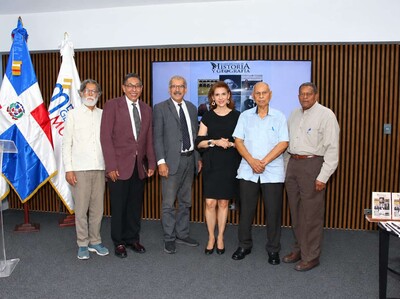
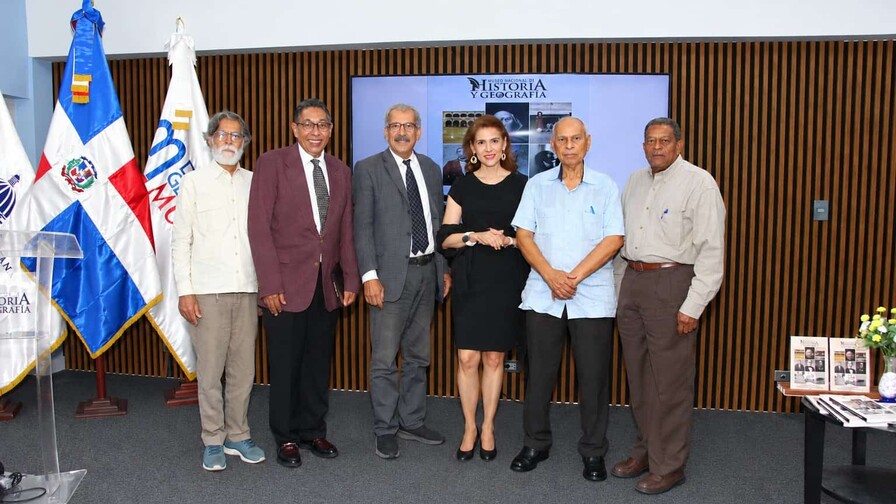
Each historian provides specialized analyses of distinct events and figures, offering multiple analytical perspectives grounded in historical documentation and archive research. Present at the formal book unveiling were several of the contributing scholars and museum representatives, including Kin Sánchez, Aquiles Julián, José Guerrero, Mónica Gutiérrez, Fernando Pérez Memén, and Manuel Otilio Pérez.
Production details and visitor information
The editorial production of the 170-page work involved a team of specialized design and publishing professionals. Abel Raimundo managed the graphic design and page layout, while Dimas Rodríguez Cuello created the book cover design. Editorial house Layoot & Printing, SRL handled the printing and editing process under the overall direction of Guerrero Sánchez.
The project reinforces the museum's long-term commitment to preserving historical memory and ensuring that academic findings presented during live lectures remain permanently accessible to the public. The publication follows recent institutional investments by the Dominican government, which reopened the National Museum of History and Geography for a second time following nearly four years of closure and renovation.
The National Museum of History and Geography is open to visitors from Tuesday through Saturday, between 10:00 a.m. and 6:00 p.m. Located in the heart of Santo Domingo at the Plaza de la Cultura Juan Pablo Duarte, the museum continues to expand its educational programming and public exhibitions. Further details regarding upcoming lectures, cultural events, and museum publications are made available through the institution's official Instagram account, @museohistoriaygeografiard.