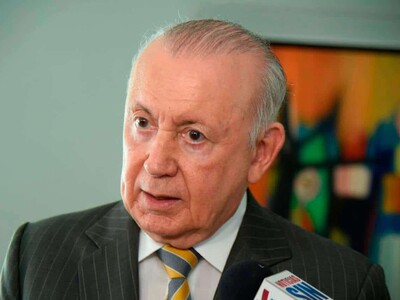
Former Vice President of the Dominican Republic Rafael Alburquerque questioned the government's economic policy on Wednesday, September 9, 2026, warning that Dominican families are increasingly using credit cards to cover basic living expenses such as food, medicine, and transportation.
Speaking in Santo Domingo on behalf of the opposition Fuerza del Pueblo party, Alburquerque stated that borrowing money to purchase food cannot be presented as an economic achievement.
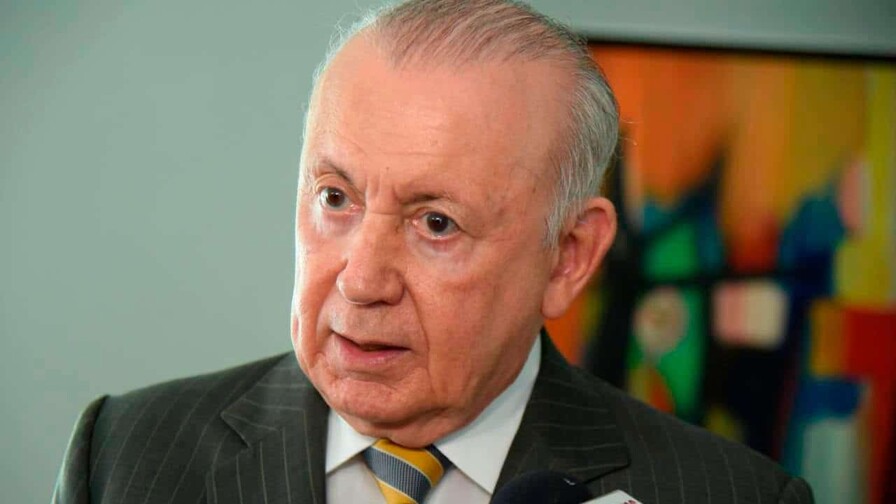
According to a press statement released by Fuerza del Pueblo, Alburquerque cited official statistics showing that 51.4 percent of employed workers in the country operate in the informal economy. He added that 62.4 percent of formal employees earn less than 30,000 Dominican pesos per month.
Alburquerque argued that these figures reflect the severe difficulties many households face when trying to meet essential living costs solely through employment income.
Credit Cards as Salary Extensions
The political leader highlighted a significant shift in credit usage among lower-income Dominican households. Official data shows that 63.1 percent of newly issued credit cards are held by individuals earning less than approximately 32,500 Dominican pesos monthly.
Alburquerque said credit cards are no longer used primarily to finance extraordinary or emergency purchases. Instead, he observed that for many working families, credit has effectively become an extension of their monthly salary.
He explained that households are resorting to borrowing to pay for routine daily costs, including groceries, prescription drugs, public transit, and other essential needs.
Alburquerque cautioned that expanded credit access does not translate into improved household purchasing power. Families will ultimately have to allocate a portion of their future earnings to repay debt principal, interest charges, and other financial fees.
He emphasized that debt is not income, borrowing capacity is not well-being, and eating on borrowed money does not equate to national prosperity.
Political and Economic Context
Alburquerque served as Vice President of the Dominican Republic from 2004 to 2012 under President Leonel Fernandez and is a member of the Political Directorate of Fuerza del Pueblo. The party was established in 2019 as a primary opposition group in the Caribbean nation of over 11 million people.
The Dominican Republic, which shares the island of Hispaniola with Haiti, has experienced growth in recent years, but living costs and wage levels remain central political issues. Informal labor, which affects more than half of the workforce, leaves millions of workers without formal employment benefits or stable income protections.
Hunger Map and Household Debt
Addressing broader social indicators, Alburquerque acknowledged as positive that the Dominican Republic has been removed from global hunger maps. However, he stressed that this outcome must be evaluated alongside the actual economic conditions in which families live.
He stated that it is necessary to determine how much of the nation's progress against hunger stems from real gains in household earnings and how much is being artificially sustained through private borrowing.
Alburquerque said the primary economic challenge facing the Dominican Republic is to generate higher quality jobs, raise wages, and build conditions that allow families to meet basic needs without relying permanently on credit.
He warned of a growing contradiction in showing progress on social metrics while household financial dependence deepens. He concluded that the Dominican Republic risks stepping off the hunger map only to enter a new map of family indebtedness.